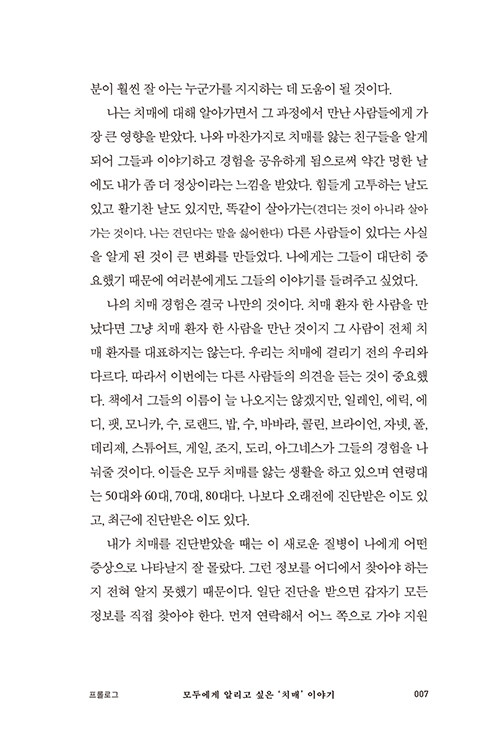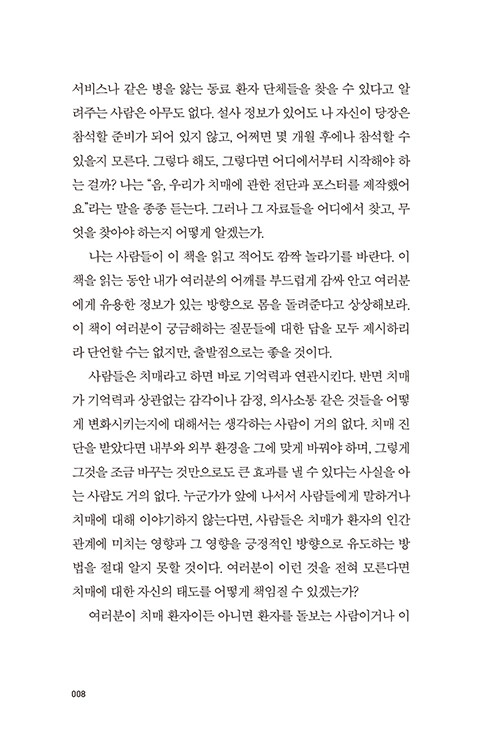
2025년 11월 10일 월요일

What I Wish People Knew About Dementia 치매의 거의 모든 기록 2022 요약

What I Wish People Knew About Dementia

 is the February Pick of the Month | Dementia Australia


What I Wish People Knew About Dementia
BY Wendy Mitchell

 is the February Pick of the Month
Thursday, 10 February 2022News


When Wendy Mitchell was diagnosed with younger onset dementia at the age of 58, she was overwhelmed with images of the later stages of the condition. But her diagnosis far from represented the end of her life. Instead, it was just the start of a very different one.

For our February Pick of the Month, the Dementia Australia librarians have chosen Wendy’s new book, What I Wish People Knew About Dementia. In this book, Wendy explores the experience of living with dementia, including the unexpected changes to senses, relationships, emotions and communication.

For this book and others written by people living with dementia, visit our library e-collection at https://dementia-e-library.overdrive.com/collection/123371.


Not yet a library member? Sign up for free at dementia.org.au/dementia-australia-library.

Library guide: younger onset dementia


Explore the Dementia Australia Library's guide to younger onset dementia.


===

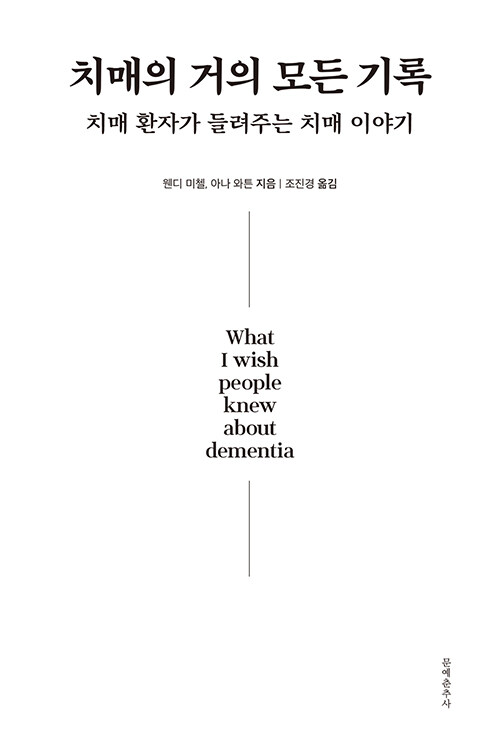
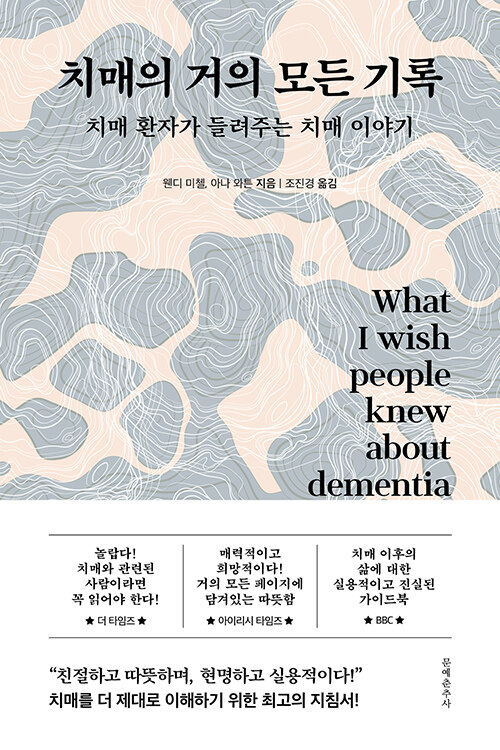
치매의 거의 모든 기록
웬디 미첼 (지은이),조진경 (옮긴이)문예춘추사2022-10-01
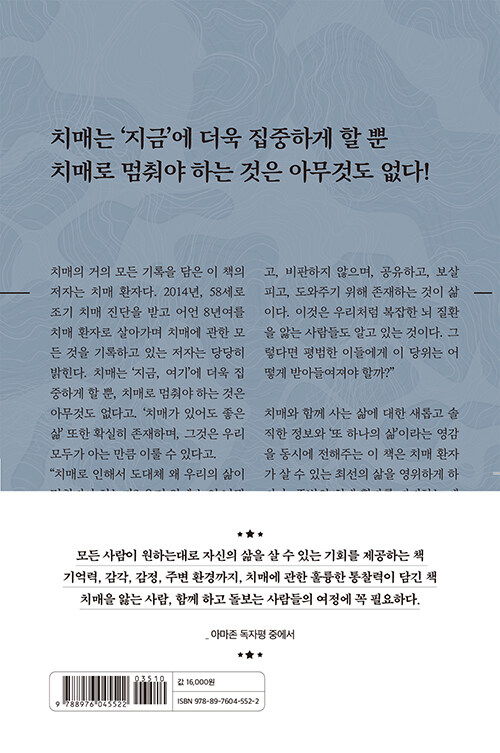
이 책의 저자는 치매 환자다. 2014년, 58세라는 이른 나이에 조기 치매를 진단받고, 그렇게 인생의 끝을 느낀 시점에서 다시 새로운 삶을 시작했다. 자신의 모든 것을 기록한 것이다. 치매 당사자인 저자가 들려주는 치매 이야기, 그녀의 기록은 한마디로 요약해서 ‘치매가 있어도 좋은 삶’이다.

그것이 어떻게 가능할까? 모든 병이 그렇겠지만, 특히나 치매는 병의 진행이 급속하지 않아서 시작과 중간과 끝이 선명히 이어지는 질환이다. 그래서 그 과정을 이해한다면, 누구라도 설령 치매 환자가 되어도 지나치게 당황하지 않아도 된다는 것이 저자의 조언이다. 그리고 ‘치매가 있어도 좋은 삶’을 나름대로 행복하게 누릴 수 있다는 것이다.

다행히도 낙관적인 성향의 저자는 오랫동안 치매를 앓으면서도 아주 작은 것에서 즐거움을 찾느라 분주하다. 그 즐거움의 하나가 바로 ‘기록’이고, 이 책은 그 ‘결실’인 셈이다. 덕분에 독자들은 치매라는 어둠의 영역을 아주 밝은 필터로 들여다볼 수 있게 되었다.

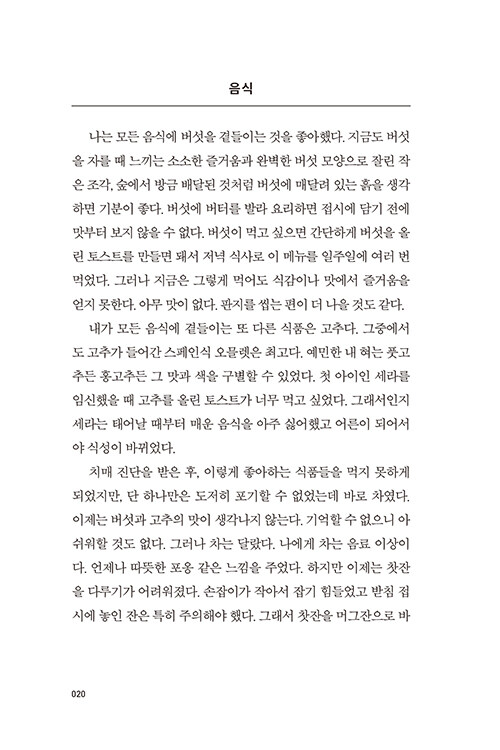
치매 환자의 ‘감각’과 ‘관계’, ‘의사소통’, ‘환경’, ‘감정’, ‘태도’ 등 치매가 불러오는 인간 삶의 모든 영역을 들여다보는, 치매 환자가 들려주는 치매에 대한 거의 모든 기록. 사실상 치매 인구가 급속도로 증가하고 있는 지금, 이 책은 우리에게 너무도 유용한 기록이 아닐 수 없다.


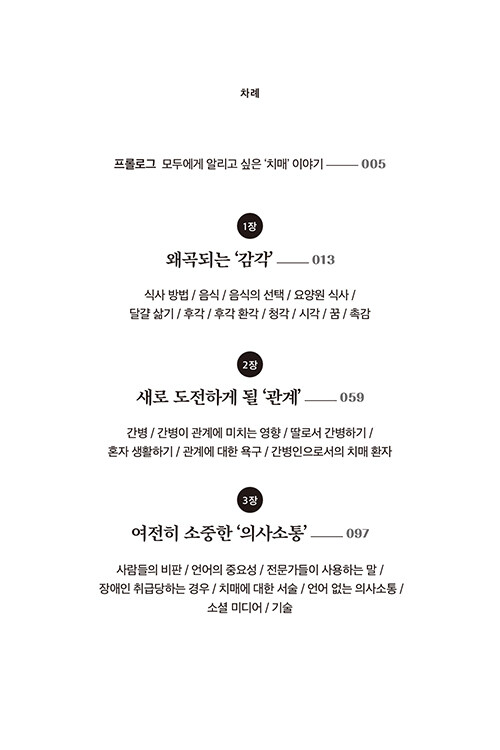
목차


프롤로그 ㅣ 모두에게 알리고 싶은 ‘치매’ 이야기 - 005

1장 ㅣ 왜곡되는 ‘감각’ - 013
식사 방법 / 음식 / 음식의 선택 / 요양원 식사 / 달걀 삶기 / 후각 / 후각 환각 / 청각 / 시각 / 꿈 / 촉감

2장 ㅣ 새로 도전하게 될 ‘관계’ - 059
간병 / 간병이 관계에 미치는 영향 / 딸로서 간병하기 / 혼자 생활하기 / 관계에 대한 욕구 / 간병인으로서의 치매 환자


3장 ㅣ 여전히 소중한 ‘의사소통’ - 097
사람들의 비판 / 언어의 중요성 / 전문가들이 사용하는 말 / 장애인 취급당하는 경우 / 치매에 대한 서술 / 언어 없는 의사소통 / 소셜 미디어 / 기술

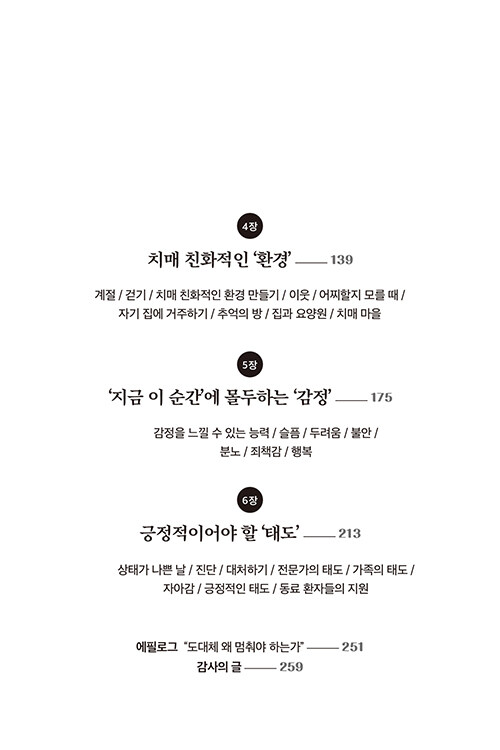
4장 ㅣ 치매 친화적인 ‘환경’ - 139
계절 / 걷기 / 치매 친화적인 환경 만들기 / 이웃 / 어찌할지 모를 때 / 자기 집에 거주하기 / 추억의 방 / 집과 요양원 / 치매 마을

5장 ㅣ ‘지금 이 순간’에 몰두하는 ‘감정’ - 175
감정을 느낄 수 있는 능력 / 슬픔 / 두려움 / 불안 / 분노 / 죄책감 / 행복


6장 ㅣ 긍정적이어야 할 ‘태도’ - 213
상태가 나쁜 날 / 진단 / 대처하기 / 전문가의 태도 / 가족의 태도 / 자아감 / 긍정적인 태도 / 동료 환자들의 지원

에필로그 ㅣ “도대체 왜 멈춰야 하는가” - 251
감사의 글 - 259
접기


책속에서


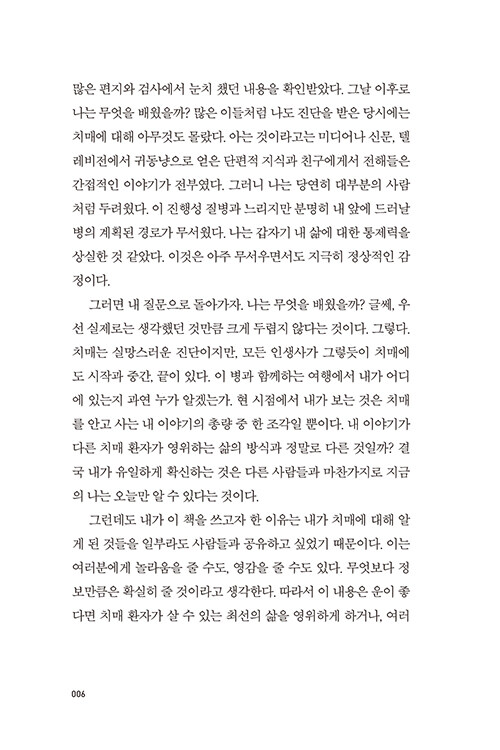
치매는 실망스러운 진단이지만, 모든 인생사가 그렇듯이 치매에도 시작과 중간, 끝이 있다. 이 병과 함께하는 여행에서 내가 어디 에 있는지 과연 누가 알겠는가. 현 시점에서 내가 보는 것은 치매를 안고 사는 내 이야기의 총량 중 한 조각일 뿐이다. 내 이야기가 다른 치매 환자가 영위하는 삶의 방식과 정말로 다른 것일까? 결국 내가 유일하게 확신하는 것은 다른 사람들과 마찬가지로 지금 의 나는 오늘만 알 수 있다는 것이다.
--- 「프롤로그」 중에서 접기
치매 말기가 되면 환자는 다른 시간대로 퇴행한다고 한다. 마음이 인생의 이야기가 담긴 커다란 책장에서 앞선 시간의 선반을 선택하는 것이다. 나는 더 이상 현재의 꿈을 꾸지 않고 과거의 꿈만 꾼다. 마치 내 꿈이 내 뇌보다 먼저 회귀하여, 나중에 치매 말기가 되었을 때 내가 몰입할 수 있는 현실의 창을 열어놓은 것 같다. 어쩌면 꿈이 나를 그곳으로 돌려보내는 까닭은 그때가 내 인생에서 행복했던 시기이기 때문일 것이다.
--- 「왜곡되는 ‘감각’」 중에서 접기
사람들이 치매 진단을 받은 후 관계를 잘 유지시키는 가장 좋은 방법을 물어오면, 나는 대화를 계속하는 것뿐이라고 말해준다. 이것이 이론적으로는 간단한 것 같지만 실제로는 그렇지 않을 수 도 있다는 점을 나도 안다. 그러나 이것은 정말 개인에게 달린 문제다. 나는 딸들과 함께 앉아 수다를 떨고 내 위임장에 대해 의논할 준비를 하면서 빵을 굽고 케이크를 만들었다. 빵을 굽고 예쁘게 장식한 온갖 모양과 크기의 달콤한 케이크 냄새가 물씬 풍기는 내 주방의 공기를 지금도 느낄 수 있다. 그것이 대화를 좀 더 기분 좋게 만드는 나만의 방법이었지만, 다른 사람들도 자기 가족에게 가장 효과가 좋은 방법을 알고 있을 것이다.
--- 「새로 도전하게 될 ‘관계’」 중에서 접기
해변 태양 아래에 발끝을 쭉 뻗고 앉아 멀리 보이는 구명정 승무원 이 구조 요청에 응하는 모습을 떠올려본다. 대부분의 사람에게 파도가 너무 강하다는 것을 승무원은 안다. 그들은 쓰라린 경험을 통해 파도를 존중하는 법을 배웠다. 그들은 조류에 거스르지 않고 순응한다. 우리가 치매에 대처할 때도 똑같다. 파도와 싸우려고 하면 물에 빠져 죽을 것이기 때문에 나는 파도를 타기로 했다.
사람들은 그 뒤에 일어날 일 때문에 가을을 두려워한다. 하지만 가을은 풍부한 색상과 다양한 과일로 가득하다. 가을은 계절의 말미에 있다. 그렇다. 즐거운 여름, 심야의 잔디밭, 머리 뒤로 느리게 넘어가는 태양에 작별 인사를 한다. 가을은 본질적으로 서서히 꺼지는 빛이다. 치매 같은 병을 표현하는 데 이보다 더 좋은 계절이 있을까?
--- 「치매 친화적인 ‘환경’」 중에서 접기


추천글
‘획기적인 책이다’
- 파이낸셜 타임스

‘세상은 더 많은 웬디 미첼을 가질 수 있다’
- 선데이 타임스

‘알츠하이머와 함께 사는 것이 어떤지에 대한 독특한 통찰력’
- 스펙테이터 (The Spectator)

‘놀랍다. 치매를 앓고 있는 사람이 주변에 있다면 누구나 이 책을 읽어야 한다.’
- 더 타임스 (The Times)

‘젊은이들의 마음과 삶 속에 있는 용감하고 빛나는 여행’
- 리사 제노바

이 책을 추천한 다른 분들 :
문화일보
- 문화일보 2022년 9월 30일자
한국일보
- 한국일보 2022년 9월 30일자 '새책'
조선일보
- 조선일보 2022년 10월 1일자
경향신문
- 경향신문 2022년 9월 30일자 '새책'


저자 및 역자소개
웬디 미첼 (Wendy Mitchell) (지은이)
저자파일
신간알림 신청

20년 동안 영국국민의료보험(NHS)에서 비임상팀 팀장으로 일하던 중 2014년 7월, 58세에 조기 발병 치매를 진단받았다. 사회나 병원 모두 치매에 대해 아는 것이 별로 없다는 사실에 충격을 받아 치매에 대한 인식을 높이고 진단 이후에도 ‘삶이 있다’는 사실을 알리는 일을 헌신적으로 하고 있다. 현재 알츠하이머병협회의 홍보대사이며, 2019년에는 치매 연구에 대한 기여를 인정받아 브래드포드대학교에서 건강학 명예박사학위를 받았다. 두 딸이 있으며 요크셔주에서 생활하고 있다. 지은 책으로 『내가 알던 그 사람』, 『치매의 거의 모든 기록』이 있다. 접기

최근작 : <[큰글자도서] 치매의 거의 모든 기록>,<생의 마지막 당부>,<치매의 거의 모든 기록> … 총 33종 (모두보기)

조진경 (옮긴이)
저자파일
신간알림 신청

건국대학교 지리학과를 졸업한 후 다양한 분야의 책들을 우리말로 옮겨 왔다. 현재 번역 에이전시 엔터스코리아에서 출판 기획자 및 전문 번역가로 활동하고 있다. 옮긴 책으로는 《피카파우 동물친구들 3》, 《52주의 이지 니트》, 《52주의 숄》, 《해리 포터 영화 속 공예 마법》, 《해리 포터 영화 속 뜨개질 마법》, 《부쿠의 펀치 니들 소품》, 《피카파우 동물친구들》, 《피카파우 동물친구들 2》, 《노니 플라워》, 《빈티지 프랑스 자수》, 《몰리 메이크스 퀼트 수업》, 《손으로 만드는 즐거움》, 《우드랜드 니트》, 《귀여운 동물 모양 니트》, 《도나 윌슨의 손뜨개 인형》, 《코바늘로 뜨는 레이스 꽃 100송이》, 《처음부터 다시 배우는 친절한 퀼트 교과서 DIY》, 《대바늘과 코바늘로 뜨는 손뜨개 꽃 100송이》, 핸드메이드 월간지 《몰리 메이크스》가 있다. 접기


출판사 제공 책소개
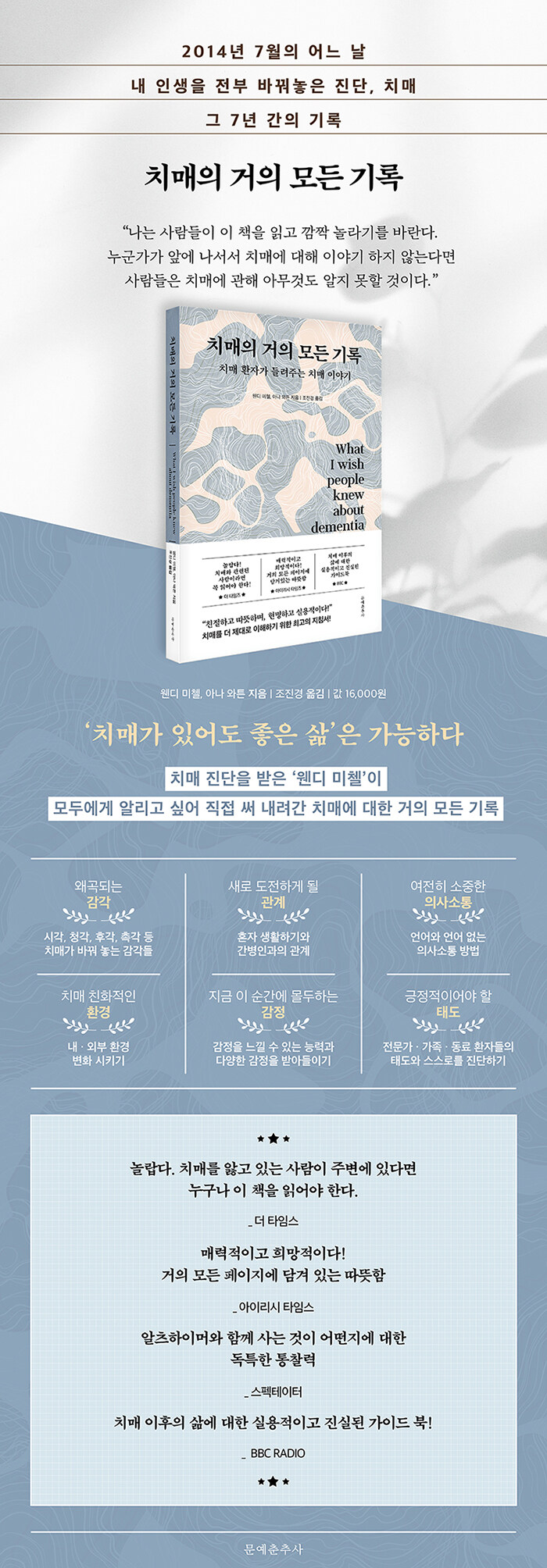


‘치매가 있어도 좋은 삶’의 기록
거의 모든 치매 환자에게 희망을 주는 책!

이 책의 저자는 치매 환자다. 2014년, 58세라는 이른 나이에 조기 치매를 진단받고, 그렇게 인생의 끝을 느낀 시점에서 다시 새로운 삶을 시작했다. 자신의 모든 것을 기록한 것이다. 치매 당사자인 저자가 들려주는 치매 이야기, 그녀의 기록은 한마디로 요약해서 ‘치매가 있어도 좋은 삶’이다. 그것이 어떻게 가능할까? 모든 병이 그렇겠지만, 특히나 치매는 병의 진행이 급속하지 않아서 시작과 중간과 끝이 선명히 이어지는 질환이다. 그래서 그 과정을 이해한다면, 누구라도 설령 치매 환자가 되어도 지나치게 당황하지 않아도 된다는 것이 저자의 조언이다. 그리고 ‘치매가 있어도 좋은 삶’을 나름대로 행복하게 누릴 수 있다는 것이다.
심지어 저자는 치매 진단 이후에 행복에 대한 죄책감을 느낀다고 토로하기까지 한다. “이상하게 들리지만, 나는 가끔씩 치매 덕분에 다른 사람들이 받는 부담감을 털어내고, 사람들이 여전히 필사적으로 돌리고 있는 다람쥐 쳇바퀴에서 벗어나게 되어 순간적으로 만족감을 느낀다. 그리고 이 병에서 얻을 수 있는 최선의 것을 찾아내는 내 능력 때문에 죄책감을 느낀다.”
다행히도 낙관적인 성향의 저자는 오랫동안 치매를 앓으면서도 아주 작은 것에서 즐거움을 찾느라 분주하다. 그 즐거움의 하나가 바로 ‘기록’이고, 이 책은 그 ‘결실’인 셈이다. 덕분에 독자들은 치매라는 어둠의 영역을 아주 밝은 필터로 들여다볼 수 있게 되었다.
치매 환자의 ‘감각’과 ‘관계’, ‘의사소통’, ‘환경’, ‘감정’, ‘태도’ 등 치매가 불러오는 인간 삶의 모든 영역을 들여다보는, 치매 환자가 들려주는 치매에 대한 거의 모든 기록. 사실상 치매 인구가 급속도로 증가하고 있는 지금, 이 책은 우리에게 너무도 유용한 기록이 아닐 수 없다.

“치매 환자에게 좋은 소식은 매일 새로운 날이 시작되므로 다시 시작할 수 있고, 사용하는 언어와 어조, 진행성 질병에 접근하는 방식을 바꿀 기회를 얻게 된다는 것이다. 이 기회는 치매를 진단받은 당사자이든 가족이나 지역 사회, 의료계에서 환자를 지원하는 사람이든 모두에게 있는데, 지원해주는 사람에게 훨씬 중요하다. 변화를 주기에 너무 늦은 때는 없다. 이 책을 내려놓고 바로 시작해도 된다.”

치매의 진짜 모습을 담은,
‘치매’보다 ‘인간’이 먼저임을 깨우치는 책!

확실히 저자는 낙천적이다. 치매 환자임에도 치매의 긍정적인 면을 끊임없이 찾아내고 스스로에게 각인시킨다. 예컨대 다음과 같은 문장이 그렇다. “행복은 순간의 마음챙김, 현재에 대한 감사가 있어야 느낄 수 있는 것이다. 결국 과거는 종종 흐릿해질 수 있고 미래는 잘 모르기 때문이다. 하지만 정말 달라진 것이 있을까? 우리 모두는 더욱 현재를 살아야 하지 않을까? 우리는 단지 서투르게 된 것뿐이다. (…) 무엇보다도 치매가 가르쳐준 것은 우리 모두 지금 당장으로 돌아와야 한다는 것이다.”
대부분의 사람은 나이가 들면서 내가 가진 것이 아니라 내게 없는 것에 집중하는 반면, 치매 환자는 지금 당장의 순간에만 집중한다는 것이다. 이 정도면 감탄이 나오지 않을 수 없다. 친구들에게 노래해주는 새 한 마리를 보면서, 돌아다니려고 밖에 있으면서, 나무줄기에서 내다보고 있는 다람쥐를 잡으면서 머릿속이 차분해지는 날이면 특별히 행복하다는 저자. 어떻게든 부족함을 남기는 전체적인 상황이 아니라 아주 작은 순간에도 아름다움을 보는 법을 배웠다는 저자에게 감탄하지 않을 수 없다.
《치매의 거의 모든 기록》은 사실상 인생에서 충격적인 사건인 치매에 관한 이야기다. 거부할 수 없는 사건을 맞은 이들에게 어떻게든 최선의 삶을 살 것을 조언하는 저자의 치매 기록은 가슴 뭉클해지는 인간 승리의 기록이기도 하다. 저자의 말마따나, 치매 환자라고 해서 도대체 왜 인간적인 삶을 멈춰야 한단 말인가. 《치매의 거의 모든 기록》은 치매 환자를 비롯해 치매라는 질병에 곤혹스러워하는 모든 사람들에게, 그리고 지금 치매 환자 곁에서 손잡고 있는 그 누군가에게도 따뜻한 위로와 격려의 선물이 될 것이다. 접기


치매, 예방하고 치유하기
평점
분포

9.8


치매에 관한 현실적이고 다양한 이야기를 알 수 있다 잔잔하지만 강인한 작가가 느껴진다
꿈만꾸네 2022-10-19 공감 (1) 댓글 (0)
Thanks to
공감


치매환자를 의식없는 나무토막 다루듯이 하지말고 혼자서 뭔가 성취감을 맛보고 싶어서 행동하는 어린아이를 곁에서 돌보아주듯 해달라는 말이 가슴에 남는다.
ryong357 2023-02-12 공감 (0) 댓글 (0)
Thanks to
공감


치매에 대해서 다시 생각해보게된 책
주변에 치매걸리신분들 간호하시는 분들에게 더 권해드리고싶다
지웅맘 2022-11-11 공감 (0) 댓글 (0)
Thanks to
공감


마이리뷰
구매자 (0)
전체 (37)
리뷰쓰기
공감순


치매의 거의 모든 기록

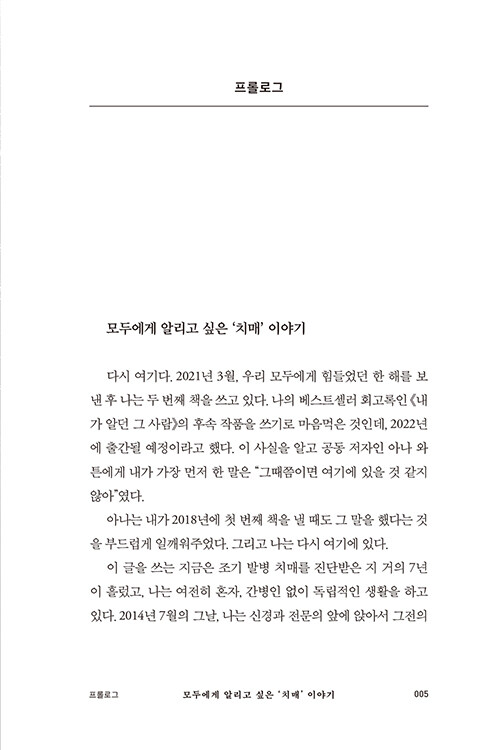
이 글을 쓰는 지금은 조기 발병 치매를 진단받은 지 거의 7년이 흘렀고, 나는 여전히 혼자, 간병인 없이 독립적인 생활을 하고 있다. 2014년 7월의 그날, 나는 신경과 전문의 앞에 앉아서 그전의 많은 편지와 검사에서 눈치챘던 내용을 확인받았다. 그날 이후로 나는 무엇을 배웠을까? (-6-)


치매 환자는 사람과 접촉하지 못하게 되면 스스로 인정하고 싶지 않더라도 접촉을 몸시 그리워하게 된다. 2011년에 호주에서 이루어진 한 연구에서는 장기적으로 치매 환자에게 매일 10분 발 마사지를 하면 행동의 변화가 일어난다는 것이 밝혀졌다. 연구에 따르면 ,브리즈번의 한 요양원 입원자들에게 공격성, 배회, 반복된 질문을 포함한 '초조 행동' 이 있었다고 한다. (-55-)


그러나 나는 타이프를 치고 글을 쓸 수 있다는 것이 때로는 나에게 불리하게 작용한다는 것을 안다. 그로 인해 사람들이 내 삶에 대하여 왜곡된 인식을 갖게 되기 때문이다. 그러나 이것은 어쩌면 나름대로 치매의 선물일지도 모르며, 이 병이 허용하는 것이 아주 적다는 점을 감안해서 나는 이 선물을 놓치지 않을 것이다. 키보드 위레서 춤추듯 움직이는 내 손가락과 화면에 뜨는 문장들에 나 역시 다른 사람들처럼 놀랄 때가 종종 있다. (-110-)


많은 사람들이 조용한 동네 분위기를 단순히 편안하거나 평화롭게만 느끼는 것은 아니었다.참가자들은 사람들이 보이지 않는 시간에 느끼는 불안에 대해 이야기했다. 이는 바깥에 있느 사람들을 보는 것만으로 이웃과 어느 정도의 유대감을 느낄 뿐만 아니라 이웃의 정체성을 다시 깊이 알게 된다는 것을 강조한 것이다. (-158-)


우리 모두는 단순한 치매 환자가 아닌 그 이상의 존재로 보이고 싶어 한다.이런 바람은 환자와 다른 사람들 모두 치매에 대해 더 좋은 태도를 보이도록 조장한다.내가 우리 동네에서 치매에 걸린 웬디가 아니라 '카메라 여인' 웬디로 알려지는 게 얼마나 좋았는지 앞에서 이야기했다. 동네 사람들이 내 치매를 보기전에 내 기술을 보았기 때문에 기운이 났다. 그들은 질병이 아닌 사람을 본 것이다. (-241-)


대한민국과 일본은 초고령 사회로 진행되고 있으며,저출산 고령화의 대표적인 동아시아 나라다. 나라의 정책과 문화가 실버세대에게 최적화되고 있으며,그들에게 맞는 복지혜택, 건강 비즈니스, 여행 비즈니스가 늘어나고 있는 추세다. 여기엔 요양병원, 요양원이 늘어나고 있다. 즉 노년층의 마지막 삶을 보내는 곳이 대표적인 두곳이며,기존의 병원이 해오던 일을 , 집이 해오던 일을 도맡아하고 있다.


그 과정에서 노년층을 중심으로 웰다잉에 대한 인식이 증가하고 있다. 몸에 이상이 생기거나, 치매에 걸리게 될 때, 여러가지 문제들이 발생할 수 있다.그 과정에서 ,기존의 치매 정책이 단절과 격리, 치료에 매진하고 있다면, 실제 치매 한자인 웬디 미첼이 쓴 『치매의 거의 모든 기록 』으 본다면, 실제로 치매화나가 원하는 것, 요구하는 것이 무엇이며, 대안에 대해서 나오고 있다. 즉 치매 환자를 격리하는 것에서 벗어나, 그들이 안전하게 살아갈 수 있도록 환경을 바꿔 놓는 것이다. 그들을 무존재감, 비생산자로 바라보지 말고, 스스로 삶을 영위해 나가며, 기억이 소실되고 있지만, 살아가는데 , 큰 어려움이 없도록 한다. 요양원, 요양병원의 형태가 아닌 야생동물을 동물원 테두리 안에서 안전하게 살아갈 수 있도록 하는 것처럼, 치매 환자 또한 비슷한 형태로,기존의 삶을 유지할 수 있으며, 간병인의 도움없이 스스로 독립적으로 살아갈 수 있는 방법을 제시하고 있다. 그들의 자아를 디테일하게 존중하고, 일반인들처럼 기억하지 못하고,논리적으로 미숙하지만, 살아가는데 있어서, 최적화된 환경을 만들어 나간다면, 어려움 없이 행복한 삶, 안전한 삶으로 바꿔 놓을 수 있으며,서로에게 필요한 삶을 하나하나 만들어 나갈 수 있으며,그들을 벌레보듯, 동물보듯 하지 않게 된다.


- 접기
깐도리 2022-10-13 공감(13) 댓글(0)
Thanks to
공감


치매 환자는 무슨 생각을?


영국의 치매환자 웬디 미첼이 아나 와튼의 도움을 받아 자신의 치매병력을 기록했던 <내가 알던 그 사람; https://blog.naver.com/neuro412/221555335038>의 뒷이야기를 정리한 <치매의 거의 모든 기록>을 냈습니다. 원제목은 <What I wish people knew about dementia>입니다. ‘사람들이 치매에 대하여 알았으면 하는 것’이라는 소박한 생각을 담은 제목이라는 생각입니다.


제목을 들여다보니 ‘알다(know)’의 과거형 ‘알고 있다(knew)’를 사용한 이유가 있을 것 같습니다. 치매라는 끔찍한 질환에 대하여 알고 있어야 제대로 대처를 할 수 있을 것이라는 의미로 보입니다. <내가 알던 그 사람>이 치매 환자가 무슨 생각을 하고 있는가를 알 수 있게 해준 것처럼 <치매의 거의 모든 기록> 역시 치매 환자의 입장에서 생각한 것들을 정리하고 있습니다. 따라서 ‘치매의 거의 모든 기록’이라고 할 수는 없을 것 같습니다.


웬디는 2014년 7월 치매 진단을 받았습니다. 그리고 2018년에 <내가 알던 그 사람>을 썼습니다. 그리고 <치매의 거의 모든 기록>을 2021년에 썼는데, 치매 진단을 받고 8년이 지난 시점에서도 사회활동을 적극적으로 하고 있는 것을 알 수 있습니다. 우리나라에서는 치매 진단을 받으면 삶이 끝난 것으로 생각하는 것과는 큰 차이가 있다는 생각입니다. 영국의 경우는 치매환자도 정상인들과 함께 어울려 살아갈 수 있도록 지원하는 다양한 정책이 운용되고 있다고 합니다.


웬디는 치매진단을 받고서 대부분의 사람들처럼 두려움에 떨었습니다. 하지만 치매에 대하여 알아가면서 생각했던 것만큼 크게 두려운 질병은 아니라는 것을 배우게 되었다고 고백합니다. 그래서 자신이 치매에 대하여 알게 된 것을 사람들과 공유하기 위하여 책을 쓰게 되었다고 합니다.


<내가 알던 그 사람>에서는 치매 진단을 받고서 겪은 일들을 정리했다고 하면, <치매의 거의 모든 기록>에서는 치매라는 질병을 이해하기 위하여 배운 내용들이 주를 이룹니다. 물론 치매환자의 입장에서의 생각을 더해놓았다고 할 수 있습니다. 다양한 논문과 책의 내용을 인용하고 있습니다. 책의 얼개를 보면 편집자의 뜻이 많이 반영되지 않았을까 하는 생각이 들기도 합니다. 책을 읽다보면 “이제 나는 예전처럼 편하게 대화하기 못한다. 특히 여러 사람과 함께하는 대화는 더 어렵다(130쪽)”라는 대목이 나옵니다. 그런데 누리사랑방을 통하여 자신의 생각들을 독자들과 교감하고 있다는데 놀라지 않을 수 없습니다.


치매환자는 감각이 왜곡될 수도 있다는 것에서부터 새로 맞게 되는 관계, 의사소통이 중요하다는 것, 치매환자에게 필수적으로 조성되어야 할 환경, 치매환자가 느끼게 되는 감정과 유지해야 할 태도 등을 주제로 하여 책이 구성되어 있습니다. 따라서 치매로 진단된 환자들이 이 책을 읽어보면 투병의 방향을 정하는데 많은 도움이 될 것으로 생각합니다.


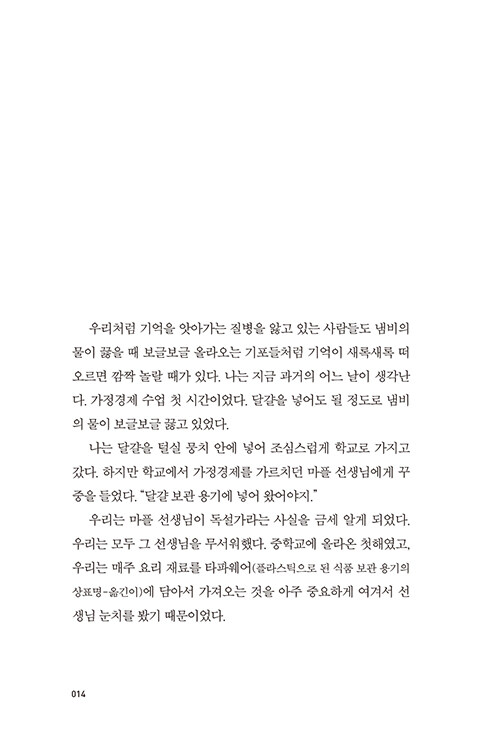
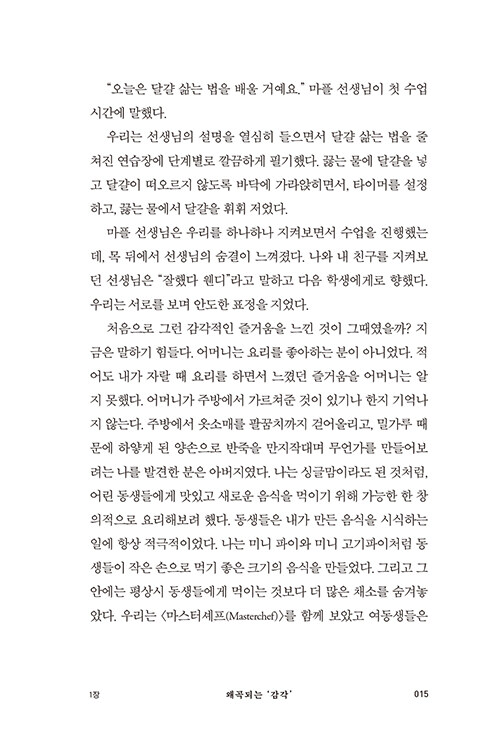
재미있는 표현도 적지 않게 만날 수 있습니다. “우리처럼 기억을 앗아가는 질병을 앓고 있는 사람들도 냄비의 물이 끓을 때 보글보글 올라오는 기포들처럼 기억이 새록새록 떠오르면 깜짝 놀랄 때가 있다.(14쪽)”


하지만 말기 치매 환자가 어떤 생각을 하고 있는지는 아직도 미지의 영역입니다. 웬디는 다양한 주제로 치매를 연구하는 학자들과 협업을 해왔다고 합니다. 가능할지는 여전히 알 수 없겠습니다만, 다음 책에서는 치매가 더 진행된 환자는 어떤 생각을 하고 무엇을 도와주면 좋을지에 대하여 이야기를 해 줄 수 있으면 좋겠습니다.
- 접기
처음처럼 2023-01-01 공감(3) 댓글(0)
Thanks to
공감


치매의 거의 모든 기록


치매 관련된 책은 보통 당사자가 아닌 가족이나 타인에 의해 이야기된다. 이 책이 기존에 있던 평범한 책들과 다른 점은 치매환자 당사자가 들려주는 치매 이야기라는 것이다. 어떻게 치매 당사자가 자신의 이야기를 끌어 책으로 만들 수 있었을까? 저자 웬디 미첼은 20년 동안 영국국민의료보험(NHS)에서 비임상팀 팀장으로 일하던 중 58세에 조치 발병 치매 진단받았다. 당시 저자는 사회나 병원 모두 치매에 대해 아는 것이 별로 없다는 사실에 충격을 받고 치매 진단 전후로 '삶이 있다'라는 사실을 알리기 위해 이 책을 펼쳤다고 한다.


<치매의 거의 모든 기록>에서는 치매 진단을 받았던 저자 당사자의 경험을 토대로, 점점 왜곡되는 감각과 새롭게 정리되는 주변 사람들과의 관계, 의사소통 문제, 치매를 이겨내기 위한 운동이나 친화적인 환경, 치매환자의 감정, 치매 당사자를 포함한 주변 사람들의 태도에 대해 이야기한다. 이 책이 저자의 두 번째 책인 만큼, 치매를 겪는 당사자의 감정 상태나 주변 사람들과의 관계에 대해 집중했고 치매 이후의 삶에 대한 희망적인 메시지를 전하고 있다.


비교적 젊은 나이에 치매초기진단을 받고, 치매에 대한 사회적 시스템이 부족하다는 것을 인지한 저자가 자신의 경험을 공유한다는 것 자체가 대단하다고 느꼈다. 자신이 치매라는 진단을 받았을 저자의 마음이 어땠을지 상상도 가지 않지만 책 속에서는 치매 이후의 삶에 대한 실용적이고 희망적인 메시지를 담고 있어 다행이라는 생각이 들었다. 보통 치매 진단을 받았다고 하면 더 이상의 회복이 불가능하고 원래의 나 자신으로 돌아오는 것은 어렵다고 생각하는데, 저자의 글을 통해 치매 이후의 삶도 존재할 수 있다는 것을 알게 되었다.


모든 사람이 치매로부터 자유롭지 않다. 치매를 앓고 있는 가정에서 읽어보면 좋을 것 같다. 특히 치매초기증상을 가진 환자나 가족이 읽으면 치매를 겪는 당사자의 감정과 주변 사람들의 대처는 어떻게 하는 것이 좋은지, 치매 이후의 삶은 어떻게 변하는지 희망적이고 실용적인 가이드를 주지 않을까 싶어 추천하고 싶다.


- 이 서평은 출판사로부터 도서를 제공받아 주관적인 견해에 의해 작성하였습니다. -
- 접기
유니솔 2022-10-10 공감(3) 댓글(0)
Thanks to
공감


치매의 거의 모든 기록


치매라는 제목을 보고도 읽고 싶은 감정을 느낀건 내 나이도 중년이 지나 치매라는 무서운 병명을 얻을까봐

사전에 치매에 대해 자세히 알고 싶어서 읽어보게 되었다.

아울러, 나의 치매 뿐 아니라 연로하신 부모님 (아버지는 뇌졸중으로 쓰러지셔 치매 확률이 더 높다는 통계를 본 터라)도 겪지 않으면 좋겠지만 미래에 대한 확신이 없기에 혹여 치매가 걸린 부모님을 어떤식으로 케어하고 돌봐야할지 고민을 해본적이 있었다.


치매의 거의 모든 기록의 저자는 치매 환자다.

2014년, 58세라는 이른 나이에 조기 치매를 진단받고, 그렇게 인생의 끝을 느낀 시점에서 다시 새로운 삶을 시작했다. 자신의 모든 것을 기록한 것이다.


초기 치매는 아직도 국가에서 지원이 제대로 되지 않고, 치매가 시작되는 시점부터 다른 가족들도 삶이 피폐해진다. 내가 꿈꿨던 노후 준비를 할수 없을 뿐더러 , 애기가 된 상대방을 케어하고 이해하기란 일반적으로 생각해도 두렵기까지 하다.

나 역시 치매가 걸린다면 무조건적으로 치매 환자를 돌봐야 한다고 생각했었는데 저자는 누구라도 설령 치매 환자가 되어도 지나치게 당황하지 않아도 된다는 것이 저자의 조언이다.

그리고 ‘치매가 있어도 좋은 삶’을 나름대로 행복하게 누릴 수 있다는 것이다.

식사 방법 / 음식 / 음식의 선택 / 요양원 식사 / 간병 / 간병이 관계에 미치는 영향 / 딸로서 간병하기 / 혼자 생활하기 감정을 느낄 수 있는 능력 / 슬픔 / 두려움 / 불안 / 분노 / 죄책감 / 행복 등


이 책은 치매 진단 이후 다른 사람들이 받는 부담감을 덜어내고 행복하게 지내는 법에 대해 긍정적으로 힘을 실어주고 있다.

나에게도 언젠가는 이런 일을 겪을 수 있기에 두고두고 소장하면서 봐야겠단 생각이 들었다.


**출판사에 제공받고 주관적으로 작성한 후기입니다**

- 접기
엽락 2022-10-16 공감(3) 댓글(0)
Thanks to
공감


치매의 거의 모든 기록

최근 어쩐지 치매에 관한 책을 좀 많이 읽은 것 같다. 막연한 말년에 대한 불안 때문인가? 하지만 치매에 대한 책이 고통받는 모습을 주로 그리다 보니 너무 무섭다, 걸리기 싫다, 하는 느낌이 강했는데 이 책은 특이하게도 치매에 걸린 환자 본인이 직접 쓴 책이라 다른 사람이 관찰하고 보살핀 시점이 아닌 본인의 미각, 후각, 청각이 하나하나 왜곡되고 과거와 달라지는 느낌,그럼에도 불구하고 새롭게 도전하고 살아가는 생활을 생생하게 쓴다. 경험담이 생생하고 구체적이면서도 '아, 치매에 걸려도 이렇게 살아갈 수 있으면 좋겠다'라는 발상의 전환을 맛볼 수 있다.
- 접기
diy 2023-07-06 공감(3) 댓글(0)
Thanks to
공감


치매 환자가 직접 들려주는 실용적인 지침서


치매에 막연한 두려움을 느끼는 사람, 치매를 앓는 사람, 치매 환자를 돌보는 사람을 위한 책 <치매의 거의 모든 기록>. 치매가 있어도 좋은 삶은 가능하다는 것을 일깨웁니다.2014년 58세에 조기 발병 치매 진단받은 저자는 20년간 영국국민의료보험에서 일했지만 사회나 병원 모두 치매에 대해 아는 것이 별로 없다는 사실에 충격을 받고 치매활동가로 살게 됩니다. 저자가 치매 환자를 대표하진 않지만, 간병인 없이 독립적인 생활을 유지하며 8년여를 살아가고 있는 치매와 함께 사는 삶에 대한 솔직한 기록을 담았습니다.


나이프 대신 숟가락, 찻잔은 머그잔으로 바꾸어야 하는 생활. 치매 진단 이후 그의 일상은 많은 변화를 겪습니다. 하얀 접시에 색이 흐릿한 음식을 주면 치매 환자는 접시에 음식이 있다는 것을 알아채지 못할지도 모른다고 합니다. 맛이 생각나지 않습니다. 양손이 더 이상 협력하지 않기 때문에 고기를 자르는 일도 힘들어집니다. 고기를 씹을 때 얼마나 오래 씹었는지 얼마나 더 씹어야 하는지 기억나지 않습니다.


뜨거운 음식도 인지하지 못해 입안에 알게 모르게 화상 자국이 많다고 합니다. 이런 것들을 알지 못하면 그저 치매 환자는 까다로운 사람이라 판단해버리고, 문제의 근본 원인을 해결하지 못한 채 서로 힘들어집니다. 패턴 있는 카펫은 방향 감각을 상실해 넘어지지 않으려 바닥을 보느라 시간을 낭비합니다. 매끈한 대리석 바닥은 수영장처럼 보인다고 합니다. 검은색 매트는 싱크홀처럼 느껴집니다. 카펫과 벽의 색이 같으면 걸어 다니는 게 불가능해집니다.


이런 감각 왜곡에 대한 것을 아는 사람이 얼마나 있을까요. 저도 이 책을 읽고서야 치매의 증상이 현실에서 어떤 식으로 작용하는지 비로소 알게 되었습니다. 기억을 앗아가는 정도로만 알고 있던 치매는 이렇게 일상의 모든 것을 혼란스럽게 만듭니다. 오감에 대한 왜곡이 심해집니다. 우리는 뇌 안에서 복잡한 질병이 생기고서야 비로소 일상의 잡다한 일들이 실제로 얼마나 복잡한 것인지 알게 됩니다.


인지 기능, 감각 경험, 운동 기능에 영향을 미치는 치매를 진단받은 저자는 부끄러워하기보다 대처 방법을 찾아 나섰습니다. 펜을 불 위에 올리는 요리보다 데워먹는 간편식 위주로 음식을 먹고, 모든 생활에서 알람은 필수로 설정합니다. 그렇지 않으면 식사 시간을 알지 못하고, 얼마나 걸었는지 알지 못합니다.


감각에 대해 환각을 보이는 증상이 나타나면 저자는 30분 테스트를 하기도 합니다. 자리를 떠났다가 30분 후에도 그대로면 환각이 아니라는 (이런 경우는 없었다고 합니다) 거라는걸요. 환자가 무슨 냄새가 난다고 하면 그 순간 그에게는 정말 그 냄새가 존재한다는 걸 이해해야 한다고 합니다. 그래야 치매 환자와 간병인 간의 관계 맺음이 원활해집니다.


문제는 이런 왜곡 감각에 대해 전문가들은 아무도 경고해 주지 않았다고 합니다. 감각의 변화는 질병 자체가 아니라 환자 개개인의 문제이기에 치매와 감각 변화의 관계를 연구하는 게 아직 부족한 현실이라고 합니다. 하지만 저자는 해결책을 결국 다 마련합니다. 치매 의사도 도움을 주지 못했던 청각 과민증을 겪을 땐 특정 범위의 소음을 차단하는 보청기를 마련했습니다. 훨씬 나은 삶을 유지할 수 있도록 노력합니다. 치매 환자와 친환경적인 공간으로 구성하느라 눈에 잘 띄는 노란색 테이프를 붙이기도 합니다.


저자는 두 딸을 키운 싱글맘으로 가족 간병인과의 관계에 대해서도 고민을 많이 했습니다. 아무런 준비 없이 새로운 역할을 맡게 되는 가족 간병인. 환자마다 기능 감퇴 속도가 달라 예측 불가능한 진행성 질병을 안고 새로운 미래를 헤쳐나가야 하는 치매 환자와 간병 문제에서 치매 환자들에 대한 사후 관리의 부재를 몸소 경험합니다. 공공 부분이 맡아야 할 일을 자발적 조직에 의존하게 하는 실상을 짚어줍니다.


그럼에도 각자의 삶을 영위하길 바랐고, 어떤 방식으로든 항상 엄마이고 싶었다는 저자의 솔직한 마음은 쓸모 있음에 대한 존재의 이야기이기도 합니다. 그렇기에 혼자 생활하면서 마주하는 일상생활의 어려움을 해결할 방법을 계속 찾아 나선 겁니다. 그리고 이 결심이 오히려 매일 치매를 이겨내게 하는 원동력이 됩니다. 환자의 회복력을 키우고 앞으로도 인생을 살아가야 한다는 점을 일깨우는 <치매의 거의 모든 기록>. 실제로 그럴 수 있게 해주는 지원의 중요성을 강조합니다. 치매 친환경적인 지역 사회처럼 말입니다.


치매 활동가로 사는 그를 섣불리 판단하며 비판하기도 하는 이들도 있습니다. 그는 그 행사장에 방금 등장했다 싶지만, 실제로는 몇 주 전부터 경로를 짜고, 가는 길에 지나갈 수 있는 랜드마크 이미지를 인쇄하는 등 준비하는 데만 무척 큰 에너지를 소모하고 있습니다. 처음엔 이 책이 치매 환자가 쓴 기록이라는 말을 들었을 때도 어떻게 그럴 수 있을까라는 의문이 들었던 게 사실입니다. 그만큼 치매에 대한 이해가 부족했던 겁니다.


여러분은 치매 환자를 떠올릴 때 어떤 이미지인가요. 치매를 보는 인식은 대부분 노망, 정신 착란, 짐, 산송장 같은 이미지 아니던가요. 육신만 남은 겉껍데기라는 이미지로 사회적 낙인을 찍는 치매입니다. 그렇기에 치매 친환경적인 사회를 만든다는 건 이들의 목소리를 들어야 하는 겁니다. 치매의 전통적인 경로를 따르지 않는 경우, 전문가들조차 진단 자체에 의문을 제기할 정도로 치매 환자에 대해 모른다고 짚어줍니다.


치매 병원조차 건물이 엉망입니다. 옅은 색 배경에 은색으로 박힌 표지판처럼 애초에 디자인 단계부터 치매 환자들이 참여한다면 훨씬 더 나은 환경을 만들 수 있음을 알려줍니다. 중증 치매 환자들이 이용하는 치매 마을의 부자연스러움에 대해서도 들려줍니다. 저자는 소셜미디어 활동도 하고, 줌 모임도 가집니다. 어린이용 사이트처럼 직관적인 사이트면 인터넷 활동도 가능합니다. 공공 좌석, 화장실 시설, 떨어진 연석, 건물 경사로, 적절한 도로 표시, 보행자 횡단보도 신호 시간 등 노인 친화적으로 만드는 실질적인 사항들을 들려줍니다. 네덜란드에는 230여 개 이상의 치매 카페가 있습니다. 대만은 치매 친화적 상점들이 있습니다. 중국은 GPS 추적 장치가 내장된 노란 팔찌 프로젝트를 시행합니다. 노르웨이의 전통 농장을 개방한 그린 케어 모델의 유용성도 알려줍니다.


"치매 진단을 받은 이후에도 내 감정은 여전히 존재하고, 다양한 방식으로 나타난다는 것을 나는 안다. " - 책 속에서


저자 이외에도 치매 진단 2년 차, 8년 차... 진단 이후에도 여전히 생활할 수 있다는 것을 보여줄 수 있는 사람들의 사례를 통해 치매의 부정적 선입관을 깨뜨리게 해주는 <치매의 거의 모든 기록>. 미화하지도 않고 병의 진행 추이에 따른 감정들을 진실하게 기록하며 변화한 세상을 받아들이는 여정을 보여줍니다.


유독 상태가 나쁜 날도 있습니다. 진행성 질병에서 벗어날 길은 없습니다. 진단받기 전의 나와는 다릅니다. 치매는 분명 사람을 황폐화시킵니다. 하지만 최후를 재촉할 필요는 없다는 것도 압니다. 미래는 아직 오지 않았고 아주 멀리 있을 수도 있습니다. 스카이다이빙을 하느라 담당 의사의 서명을 받아낸 저자는 멋지게 스카이다이빙을 해냈습니다. 남이 보면 엉뚱해 보일지 몰라도 언제나 지금 여기에 집중할 수 있게 해주는 치매를 활용할 줄 아는, 오늘을 살아가는 저자입니다.


치매 같은 질병에 관해서는 태도가 싸움의 절반을 결정한다고 합니다. 주변 사람들로부터 영향도 크게 받는다고 합니다. 그리고 이런 태도의 변화는 치매 환자에 대한 더 깊은 이해로부터 시작될 겁니다.
- 접기
인디캣 2022-10-04 공감(2) 댓글(0)
Thanks to
공감


치매의 거의 모든 기록


치매 환자가 들려주는 치매 이야기


문예춘추사에서 출판한 웬디 미첼, 아나 와튼의 <치매의 거의 모든 기록>은 치매 환자인 저자가 자신의 상태를 기록으로 남긴 것이다. 우리가 치매에 관해 다루는 수많은 매체는 치매에 걸리는 환자를 둘러싼 그의 가족의 서사에 주목한다. 가족이 무너져 내리고 절망하는 순간을 포착하며 치매라는 질병의 무서움을 인식하는 게 일반적이다.


문득 치매 환자는 본인은 어떠한 심리와 감정의 변화를 거치게 되는지 궁금했다. 치매 환자 스스로 남긴 기록이 이 책이 눈에 들어온 건 나의 친척 이야기도 한몫한다. 젊은 시절 일에 몰두하고 가족을 부양한 친척 한 분이 경증 치매를 시작으로 이제는 중증 치매로 이어져 딸을 알아보지 못하는 상황에 부닥치게 되었다.

부모를 간병하는 딸이 이에 견디지 못하고 뇌출혈까지 앓고 있어 치매 환자는 어떤 인지 과정을 거쳐 기억을 잃는지 너무도 궁금하던 차였다.


저자는 감각이 왜곡되어 가는 과정을 담담하게 서술한다. 치매가 진행하면 환자는 자신의 서재에 꽂혀있는 인생을 담고 있는 책장에서 앞선 시간의 선반을 선택하는 것이라 한다. 최근의 기억은 빨리 사라지고 인상적이었던 과거 경험이 그를 지배하는 것이다. 미디어에 등장한 치매에 걸린 노인이 자신이 발레리나 시절 익혔던 몸동작을 보여주고, 치매 연주자가 자신이 연주한 곡을 기억하는 모습은 울컥하고 감명 깊은 장면이었다.


치매라는 질병이 어려운 이유 중 하나는 간병에 있다. 의사소통이 제대로 이루어지지 않은 상태에서 오랜 시간 환자를 돌보는 상황은 서로에게 불편을 초래한다. 환자는 자신이 기억하는 특정한 시간대에 기억이 머물고 있어 간병인은 대화를 통해 기억을 유지하는 것이 관건이다. 다행히 치매를 조기에 발견에 증상을 늦추는 약도 개발되고 있지만, 여전히 치매 환자를 누가 간병할지는 중요한 사항이다.

환자의 치매를 확인한 순간, 그는 새로운 인생을 살아야 한다고 인식해야 한다. 치매 환자를 효과적으로 치료하고 대하려는 방안이 등장하고 있어 환자 가족에 희망이 되고 있다.

네덜란드의 호그백 치매 마을은 엄청난 찬사를 받으며, 전 세계적으로 갑자기 나타난 수많은 치매 마을에 영감을 주었다. 대한민국에도 호그백 마을을 모델로 지방자치단체에서 운영하는 치매 마을이 속속 들어서고 있다. 중증 치매 환자를 치료하기 위해 격리는 선택하는 것은 조심해야 한다. 격리는 환자의 ‘정상적’으로 보이는 생활을 차단할 수 있다.


저자와 같이 인지능력이 뛰어난 치매 환자의 관점에서 바라보는 호그백 마을에서 시행하는 조치가 어떻게 받아들여지는지도 흥미롭다. 저자는 인위적으로 조작되고 부자연스러운 환경을 좋아하지 않는다. 그렇게 생각하는 환자가 있을 거로 생각하지 못했던 터라 환자 처지에서 치매 마을이 다르게 느껴질 수 있다는 생각이 들었다.


치매는 서서히 진행하는 질환이다. 고령 인구의 증가로 치매 환자를 접하게 되는 사례는 점점 증가할 것이다. 그들을 대하는 가장 좋은 방법은 꾸준한 대화와 관심이다. 환자도 의식이 있을 때는 우리와 같은 일반인과 같은 방식으로 인식하고 자신의 감정을 고스란히 느낀다.


치매 환자가 저술하는 <치매의 거의 모든 기록>은 그동안 잘 알지 못했던 치매 환자의 인지 과정과 치료에 관한 힌트를 얻을 수 있어 도움이 되었다.


- 이 글은 출판사에서 도서를 지원받아 주관적으로 작성하였습니다.


#치매의거의모든기록, #문예춘추사, #웬디미첼, #아나와튼, #조진경, #치매, #건강일반, #에세이, #의학, #알츠하이머, #건강, #컬처블룸, #컬처블룸서평단
- 접기
kimtaeho2000 2022-10-15 공감(1) 댓글(0)
Thanks to
공감


치매의 거의 모든 기록


노화로 인한 치매는 피하기 어려워요 환자도 가족도 두려워 하는 치매를 가능한 중증이 되지않고 편안히 지내는 방법을 기대했습니다


아무리 뛰어난 업적을 가진 사람이라도 세상의 부를 차지한 사람이라도 권력의 정점에 선 사람마저도 치매를 앓게되면 그 사람의 존재 자체를 상실하기 시작해요. 치매 환자들은 자신에게 뭔가 잘못된 일이 생기고 있다는 걸 자각할 때도 있고 그로 인해 두려움이 생깁니다. 아직까지 치매는 진행을 어느 정도 늦출 수 있을 뿐이고 완벽한 치료법은 없으니까요.


치매 환자는 사람과 접촉하지 못하게 되면 접촉을 몹시 그리워한다고 해요. 호주에서 이뤄진 연구에 따르면 장기적으로 치매 환자에게 매일 10분 발 마사지를 하면 행동의 변화가 일어난다는 것이 밝혀졌다고 합니다. 공격성, 배회, 반복된 질문을 포함하는 초조 행동이 크게 감소되었다는 것이죠. p.55


치매로 인해 이전에는 자연스럽게 하던 행동이 불가능해지는 경우가 많아요. 말하는 능력을 상실한 사람이 대신 타이프와 그림으로 자신을 표현하기도 하고 어떤 사람은 말은 못해도 노래는 잘 부르기도 했어요.


알츠하이머에 걸린 프리마 발레리나가 음악을 듣던 중 몸이 저절로 움직였고 피아니스트이자 작곡가로 활동한 폴 하비는 단 4개의 음표만으로 아름다운 음악을 작곡하여 사람들에게 감동을 준 이야기도 있어요. p.102


치매에 걸린 가족을 집에서 함께 생활하게 하고 싶은 가족들은 환자가 안전하게 지내게 하기 위해 거의 감금하는 경우도 있습니다. 차라리 요양원에서 야외 활동을 하며 꽃과 자연을 즐길 수 있다면 오히려 환자의 건강 유지에 도움이 되고 가족들의 스트레스도 낮출 수 있다고 해요. p.170


이 책의 저자는 치매 진단을 받고 8년 동안 치매 환자로 살아가며 자신이 겪은 일을 더해 치매에 대한 기록을 남기고 있어 더욱 위로가 되네요. 치매는 암이나 고혈압과 마찬가지로 질병입이고 치매에 걸렸다고 해서 세상이 끝나는 것도 아니고 모든 것을 중단할 필요도 없어요. 필요하다면 약물을 복용하고 전문가와 시설의 도움을 받으며 자신과 가족이 가능한 오래 편안한 생활을 하도록 하는 게 중요하는 생각을 갖게 합니다.


* 이 리뷰는 네이버 이북카페를 통해 출판사 서평단에 선정되어 도서를 제공받아 작성되었습니다
- 접기
무파스 2022-10-14 공감(1) 댓글(0)
Thanks to
공감


[서평] 치매의 거의 모든 기록

[서평] 치매의 모든 기록

갱년기로 건강에 변화가 생기면서 몸도 마음도 이상 신호를 보내 왔다. 자신감 있던 기억력은 어디로 사라지고 시간을 계획해서 쓰는 것은 힘들어지고 글씨도 날라가는 글자체에 속도도 빠르지 않고 머리카락은 계절에 민감하게 빠지고 피부는 축축 탄력을 잃어가고... 나이가 드는 것이 무서워지기 시작했다.
어느날인가... 전날 주차해놓은 차의 위치가 기억나지 않아서 주차장을 두리번거리다가 갑자기 겁이 덜컥났다. 건망증인가? 조기치매인건 아닌가?
몸도 맘도 우울해지기 시작했다. 무기력해지는 나를 바라보며 독서를 하고 글을 쓰기 시작했다.
그래도 가끔씩 걱정되는 것은... 혹시 하는 기억력 감퇴...

이책은 영국국민의료보험에서 비임상팀 팀장으로 일하던 중 2014년 7월, 58세에 조기 발병 치매를 진단 받고 이후로 사회나 병원 모두 치매에 대한 아는 것이 별로 없다는 사실에 충격을 받고 치매에 대한 인식을 높이고 진단 후의 삶을 알리는 일을헌신적으로 하고 있는 웬디 미첼의 책이다. 공저로 아나 와튼이 함께 했다. 현재 알츠하이머 병협회의 홍보대사이며 2019년에 브래드포드대학교에서 건강학 명예박사학위를 받았다. 건국대학교를 졸업하고 다양한 분야의 책들을 우리말로 옮겨온 에이전시 엔터스코리아의 조진경 번역가가 옮겼다. 도서출판 문예춘추사에서 출판하였다.

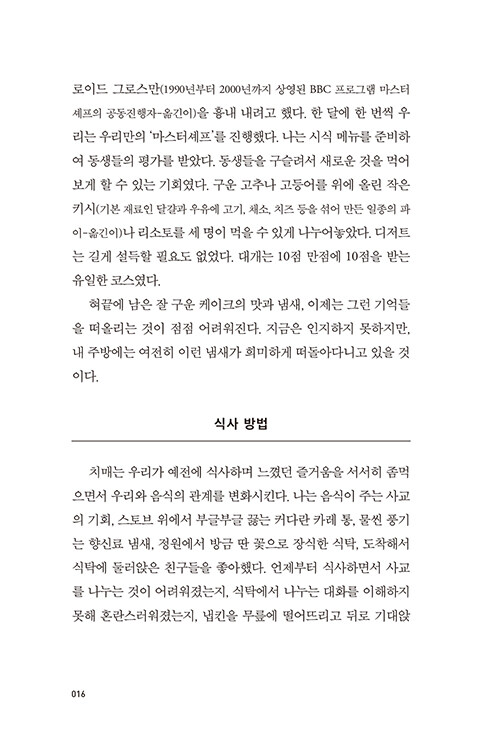
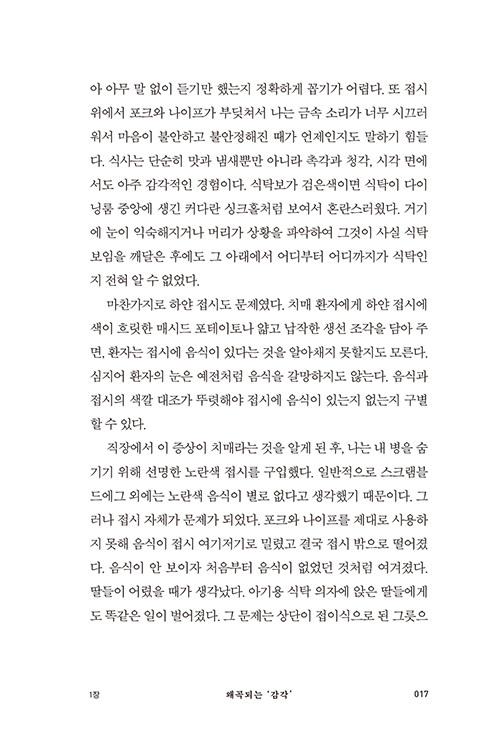
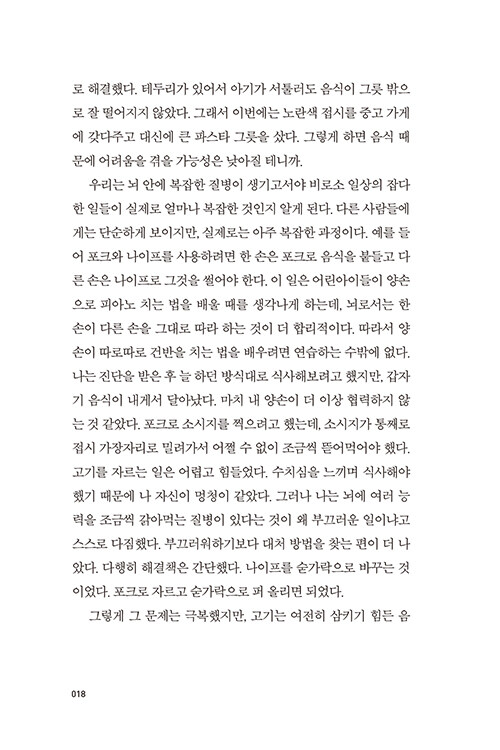
치매는 접시 위의 음식을 정확히 포크로 찍기 힘들었고 그것은 어린 유아들이 처음 포크를 배울 때의 어려움처럼 느껴졌다. 그 이유는 뇌 안에 복잡한 질병으로 인하여 일상의 잡다한 일들이 실제로 복잡하게 다가오는데 그런 것들이 미숙해진다는 것이다. 양손의 협응력이 떨어지는 것...
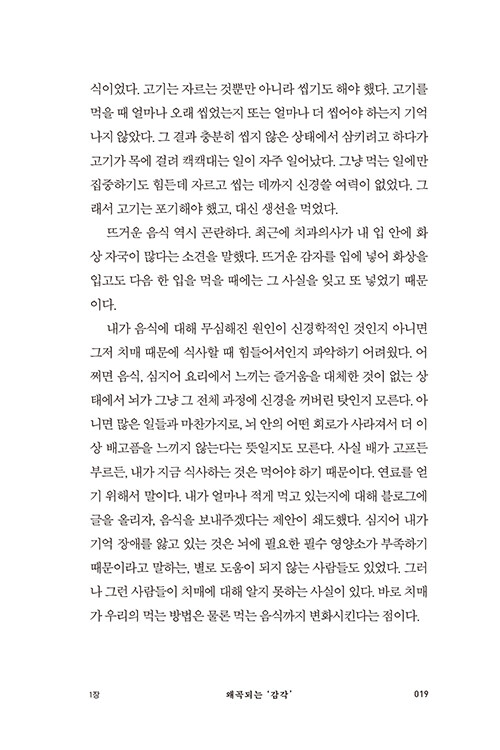
고기를 먹을 때에도 얼마나 오래 씹었는지 또는 얼마나 더 씹어야 하는지가 기억이 나지 않아서 어떤 때에는 고기를 덜 씹어서 삼키려다가 목에 걸려 캑캑거리는 일도 종종 일어난다는 것이다. 뜨거운 음식을 먹을 때에도 그 음식이 뜨거웠다는 것을 기억하지 못하고 또 다시 뜨거운 음식을 먹어서 입에 화상을 반복적으로 얻게 된다는 것이다.
저자는 배가 고프든 부르든을 느끼지 못하고 그저 지금 식사하는 것은 연료를 얻는 것처럼 먹어야 하기 때문이라는 것이다. 그리고 치매는 먹는 방법은 물론 먹는 음식까지 변화 시켰다. 저자는 자신에게 일어나는 일이나 주변 치매를 앓고 있는 사람의 이야기를 묵묵히 담아주었고 현실적으로 그들에게 무엇이 필요한지 어떻게 다가가야할지를 알려주었다. 잘 알지 못했기에 저자의 글은 가슴 아프게 다가왔다. 그러나 저자는 치매의 모든 영역을 다루고 알려주며 치매에 대하여 알려주고자 노력한다. 저자는 치매 진단을 받고 낙담하고 자기의심을 하기 보다는 절대 스스로를 스스로 포기해서는 안 된다는 강한 메세지를 전한다. 포기는 다른 사람들이 대신 해줄 거라며...

제목처럼 치매에 대한 거의 모든 것을 알 수 있는 책으로 알츠하이머와 함께 사는 것이 어떤지에 대한 저자의 기록을 통해서 치매를 더 제대로 이해할 수 있는 친절하고 따뜻한 실용서이다.

이 리뷰는 책을 제공받아 직접 읽고 작성했음에 지극히 주관적일 수 있음을 알려드립니다.
- 접기
오리 2022-10-14 공감(1) 댓글(0)
Thanks to
공감


치매의 거의 모든 것 - 웬디 미첼,아나 와튼 지음

치매의 거의 모든 것


치매 환자가 들려주는 치매 이야기


​치매에 대한 솔직한 토로, 따듯한 위로


사람들이 치매에 대해 알았으면 하는 것들


대표사진 삭제

사진 설명을 입력하세요.


치매는 멀고도 가까운 이야기이다.


지금은 주위에 치매에 걸린 사람은 없지만


할머니가 치매에 걸리셨었고 할머니를 케어하기 힘들었다고 들었다.


하지만 그 아프신 와중에서도 내 이름은 잊지 않으셨고 내가 잘 못하는것도 언젠간 잘 할수 있을거야라고 응원을 주셨던 마지막 기억이 남는다.


물리적 거리가 멀어서 함께한 시간이 적었고 치매에 걸리신 이후로는 더욱더 기억이 별로 없는 것이 아쉬워진다.


이 책의 작가인 웬디 미첼은 경증의 치매 환자다. (최소한 내가 생각하는 환자에 비해 독립적인 생활을 하고 있다.)


치매환자가 되었을 때의 감각들, 관계의 변화, 시선들 , 공유 등을 내용을 담고 있다.


치매는 나의 미래일 수도 있고, 누군가의 가까운 미래일 수 있다.


이 책을 읽으면서 기존의 감각들이 어떻게 변화하고, 치매 환자를 어떻게 대했으면 하는지에 대해서 알 수 있었다.


#후각


내가 좋아하는 냄새를 기억하고 치매로 인한 기억을 복귀 할수 있다는 것


여행지에 갈 때 좋아하는 향수. 그곳을 기억하고자 할때 향수를 들고가라고 해서 상하이에 갔을 때 향수를 가지고 호텔 여기저기에 뿌린 기억이 있다. 나의 상하이는 이런 느낌.....이야 라고 그렇지만 엘베에서 담배피는 중년 남자로 인한 기억으로 어떤 향수를 썼는지 기억도 안난다.


#청각


환청이 들린다.. 이건 중증일수도 있겠지안 작가의 경우 원인을 찾다가 우리로 따지면 이비인후과로 가서 검사를 하고 보청기를 했더니 환청으로 인한 걱정은 덜한다고 했다.


보청기는 듣기 싫은 주파수?도 막아주는 것 같다.


작가에게는 참 다행이라는 생각이 들었다.


#시각


읽고 있다가 울컥했다.


다른것은 작가의 개인적인 신체 변화였지만. 시각은 좀 다르다.


실체가 아닌 것을 알고 있지만, 보내기 싫은 그 마음이. 너무 슬펐다.


집에서 정원에서 돌아가신 아버지와 마주한 것.


말을걸면 사라질것을 알고 지켜보기만 했다고.


꿈에서나 보던 아빠를 만나게 되면 나도 작가처럼 행동할 것 같았다.


#새로 도전하게 될 관계


치매 혹은 다른 병을 걸리더라도 환자가 되면 새로운 관계가 시작된다.


가족관계에서 간병인과 환자로 혹은 타인이 간병인으로 24시간 같이 함께 하게 된다.


최근에 엄마가 크게 다쳐서 몇 개월간 간병인의 삶을 살았다.


책을 읽으면서도 나는 간병인으로서의 도움을 줬을까?에 대한 생각이다.


돌봄이 필요한 환자(부모님)에게 정상적인 영향을 줬을지. 책을 읽으면서도 한번 생각하게 되었다.


책에서 작가와 두 딸들의 관계는 간병인과 환자가 아닌 기존 그대로의 가족관계를 유지했고, 작가는 지속적으로 독립을 유지하고싶어하고 그렇게 지내고 있는 듯하다.


경증이라서 돌봄이 아직 필요 없는 단계여서 그럴 수도 있다.


여기저기에서 치매임을 밝히지 않아하고싶어하고 또 혼자 독립을 지키고 싶어 한다.


나도 빨리 해 라고 하면 마음이 복잡하고 할 수있는것도 제대로 못하게 된다.


작가의 경우에도 이혼을 하고 두 딸들을 독립 시키고 혼자 살고 있는데 같이 함께 하는 동반자가 있는 삶도 부러워했지만 치매와 함께 하고 있을 때 닥달 하는 사람이 없어서 빨리 빨리를 외치는 사람이 없어서 혼자만의 시간을 잘 보내고 있다고 한다.


이건 치매뿐만 아니라 다른 환자에게도 적용이 되는 부분이라 이해가 쉽게 느껴진다.


재활중인 어머니에게도 빨리빨리를 외치지않고, 혼자 하는 방법 독립적인 것을 익히게 하면 앞 뒤로 혼자 걷는게 아닌 발걸음을 나란히 할 수 있지 않을 까 싶다.


#실비아 (작가의 지인)


진짜 자매는 아니었지만 자매처럼 함께 세월을 보낸 작가의 절친이야기다.


처음 만났을때부터 그리고 마지막까지


그녀는 치매에 걸렸고 실비아는 암에 걸렸다.


그들의 이야기를 읽었을때 나에게도 친 자매는 아니지만


자매같은 사람들이 있으면 좋겠다고 생각했는데


신은 그렇게 호락호락 하지 않은 것 같다.


암에 걸린 실비아. 그녀는 세상을 떠났다.


작가는 실비아의 죽음을 듣고 슬퍼했지만/ 눈물을 많이 흘리지 않았다고 한다.


친구와 실비아의 이야기를 할때도 그 우울감이 오래 가지 않고 주제 전환 하듯 기분도 다시 밝아지고.


내가 원한건 이런건 아닌데 뇌가 나를 가지고 노는 느낌이 드는 부분이라


읽으면서도 눈물이 났다.


"나"이지만 "내가"아닌 감각. 그게 오묘하고 참 슬프다.


사람의 뇌는 그냥 나이 먹으면 끝인데 왜 이렇게 슬프게 끝이 변할 까. 라는 생각이 드는 책이었다.


나는 최근 건망증이 조금씩 보이고 있다.


핸드폰을 열고 무언가 찾으려 하다가 내가 뭐하고 있지?


물건을 찾으러 부엌에 내가 여기 왜 왔더라?


물론 이내 기억하고 하려고 했던 행동을 마무리 한다.


​친구들이랑 이야기 하다보면 친구들도 조금씩 그런 현상을 보인다고 해서 안심(?)하고 있지만.


책에 나왔던것처럼 "내 기억에 사라지는" 그 무언가들을 놓치기가 싫다.


특히 무언가를 모으고 저장하는 습관을 가진 나에게 치매는 너무나 무서운 병이다 ㅠㅠ


치매 환자가 직접 쓴 책으로 치매를 가지고 있는 사람에 대해 다가가는 방법등을 알 수 있는 있는 책이다. .


꼭 치매가 아니더라도 간병을 하고 있는 사람 또는 가족관계, 나이를 먹어가는 것에 대한 인생이야기를 배울 수 있다.


* 네이버 '디지털감성e카페' 카페 이벤트를 통해 출판사로부터 책을 무상으로 제공받아 읽고 쓴 서평입니다.

===
<치매의 거의 모든 기록>, - 웬디 미첼, 문예춘추사
- 오늘 서대문도서관에서 읽으며 와닿았던 부분 발췌함 -
1장. 왜곡되는 감각 : 치매 말기가 되면 환자는 다른 시간대로 퇴행한다고 한다. 마음이 인생의 이야기가 담긴 커다란 책장에서 앞선 시간의 선반을 선택하는 것이다.
나는 더 이상 현재의 꿈을 꾸지 않고 과거의 꿈만 꾼다. 마치 내 꿈이 내 뇌보다 먼저 회귀하여, 나중에 치매 말기가 되었을때 내가 몰입할 수 있는 현실의 창을 열어놓은 것 같다. 어쩌면 꿈이 나를 그곳으로 돌려보내는 까닦은 그때가 내 인생에서 행복했던 시기이기 때문일 것이다. 꿈에서 내 딸들은 항상 어리다. 대개는 세 살에서 여섯 살 즈음이다. •••
내 정신이 혼미할때 누군가가 내 손을 잡아주는 느낌이 들면, 내가 혼란스럽거나 방향감각이 없거나 낯선 사람들 사이에서 길을 잃거나 어떻게 할 수 없을 때 누군가가 나를 이끌어준다면 큰 위안이 될 수 있다.
그 손은 누군가가 옆에 있으며, 천천히 해도 된다고, 괜찮다고 알려줌으로써 우리를 위로해 줄 수 있다. 안개가 낀 듯하고 정신이 또렷하지 않을 때, 우리를 잡아주는 손은 우리의 주의를 끌고, 우리를 상냥하게 현재로 이끌어주며, 격정을 진정시키는 방법이다. 그 접촉은 "내가 여기 있어"라는 뜻이다. 여러 말이 필요 없다.
----
2장.새로 도전하게 될 관계 :

간병 : 치매 진단이 환자 한 사람에게만 영향을 준다고 생각해서는 안된다. 그렇다. 치매는 환자의 뇌 속에서 존재하는지 모르지만, 그 진단은 환자 한 사람의 생활이 아니라 그 주변에 있는 모든 사람의 생활을 바꿀 것이다. 하물며 조기 발병 치매 환자는 사회적 지원도 받을수 없다는 것이 아이러니한 일이다. 남편과 아내, 자녀가 '간병인'이라는 새로운 역할을 아무 준비나 계획, 경고도 없이 인생을 바꾸는 부담까지 떠안게 된다. 몇 년 동안 나는 노년 계획을 망쳐버린 남편의 치매를 원망하는 아내와, 엄마를 정말 보살피고 싶지만 충분하지 못한 지원체제를 알아보느라 너무 지쳐서 자기 건강까지 잃은 딸까지, 이런 사례들을 많이 접했다.
---
간병이 관계에 미치는 영향 : "같은 질문을 반복하는 아내에게 화가 나서 이렇게 말하기도 했어요. '아, 그만 말해. 백번도 더 말했잖아'. 그래도 아내는 이해도 못하고, 자기가 말하는 걸 어쩌지 못해요. 그런데도 나는 말합니다. '그만 말해'. 놀라실 겁니다. 지금도 아주 많은 일들에 죄책감을 느낍니다. 다르게 할 수도 있었는데, 다르게 처리할 수도 있었는데 하고 말이예요.
사람들이 치매 진단을 받은 후 관계를 잘 유지시키는 가장 좋은 방법을 물어오면, 나는 대화를 계속하는 것뿐이라고 말해준다.
혼자 생활하면, 왜 기억이 안나냐고 물어보는 사람도 없다. 기억을 못한다고 끊임없이 알려줘봤자 나에게는 실패의 신호일 뿐이다. 기억해요? 기억해야 해요. 이런 말은 끊임없이 나를 더 비참하게 만든다. 이제는 사람들이 그렇게 말해도 나는 대답하지 않는다. 그냥 계속하게 둔다. 그것이 더 쉽다. 또 내가 틀린 단어나 날짜, 이름을 말해도 지적하는 사람이 없다. 치매 환자들끼리 나누는 대화를 살짝 들어보면 서로 내용을 잡아주는 일이 거의 없다. 대신 이야기를 그냥 받아들인다.
---
관계에 대한 욕구 : 나는 특히 고독한 날에는 마을 사람들과 마주치기를 바라며 산책하러 나가고는 한다. 고독할 때 나가서 누군가가 던지는 가벼운 인사나 미소라도 보는 것이 얼마나 놀라운 효과를 발휘하는지 모른다.
2019년 보고서에서는 슬프게도 친목관계의 상실이 치매 진단후 많은 환자가 겪는 문제로 보인다. 그 원인을 치매가 의미하는 바에 대한 사회적 인식의 부족, 치매라는 병의 용인 부족, 치매 환자에 대한 동정심의 부족이라는 세 가지로 요약했다.
4장. 치매 친화적인 환경 : 현재 나는 운 좋게도 주변 자연이 아름다운 마을에 살고 있다. 나는 치매 진단을 받고 일이 년 후, 도시는 소음과 위험 요소가 너무 많아서 도시에서 시골로 이사했다.지금 살고 있는 이 집은 거실에 커다란 창이 있어서 길 건너의 방목장이 내려다보여 마음에 들었다.
걷기는 분명 나에게 목적을 주며, 목적이 있으면 나의 뇌는 계속 돌아간다. 나는 이렇다할 목적없이 걷지 않는다. 항상 주의를 둘러보며 볼 수 있는 것을 보려고 한다 . 걸으며 탐색하는 것은 사회적 접촉이기도 하다. 그 모든것이 뇌를 계속 활동하게 만든다.
자연과의 관계를 유지함으로써 원기가 회복되는게 느껴졌고 참가자들은 집 근처에서 일상적인 움직임 중에 꽃을 볼때의 즐거움이나 동물을 발견했을때의 흥분을 함께 나누었다.
치매 진단을 받은 후 새로운 환경을 선택할때는 옥외 공간과 교통의 접근성, 창문에서 보이는 맞은편 풍경 등을 고려해야 한다.
다른 연구들은 이동이 제한된 노인과 치매 환자가 창문을 통해 밖에 있는 사람들의 미소를 받으면서 창문이 비공식적인 상호작용과 소속감의 원천임을 발견했다. 집안에만 있는 사람들은 밖에서 노는 어린아이들을 보거나 목소리를 듣는 것만으로도 희망과 유대감을 느꼈다.
창문으로 밖을 내다볼수 있도록 생활공간을 정비하는 것은 집을 개조하는 중요한 방법이 될 수 있다. 창밖을 내다보며 지나가는 동물들을 보고, 사람들에게 손을 흔들고 그들도 나에게 손을 흔들어주는 것을 보면 즐겁다.
5장. 지금 '이 순간'에 몰두하는 감정
우리는 자기 집에서 쫒겨나 요양원에 들어가는 것을 두려워한다. 벼랑 끝으로 떨어지는 것이 두렵다. 자아 상실을 걱정하는 것은 지극히 인간적인 것이다.
서구 문화에서는 인지 능력과 자율성, 내적 통제가 상징적 자아의 중심 특징이다. 독립성과 정체성, 통제력의 상실, 따라서 치매는 인간으로서의 개인의 정체성에 대한 개념을 위협하는 것으로 보인다.
헹복: 내가 익숙해진 또 다른 죄책감이 있는데, 바로 행복에 대한 죄책감이다. 이상하게 들리지만, 나는 가끔씩 치매 덕분에 다른 사람들이 받는 부담감을 털어내고, 사람들이 여전히 필사적으로 돌리고 있는 다람쥐 쳇바퀴에서 벗어나게 되어 순간적으로 만족감을 느낀다.
우리는 나이가 들면서 한가지 일에 집중하는 버릇을 버린다. 대신에 다른 것들을 바라며 우리 앞에 놓인 현재를 망쳐버린다. 내가 가진 것이 아니라 내게 없는 것에 집중한다. 무엇보다도 치매가 가르쳐준 것은 우리 모두 '지금 여기, 지금 당장'으로 돌아와야 한다는 것이다

- 접기
여름아 2022-10-12 공감(1) 댓글(0)


===


Popular Highlights in this book
What are popular highlights?
Previous page

When people think of dementia, they immediately associate it with memory. Few people realise, for example, just how it changes our relationships with our senses, our emotions, our communication.
Highlighted by 57 Kindle readers

You will never realise until you have a complex disease inside your brain how complicated some of the everyday chores we take for granted really are.
Highlighted by 57 Kindle readers

When people ask me how best to navigate relationships after a dementia diagnosis, I have only one answer: keep talking.
Highlighted by 36 Kindle readers
Next page


From the Publisher


The Sunday Times Bestseller: From Someone Who Knows


Product description

Review
An engaging and hopeful read. Mitchell's signature warmth and optimism shine through on almost every page ― Irish Times

This is a book whose purpose is to convert despair into hope . . . A kind of how-to manual for people with the condition and those who support them. It proceeds by a practical and calming formula: take a difficulty and find a way to overcome it. Running under all the commonsense pieces of advice is a deeper and more existential message, one for all of us, young and old, in health or frailty: be kind, be attentive, be resilient, bend with change rather than be broken by it, connect, forgive, accept, embrace. Live. ― Nicci Gerard, Observer

Essential reading for those living with dementia, those who support them, professionals working in the field and any 'curious individual' . . . Her message for those given a dementia diagnosis is to never give up on themselves ― Sunday Times Magazine

A compelling blend of how-to manual and manifesto for a more sympathetic and informed approach to the disease.Even those whose own lives have yet to be touched by Alzheimer's and other forms of the condition . . . will surely respond to this uplifting depiction of the survival of the human spirit in the most testing of circumstances ― Financial Times

A must-read . . . It offers readers a practical and really honest guide to life after a diagnosis of dementia . . . For anyone who's beginning this journey, I couldn't recommend it higher' -- Michael Ball, BBC Radio 2

Revelatory . . . There are many books about dementia that focus on its biology, its clinical subtypes, its social dimension, its effect on carers and loved ones. But there are few memoirs written by the people with dementia themselves. Mitchell's joins a burgeoning literature of medical memoirs that, like the finest travel writing or reportage, transport the reader to another world that they may or may not visit one day ― The Times

Currently 50 million people worldwide live with dementia; it is estimated this will increase to 152 million by 2050. So we'd better all buy this godsend of a book . . . Wendy Mitchell is a life-saver' -- Frances Wilson ― The Oldie


An inspirational follow-up which shows that not all is lost when people lose their memories― Mail on Sunday

Full of wisdom, honesty and warmth . . . It taught me so much about what it's like to live with dementia and what it means to be part of a community . . . An absolutely essential read -- Jan Carson

Using her impressive range of contacts, [Mitchell] augments her own experience with stories of other patients to paint a comprehensive picture of this unforgiving illness ― Tablet
Book Description
Dispelling the myths and stereotypes of living with dementia, Sunday Times bestselling author of Somebody I Used to Know Wendy Mitchell offers a warm, wise and thoroughly practical guide to life after a life-changing diagnosis - from someone who knows.
Read more

Product details
Publisher ‏ : ‎ Bloomsbury
Publication date ‏ : ‎ 29 March 2022
Language ‏ : ‎ English
Print length ‏ : ‎ 240 pages

Best Sellers Rank: 995,312 in Books (See Top 100 in Books)17 in Dementia
39 in Grandparenting (Books)
349 in Diseases & Physical Ailments
Customer Reviews:
4.6 4.6 out of 5 stars (963)


About the author
Follow authors to get new release updates, plus improved recommendations.

Follow

Wendy Mitchell


Wendy Mitchell spent twenty years as a non-clinical team leader in the NHS before being diagnosed with Young Onset Dementia in July 2014 at the age of fifty-eight. Shocked by the lack of awareness about the disease, both in the community and in hospitals, she vowed to spend her time raising awareness about dementia and encouraging others to see there is life after a diagnosis. She is now an ambassador for the Alzheimer's Society. She has two daughters and lives in Yorkshire.

Customer reviews
4.6 out of 5 stars


Top reviews from other countries
Translate all reviews to English


Gary M. Buyachek

5.0 out of 5 stars Important bookReviewed in the United States on 30 December 2023
Format: PaperbackVerified Purchase

This book is written by someone diagnosed with dementia. She brings up a lot a great points on how she is treated by other people as well as the doctors. The author is giving first hand information on what she is going through what she hopes for. I have dealt with people with dementia, even within my own family. The book opened my eyes on what they go through and what is slowly happening with them. It helped me to understand how they would like to be treated and respected, this is something we all need when we deal with other people. I would recommend this book to everyone.

Report


J. Drew

5.0 out of 5 stars This book has helped me understand loved ones with dementiaReviewed in the United Kingdom on 19 May 2025
Format: KindleVerified Purchase

- Wendy Mitchell has written a wonderful book to help guide anyone who either has or is experiencing a loved one with dementia in how and what it's all about and where to go for help. Often, we think of dementia as a disease of memory but it so much more than that as I'm realising with having lived with a loved one now who has early dementia. Dementia is also about changes in perception, our senses and taste, and hallucinations as well as many other factors. What’s great about this book is she explore these things that you might take for granted and not be aware of.
- Very early on in the book, the author describes the process of eating. When you put food in the mouth, you might have forgotten you've got it in the mouth and then you don't know how long you've chewed it and then you forgotten how to swallow it and then you swallow it and start choking or aspirating on the food. There is also the fact that you can't even see the food on the table. It's all white, so for example, one of the things that the Wendy Mitchell did as she started eating fish rather than meat was because it just took too long to chew and swallow meat and knowing where it was in the mouth and how long she masticated it for. I wondered if similar things happened to children with autism and other sensory issues.
- The book is such a compassionate and humane look at how we should be treating and managing dementia from someone who is on that journey herself. It can help us to explain and understand and by using empathy, to create a much better model for supporting these elderly and younger people who might have a disease where their brain is being slowly taken away from them. They are still individuals who have rights. By understanding the sensory preferences and the fact that dementia can impact on everyone and by being aware of the language that we should use to make this and more dignified way of managing the problem that is dementia.
- The book looks at how we should focus not just on what the person can't do, which is so much of what happens in dementia, but on what they are able to do and achieve and to then work on those strengths. we have to recognise that dementia is a neurological condition which strips the brain of many of its abilities to function, but people can still lead healthy and happy and creative lives, we just need to tap into that and recognise the language that we use can be harmful.
- One of the words Wendy does like to use if the word ‘the journey’ that people are on as they travel this new land. Although memories might seem significantly impaired, it's important to know that many people with dementia still have full emotional lives and will feel things, they just may struggle to explain and understand what's going on, but they still feel emotions and it's important to respect these emotions and to try and support them in so many different ways.
- There are many different types of dementia and it's important to understand that all of these will impact on the brain and how we behave in very many ways but it's also important that we should understand and try to be empathetic and realise these people also feel similar emotions, but they will be slightly changed in how they respond to things. One of the things in the book is that when Mitchell talks about a friend who dies. She felt the grief, but also the fact that she can respond in a different way even though the response will change.
- I love the analogy of looking at your brain as a series of motorways and interlocking roads in which thoughts and memories travel by, but with dementia and the brain being damaged, means that some of those roads are closed and there are some roadwork’s on going which means that sometimes your thoughts will get there through diverted means and sometimes never arrive at all..
- I love the analogy about the child who looks at a seashell that they picked up of the shore and how they become so focused in it that nothing else disrupt their focus, and yet as we get older, we become more obsessed with thinking about something else and becoming distracted. Dementia can be a similar kind of nature where we still become more interested in single things and being oblivious to everything else but that's not necessarily a bad thing.
- There's a lot of negativity around it the diagnosis of dementia but it's important to see it more as a journey and to praise people and tell them how well they are doing, for example living alone and being independent and managing their day and to see that they're now on a different journey and yes, life is full of uncertainty about what will happen to us in the same true of people with the diagnosis or what they can do and the journey that they're on which will be a little bit different to the one that they had perceived, they might been on otherwise.
- Finally, the thing to acknowledge it about how you don't give up on yourself because everyone else will do that, but you can achieve more than you might think. A lovely book that I would recommend to anyone suffering from dementia or wants to understand a loved one or friend who has dementia.

Read more
Report


Kindle Customer

2.0 out of 5 stars Condition of the bookReviewed in Singapore on 23 January 2024
Format: PaperbackVerified Purchase

I have nothing negative on the content of the book. It was brilliant, but its the condition of the book where I saw yellow specs on some pages. Hence I was wondering if the book has been in storage for a while & not well maintained. Thanks!


Report


Dairy Girl

5.0 out of 5 stars What Every Aging Person Needs to ReadReviewed in Canada on 21 August 2024
Format: PaperbackVerified Purchase

Health professionals, care aides, owners of care homes and baby boomers - pick up a copy of this honest and extremely helpful book written by an intelligent woman who Is living with this disease. You will be amazed at what you will learn.

Report


barbara leitao

5.0 out of 5 stars DemênciaReviewed in Brazil on 9 January 2024
Format: PaperbackVerified Purchase

Livro excelente. Deve ser lido por todos e principalmente aqueles que tem idosos na família

Report
Translate review to English
See more reviews

From Australia

Lesleyw
5.0 out of 5 stars Excellent
Reviewed in Australia on 26 September 2022
Verified Purchase
As I am carer for my husband this gave me an insight into how he may be feeling and allows me to adjust my behaviour
Helpful
Report
From other countries

Gary M. Buyachek
5.0 out of 5 stars Important book
Reviewed in the United States on 30 December 2023
Format: PaperbackVerified Purchase
This book is written by someone diagnosed with dementia. She brings up a lot a great points on how she is treated by other people as well as the doctors. The author is giving first hand information on what she is going through what she hopes for. I have dealt with people with dementia, even within my own family. The book opened my eyes on what they go through and what is slowly happening with them. It helped me to understand how they would like to be treated and respected, this is something we all need when we deal with other people. I would recommend this book to everyone.
2 people found this helpful
Report

J. Drew
5.0 out of 5 stars This book has helped me understand loved ones with dementia
Reviewed in the United Kingdom on 19 May 2025
Format: KindleVerified Purchase
- Wendy Mitchell has written a wonderful book to help guide anyone who either has or is experiencing a loved one with dementia in how and what it's all about and where to go for help. Often, we think of dementia as a disease of memory but it so much more than that as I'm realising with having lived with a loved one now who has early dementia. Dementia is also about changes in perception, our senses and taste, and hallucinations as well as many other factors. What’s great about this book is she explore these things that you might take for granted and not be aware of.
- Very early on in the book, the author describes the process of eating. When you put food in the mouth, you might have forgotten you've got it in the mouth and then you don't know how long you've chewed it and then you forgotten how to swallow it and then you swallow it and start choking or aspirating on the food. There is also the fact that you can't even see the food on the table. It's all white, so for example, one of the things that the Wendy Mitchell did as she started eating fish rather than meat was because it just took too long to chew and swallow meat and knowing where it was in the mouth and how long she masticated it for. I wondered if similar things happened to children with autism and other sensory issues.
- The book is such a compassionate and humane look at how we should be treating and managing dementia from someone who is on that journey herself. It can help us to explain and understand and by using empathy, to create a much better model for supporting these elderly and younger people who might have a disease where their brain is being slowly taken away from them. They are still individuals who have rights. By understanding the sensory preferences and the fact that dementia can impact on everyone and by being aware of the language that we should use to make this and more dignified way of managing the problem that is dementia.
- The book looks at how we should focus not just on what the person can't do, which is so much of what happens in dementia, but on what they are able to do and achieve and to then work on those strengths. we have to recognise that dementia is a neurological condition which strips the brain of many of its abilities to function, but people can still lead healthy and happy and creative lives, we just need to tap into that and recognise the language that we use can be harmful.
- One of the words Wendy does like to use if the word ‘the journey’ that people are on as they travel this new land. Although memories might seem significantly impaired, it's important to know that many people with dementia still have full emotional lives and will feel things, they just may struggle to explain and understand what's going on, but they still feel emotions and it's important to respect these emotions and to try and support them in so many different ways.
- There are many different types of dementia and it's important to understand that all of these will impact on the brain and how we behave in very many ways but it's also important that we should understand and try to be empathetic and realise these people also feel similar emotions, but they will be slightly changed in how they respond to things. One of the things in the book is that when Mitchell talks about a friend who dies. She felt the grief, but also the fact that she can respond in a different way even though the response will change.
- I love the analogy of looking at your brain as a series of motorways and interlocking roads in which thoughts and memories travel by, but with dementia and the brain being damaged, means that some of those roads are closed and there are some roadwork’s on going which means that sometimes your thoughts will get there through diverted means and sometimes never arrive at all..
- I love the analogy about the child who looks at a seashell that they picked up of the shore and how they become so focused in it that nothing else disrupt their focus, and yet as we get older, we become more obsessed with thinking about something else and becoming distracted. Dementia can be a similar kind of nature where we still become more interested in single things and being oblivious to everything else but that's not necessarily a bad thing.
- There's a lot of negativity around it the diagnosis of dementia but it's important to see it more as a journey and to praise people and tell them how well they are doing, for example living alone and being independent and managing their day and to see that they're now on a different journey and yes, life is full of uncertainty about what will happen to us in the same true of people with the diagnosis or what they can do and the journey that they're on which will be a little bit different to the one that they had perceived, they might been on otherwise.
- Finally, the thing to acknowledge it about how you don't give up on yourself because everyone else will do that, but you can achieve more than you might think. A lovely book that I would recommend to anyone suffering from dementia or wants to understand a loved one or friend who has dementia.
3 people found this helpful
Report

Kindle Customer
2.0 out of 5 stars Condition of the book
Reviewed in Singapore on 23 January 2024
Format: PaperbackVerified Purchase
I have nothing negative on the content of the book. It was brilliant, but its the condition of the book where I saw yellow specs on some pages. Hence I was wondering if the book has been in storage for a while & not well maintained. Thanks!
Customer image
Customer image
Customer image
Report

Dairy Girl
5.0 out of 5 stars What Every Aging Person Needs to Read
Reviewed in Canada on 21 August 2024
Format: PaperbackVerified Purchase
Health professionals, care aides, owners of care homes and baby boomers - pick up a copy of this honest and extremely helpful book written by an intelligent woman who Is living with this disease. You will be amazed at what you will learn.
Report

barbara leitao
5.0 out of 5 stars Demência
Reviewed in Brazil on 9 January 2024
Format: PaperbackVerified Purchase
Livro excelente. Deve ser lido por todos e principalmente aqueles que tem idosos na família
Report
Translate review to English

THERESA FEIJ
5.0 out of 5 stars book on alzheimers
Reviewed in Belgium on 10 February 2025
Format: PaperbackVerified Purchase
I still have to read it ... am sure its very good !
Report

CHRISTINA
5.0 out of 5 stars Excellent
Reviewed in Italy on 18 June 2024
Format: HardcoverVerified Purchase
Excellent
Report

Edvardas
3.0 out of 5 stars A well-written story of dementia.
Reviewed in Germany on 15 March 2025
Format: HardcoverVerified Purchase
One persons view of dementia. It affects people in different ways. Worth reading.
Report

Lesley Bazley
5.0 out of 5 stars Uplifting view of living with dementia
Reviewed in the United Kingdom on 28 January 2024
Format: KindleVerified Purchase
I really enjoyed this book and the insight of how it is living with dementia and the impact of other people's perception on people who have been diagnosed. I now know that how you behave with someone who has dementia can make it a hard disease to live with or a positive experience. It was also interesting how Wendy described how environments can make a difference especially using black on floors can make it look like a huge frightening hole in the floor. Well done Wendy for so eloquently explaining what it's like to live with dementia. Anyone newly diagnosed or caring for someone living with dementia should read this book. I'd highly recommend this as a good read for anyone.
11 people found this helpful
Report
==
PMc
5.0 out of 5 stars Powerful
Reviewed in the United States on 15 January 2024
Format: PaperbackVerified Purchase
An amazing book that really opened my eyes to the world of a dementia patient undergoing a transformative change. The author brings about hope throughout the pages.
Report

LR
4.0 out of 5 stars Great reading
Reviewed in the United Kingdom on 5 May 2022
Format: HardcoverVerified Purchase
Getting through this book but very informative for me.
One person found this helpful
Report

Steve Martin
4.0 out of 5 stars I recommend this book!
Reviewed in the United States on 9 March 2023
Format: PaperbackVerified Purchase
Not a text book so don't expect solutions or a cure, but useful information from a woman who's dealt with dementia for years. It did explain a lot to me about the early behaviors as our relatives developed dementia.
One person found this helpful
Report

A. Pedersen
5.0 out of 5 stars Everybody needs to buy this book and read it now!
Reviewed in the United Kingdom on 27 May 2023
Format: PaperbackVerified Purchase
The statistics say 1 person in every 3 born in 2023 will develop some form of dementia.
Sadly I have early onset. I know a lot about dementia because I nursed both my parents through it and went on to have a career in Caring specialising in dementias.
This book was interesting to read, informative and well presented. It certainly gives you all the information you need whether you’re a dementia sufferer or a caregiver for somebody with dementia.
Everybody should read this!
22 people found this helpful
Report

suzanne collier
5.0 out of 5 stars Helpful
Reviewed in the United States on 9 March 2024
Format: PaperbackVerified Purchase
My parent is going through dementia. This really helped me understand the process. Thank you.
Report

Sarah Sanderson
5.0 out of 5 stars Enlightening!!
Reviewed in the United Kingdom on 12 March 2023
Format: PaperbackVerified Purchase
I am half way through this book, but I have already learned so much. I bought the book as I feel I am at a crossroads with my Dad who has vascular dementia. Wendy writes about so many aspects of dementia that I feel I am sharing her journey. She shares her story from so many angles of dementia and includes so many research facts as well as personal facts. Her views on caring are revelations to me that I now feel empowered to be a better carer as well as daughter. Thank you Wendy for sharing such an intimate journey
5 people found this helpful
Report

Alexandra Carey
5.0 out of 5 stars Vital reading
Reviewed in the United Kingdom on 12 July 2024
Format: KindleVerified Purchase
I believe this is a book that everyone over 50 should read. It explains why so many of the stereotypical views of dementia are misconceived. But most importantly it shows why a greater understanding of dementia is needed throughout society.
5 people found this helpful
Report

mrs g j mcgougan
5.0 out of 5 stars Dementia
Reviewed in the United Kingdom on 27 November 2024
Format: PaperbackVerified Purchase
This book is amazing
Very Highly recommend if you want to know more about an individual who is going through the stages of Dementia.
One person found this helpful
Report

AC of Norwich
3.0 out of 5 stars Thought provoking
Reviewed in the United Kingdom on 12 July 2023
Format: PaperbackVerified Purchase
If you are interested in dementia information, you need to know the book is about Wendy Mitchell's experience of young-onset dementia, aged 58. The book is NOT about mainstream old-age dementia, where sufferers (yes, Wendy, I still say sufferers) have many age related ailments in addition to dementia. Old-age dementia has little meaningful comparison to Wendy's articulate, fit and mobile, young-onset scenario. However, the book is thought-provoking and well written and for some people well worth a read. There are omissions - for example, nothing about sexual emotions, domestic animals, and finance.
27 people found this helpful
Report

Imogen
5.0 out of 5 stars you need to read this right now!
Reviewed in the United Kingdom on 9 August 2024
Format: PaperbackVerified Purchase
Everyone needs to read Wendys books. I have all 3. So insightful and educational. Even if your life is not touched by dementia..........yet.........you will learn so much, and see the world in a different way.

What an incredibly brave woman.

I wish I knew this too before my mother in law was really lost to us because of this cruel disease. I am better placed now to help sufferers and their families with this nasty disease.
2 people found this helpful
Report

==
From other countries

Steve E.
5.0 out of 5 stars as expected
Reviewed in the United Kingdom on 9 January 2025
Format: PaperbackVerified Purchase
The item was as described
Report

Richriauk
5.0 out of 5 stars Informative read
Reviewed in the United Kingdom on 22 August 2023
Format: PaperbackVerified Purchase
I bought this book to educate myself as my Dad has been diagnosed with dementia - it was a well rounded and thoughtful book written from the view and experience of a persona who has first hand experience of what it is like to be given a dementia diagnosis- I’ve passed it on for my Mother to read - not sure she will she’s in denial
5 people found this helpful
Report

C C Barrett
5.0 out of 5 stars Excellent and important read
Reviewed in the United Kingdom on 25 May 2023
Format: PaperbackVerified Purchase
Wendy Mitchell is an inspiration. Having worked in the NHS for many years, she was diagnosed with young onset dementia at 59. She describes her life and how she is still able to live independently several years in. I have seen an interview with Wendy and she is a happy and caring woman. Really an inspiration for anyone who has anyone in their life with this disease.
3 people found this helpful
Report

Bookworm
5.0 out of 5 stars Understanding Alzheimer’s
Reviewed in the United Kingdom on 7 March 2023
Format: KindleVerified Purchase
I read this book because I want to understand how my elderly relative feels now she’s got a diagnosis of Altzheimers and how it is affecting her day to day living.
It’s an amazing book, full of lots of great ideas to help cope with the disease. I now understand why my elderly relative sees, hears, tastes food etc. and now that I understand better I can help better.
5 people found this helpful
Report

Amazon Customer
5.0 out of 5 stars Good book
Reviewed in the United Kingdom on 16 July 2024
Format: HardcoverVerified Purchase
I heard the author interviewed on the radio, and subsequently bought the book. Contains good and helpful insight into dementia.
One person found this helpful
Report

The old rocker
4.0 out of 5 stars Helpful.
Reviewed in the United Kingdom on 13 March 2023
Format: HardcoverVerified Purchase
Bought for the wife as her father has been diagnosed with dementia and we need to know what's in store for us all.
Anyone who's going through such an ordeal should read a book like this.
3 people found this helpful
Report

Mrs Jennifer L Hope
5.0 out of 5 stars Dementia in perspective
Reviewed in the United Kingdom on 10 February 2024
Format: KindleVerified Purchase
Thank you for writing this book - so enlightening as a daughter/carer. I thought I was doing well but I understand so much more now and hopefully I’ll be a much better daughter/carer, certainly try not to take over/disable my lovely mum.
6 people found this helpful
Report

AWS
5.0 out of 5 stars Essential reading
Reviewed in the United Kingdom on 25 February 2023
Format: KindleVerified Purchase
A brilliant book from ‘someone who knows’ - Wendy Mitchell’s insights have made me understand so much more about my husband’s vascular dementia and she can’t be thanked enough.
In my opinion this book is a ‘must’ for all the professionals and for all the carers out there.
Don’t just take my word for it…please read it for yourself.
3 people found this helpful
Report

Margaret Thompson
5.0 out of 5 stars A very helpful read
Reviewed in the United Kingdom on 20 July 2022
Format: KindleVerified Purchase
Alzheimer's will probably touch everyone's life in some way or other. I found this a really helpful guide. I didn't read every word. At times it felt like a text book but indeed most useful. We need to remember that it,s a diagnosis not a prison sentence. And give everyone the chance to continue to live their own life as they want to.. To help to find pathways and not to.impose solutions.
5 people found this helpful
Report

Amazon Customer
5.0 out of 5 stars Thank you Wendy ❤️
Reviewed in the United Kingdom on 7 March 2023
Format: HardcoverVerified Purchase
I have only just started reading this book and already it has really opened my eyes to living life with dementia. It has highlighted mistakes I have made albeit with good intentions. .I am taking notes as I go, this is undoubtedly going to help me help my lovely mum. Thank you Wendy ❤️
5 people found this helpful
Report

==

==
reviews
Profile Image for Petra X.
Petra X
2,456 reviews
35.7k followers

Follow
July 10, 2023
Review The most interesting thing I learned from this book is that Alzheimer's may badly affect a person's ability to do many practical things - the author found a knife and fork impossible, and that how they seem to other people, for example the author's poor speech, might be of a person quite far along the road of dementia, it isn't like a water level where everything deteriorates at the same rate.

The author's ability to write at a professional level was not affected in any way, she could type out her thoughts perfectly and wrote two books, this the second. She could travel around the country, taking pictures everywhere so she could see visually where she was, where she should be and where she had to return to and then give a speech. She couldn't speak off the cuff, but could read what she had typed out. Hence her miraculous-seeming ability to write this book and read it for the audio edition which I had.

Therefore it is important not to treat the person with dementia as though all of them was affected (although it might be). There is much in this book that gives advice and tips on how to be with, treat and make allowances for those with a brain degenerative disease. She discusses not just the practical, but also respect for the afflicted, mood, philosophy and the adjustment all connected to the person will have to make, themselves included. Even when they seem to be in denial.

I have to say I didn't enjoy this book as much as Wendy Mitchell's first, Somebody I Used to Know. This one is somewhat repetitive. For enjoyment I would give it 3.5 stars but because of what I learned, and because I am amazed that she was able to write both books since her diagnosis of Alzheimers, it is a 5 star.
I wish Wendy Mitchell many years of health, and look forward to her third book.
__________

Notes on Reading The author has early onset (60s) dementia. It has robbed her of a lot of her ability to do things - she can't speak with fluency, can't eat with a knife and fork, can't remember what she's put in the microwave, can't remember she put anything in at all. But her ability to type has not been affected at all, the tangles and plaques have not reached that part of her brain, so she communicates as well as she ever did.

The book is quite enlightening, I had never thought of how the senses might be affected, noises, hallucinations of smell, all kind of things. So it is interesting, but repetitive and although not in any way 'poor me' it is very much 'see things our way' and although that is the purpose of the book, it is hammered in continually.

My aunty wrote to me yesterday. She is 84. My uncle's sight has almost gone and although he is more or less ok in the day - although the living room is now his bedroom - at night he is completely possessed by the demons of dementia and has to have a carer rom 10-7. My aunty who has been married for 61 years is so worried about how long she can keep him at home, how long before he will have to go into a home.

Her mother - my grandmother - and her brother (world famous in anaesthetics) both died of or with dementia, my uncle was only in his 60s. And I've just heard one of my godfather's who hasn't been seen in public for many years now, has just died from Alzheimer's. It's like cancer, it's like six degrees, everyone is touched by one or the other or both.
2022-read
 
2022-reviews
 
biography-true-story
 
...more

242 likes

25 comments

Like

Comment


Profile Image for Jo (The Book Geek).
Jo (The Book Geek)
928 reviews

Follow
April 6, 2023
Personally, I don't think we will ever fully understand what an individual with dementia is contending with, and we will always be learning new aspects about the disease. This is the disease that claims many, and it is truly devastating to witness, whether you are a relative to that person, or a health professional. I worked in specialist dementia settings for over ten years, and I don't regret any of it, in fact, it sometimes crosses my mind whether I could have done more.

Dementia is different for every individual, so they must never be put in one basket, like a one-size-fits-all approach, because that isn't how it works. I have met some wonderful people over those years, the youngest person being just aged 41 at diagnosis. I often wonder how that person is doing now. I also knew a lovely lady that had lost the ability to form words, and in order to coax her down to enjoy breakfast, I had to walk her down whilst singing her favourite song and dancing, because music is all she really remembered.

Wendy Mitchell is an inspiration, especially to educate others whilst living with dementia herself. I love the way she separated the chapters to speak of everyday things like smells, taste, touch, things that we sometimes take for granted. There is a really interesting section on moods which I could resonate with, as with experience, I worked with many individuals that often had low moods, that sometimes turned extremely aggressive.

I enjoyed hearing things from Mitchell's perspective, and how people changed towards her once she had a diagnosis. It's funny how some people back off the moment a person says 'Dementia'. I give praise to Wendy Mitchell for writing this fascinating book about a disease that most of us don't know enough about.
inspirational
 
non-fiction
 
women-authors

29 likes

Like

Comment

Profile Image for Tomasz.
Tomasz
671 reviews
1,033 followers

Follow
February 26, 2023
Autorka odwołując się do doświadczeń własnych oraz znajomych jej ludzi rozwiewa mity dotyczące osób żyjących z demencją. Dużo się z tej książki dowiedziałem, zwłaszcza w kontekście języka włączającego, ale również na temat codziennego funkcjonowania lub sposobu odbierania zmysłów przez takie osoby. Jest tu kilka odwołań do badań i innych źródeł naukowych, jednak podstawą jest perspektywa autorki, wraz z radami i wskazówkami dla rodziny i otoczenia.
2023
 
non-fiction

23 likes

Like

Comment

Profile Image for Jennifer (JC-S).
Jennifer (JC-S)
3,503 reviews
281 followers

Follow
February 5, 2022
‘When you’ve met one person with dementia, you’ve simply met one person with dementia. We’re as different as we all we before dementia.’

A chance conversation led me to Wendy Mitchell’s first book (thanks, Jill) and to Wendy’s blog https://whichmeamitoday.wordpress.com/ . I follow Wendy’s blog partly to read about her work as an advocate for dementia sufferers and partly to enjoy the magnificent photographs she takes on her (almost) daily trundles around the village where she lives in Yorkshire, UK. I find Wendy inspirational and have been eagerly awaiting the publication of this book. Wendy was diagnosed with dementia in 2014.

Why? Because so much of what we read about dementia is written by observers not those living with it. And understanding what dementia might be (there are many different forms) and how it might manifest (not the same for everyone) is not the same as reading about how it impacts on the individuals living with it.

‘I hope this book will at least give people a start.’

The book is divided into six sections: Senses; Relationships; Communication; Environment; Emotion and Attitude. Each of those sections has subdivisions on different aspects. Wendy writes about what works for her including writing things down, setting alarms as reminders, substituting no-tie shoelaces when she was unable to tie her own. Wendy also writes about visual and olfactory hallucinations. As Wendy explains, dementia plays tricks on her brain. One of her tips with visual hallucinations is to take a photograph of what you think you can see ‘and it it’s in the picture, it’s most likely there in real life.’ Another tip is to walk away for thirty minutes and returning to see if what she saw is still there. One of the instances Wendy recounts is of seeing her father on the lawn. He had been dead for twenty years, but the vision returned some fond memories to Wendy.

This is an uplifting and inspiring book. Wendy lives with her dementia (she lives alone) and can find joy in small things, as well as tackling some big adventures. I loved her recounting of her skydiving adventure (which I first read on her blog).

‘Up here, there is no dementia… I am flying, free from all that binds me to the earth.’

Wendy also writes of others she knows who live with dementia, of devices that can help, of finding joy in the present. Dementia may be an irreversible neurological condition, of relentless decline but there can still be enjoyment in life. Wendy is proof of that.

Highly recommended.

Jennifer Cameron-Smith

14 likes

2 comments

Like

Comment

Profile Image for Joana  .
Joana
169 reviews
127 followers

Follow
May 25, 2024
Nunca dou estrelas a memoirs mas este foi excecional.

Wendy Mitchell, aos 58 anos, foi diagnosticada com demência vascular precoce e Alzheimer. Com medo do seu diagnóstico, foi pesquisar e eis que ficou estupefacta com a falta de informação que havia sobre o tema. Por isso, fundou um blog sobre toda a sua experiência desde então, e escreveu 3 livros, sendo este o segundo.

"O que eu quero que todos saibam sobre Demência" não podia ser um título mais transparente: é literalmente toda a experiência de Wendy explicado a todos os que não a têm e a quem foi diagnosticado recentemente. Wendy escreve sobre como as suas emoções mudaram (desde a perda do medo e da raiva à intensa ansiedade continuamente presente), à relação consigo própria, com as filhas, com os sentidos (aprendi TANTO nesta secção, não fazia ideia) e como a sua vida deu a volta depois do seu diagnóstico.

Essencial para quem quer conhecer mais sobre esta doença e não sabe por onde começar a pesquisar, ou para quem conhece alguém que tem demência e gostaria de perceber por que tempestades o outro está a passar.

Wendy é um mulherão. Levou o seu diagnóstico como algo positivo (depois do choque inicial) e conseguiu aceitá-la, transmitindo essa positividade e esperança neste livro, o que eu agradeço mesmo de coração ❤️

Infelizmente, Wendy faleceu em Fevereiro deste ano.
oferecido-pela-editora

11 likes

3 comments

Like

Comment


Profile Image for Julie.
Julie
2,507 reviews
34 followers

Follow
June 5, 2025
Wendy writes of learning the hard way, through first-hand experience of the sensory changes that occur as part of the disease of dementia. She wished someone had made her aware of these potential changes, as foreknowledge would have made the experience less frightening.

The diagnosis of dementia “will not change one life: it will change all of those around us.” It requires aftercare and continuing support. “Dementia adds another dimension to that melting pot of character.” The person is first, the disease second. Dementia changes relationships. Wendy advises: “Keep talking.”

Some of Wendy’s practical suggestions:

“Colour and contrast matter for people with dementia.” An example is signage. Wendy noted that in one hospital, “many signs were in a silver colour pinned to a pale background, which all blends into one for someone with dementia.” A much better choice is “bright blue signs with bold white writing.”

“Swap cups and saucers for mugs; swap plates for bowls with rims that won’t let food escape.” Cups and saucers are fiddly, as you must be able to balance the cup on the saucer without spilling the tea. My favourite plates are the kind used for pasts as their edges are curved to keep pasta from sliding into your lap!

“Offer a choice of no more than two or three things.” Too much choice can be overwhelming and put a roadblock in the way of decision making.

“Keep disturbing noise and clatter to a minimum.” Peace and quiet fosters an environment of calm.

I loved reading about Wendy’s “memory room” where she kept her treasures; it was “a sanctuary where happy memories captured on film fill spaces on every wall.” It was a place where Wendy would go when she needed to “sit and feel calm, surrounded by the people and places that made [her] so happy.”

A true observation - “Retrieving a memory through olfactory stimulus can be more effective than through conversation alone.”

Wendy writes of not being a very tactile person until dementia changed her life. Suddenly, she wanted to hug everyone she met, at least people she instinctively liked. She especially wanted to hug people in gratitude who showed her kindness. “Touch remains more vital to all of us than we are perhaps willing to admit.”

“During my fogs, if I feel someone’s hand reaching for mine, guiding me if I’m confused, disorientated, lost or out of my depth in a new place or among new people, it can be such a relief.”

A gentle touch says, ‘I’m here.’


non-fiction

10 likes

2 comments

Like

Comment

Profile Image for Rebecca.
Rebecca
4,153 reviews
3,427 followers

Follow
January 30, 2022
(3.5) I loved Mitchell’s first book, Somebody I Used to Know. She was diagnosed with early-onset Alzheimer’s at age 58 in 2014. This follow-up, too, was co-written with Anna Wharton (they have each written interesting articles on their collaboration process, here and here). Whereas her previous work was a straightforward memoir, this has more of a teaching focus, going point by point through the major changes dementia causes to the senses, relationships, communication, one’s reaction to one’s environment, emotions, and attitudes.

I kept shaking my head at all these effects that would never have occurred to me. You tend not to think beyond memory. Food is a major issue for Mitchell: she has to set iPad reminders to eat, and chooses the same simple meals every time. Pasta bowls work best for people with dementia as they can get confused trying to push food around a plate. She is extra sensitive to noises and may have visual and olfactory hallucinations. Sometimes she is asked to comment on dementia-friendly building design. For instance, a marble floor in a lobby looks like water and scares her, whereas clear signage and bright colours cheer up a hospital trip.

The text also includes anonymous input from her friends with dementia, and excerpts from recent academic research on what can help. Mitchell and others with Alzheimer’s often feel written off by their doctors – her diagnosis appointment was especially pessimistic – but her position is that the focus should be on what people can still do and adaptations that will improve their everyday lives. Mitchell lives alone in a small Yorkshire village and loves documenting the turning of the seasons through photographs she shares on social media. She notes that it’s important for people to live in the moment and continue finding activities that promote a flow state, a contrast to some days that pass in a brain haze.

This achieves just what it sets out to: give a picture of dementia from the inside. As it’s not a narrative, it’s probably best read in small doses, but there are some great stories along the way, like the epilogue’s account of her skydive to raise money for Young Dementia UK.

Originally published on my blog, Bookish Beck.
2022-release
 
dementia
 
memoirs
 
...more

8 likes

Like

Comment

Profile Image for Cliff M.
Cliff M
298 reviews
23 followers

Follow
April 25, 2023
How could I give a book less than five stars when it is about the lived experience of someone with dementia? To say ‘the book could be better’ would be like saying ‘you could be leading your life better’. Impossible. For someone with dementia to apply themselves with such determination to produce any book let alone this fantastic book, is incredible. Though it is sad that the author, Wendy Mitchell has the condition, it is in having the condition and how she has responded to it that Wendy has produced her life’s work. Wendy’s life has been more than worthwhile because of the way she has helped others understand dementia.

In particular, this book helped me understand how people with dementia FEEL when being patronised, diminished, and ignored by people who should know better (doctors, nurses, medical receptionists, volunteers, family and friends etc). And also how they feel when treated with respect and kindness. Just because someone has become non-verbal doesn’t mean they can’t hear and understand everything you say, both explicit and implicit…

Though it is not the point of the book, I was struck by how an inverse pyramid of arrogance towards those with dementia seems to exist amount those who they meet regularly. By that I mean the pyramid of status we hold in the West with hospital consultants and professors at the top, other healthcare professional in the middle, unqualified people who work in healthcare further down and so on, seems to get inverted when it comes to treating people with dementia in an arrogant and uncaring manner. Reading stories of medical receptionists bringing dementia patients to tears with their arrogance and belittling behaviours contrasts with the caring attitudes of many highly qualified and experienced hospital consultants. Of course, there are arrogant consultants as there are caring receptionists, but too often in these stories of the chronically ill we read about people who are paid to do the admin using their tiny bits of power to make people feel bad about themselves. I wish the behaviour of such individuals was monitored better and there were consequences for them.

Highly recommended.

4 likes

Like

Comment

Profile Image for Judith Johnson.
Judith Johnson
Author 
1 book
98 followers

Follow
June 27, 2022
A friend of ours has recently begun to show signs of dementia, and I saw this book in our local library as part of a selection of books on display for Dementia Awareness Action week. I’ve learnt a lot from reading it and feel I will better be able to understand some of the changes which may affect our friend. Added to this, I am very grateful to Wendy Mitchell, who lives with dementia herself, for amending my preconceptions about the condition - now feel less fearful about the possibility of being there myself one day.

4 likes
======

=======

세진님, Wendy Mitchell의 두 번째 책인 <What I Wish People Knew About Dementia>에 대한 요약과 평론을 요청하셨다. 요청에 따라 세진님과의 대화는 존댓말로, 책의 요약 및 평론은 <해라체>를 사용하여 작성한다.


📚 <What I Wish People Knew About Dementia> 요약 및 평론 (Wendy Mitchell)


📖 책 소개 및 배경

<What I Wish People Knew About Dementia>는 Wendy Mitchell이 첫 번째 회고록인 <Somebody I Used to Know> 이후, 치매 환자로서의 삶과 옹호 활동(advocacy) 경험을 바탕으로 쓴 책이다. 이 책은 치매 진단이 **<삶의 끝>**이 아니라 **<삶의 변화>**임을 선언하며, 치매에 대한 사회의 오해, 편견, 두려움을 정면으로 다룬다. 저자는 자신의 일상적인 경험과 과학적 지식, 그리고 다른 치매 환자들의 이야기를 결합하여 독자들에게 치매를 가진 사람들의 진정한 현실을 알려주고자 한다. 이 책은 치매 환자의 입장에서 사회와 주변 사람들에게 **<무엇을 바라는지>**를 명확히 전달하는 일종의 지침서이자 선언문이다.


📝 주요 내용 요약 (Summary)

1. 오해와 편견에 대한 도전: 치매는 '사라지는 것'이 아니다

Wendy Mitchell은 치매에 대한 가장 큰 오해는 환자가 단순히 기억과 인지 능력을 **<잃는 존재>**로만 여겨지는 것이라고 지적한다. 그녀는 치매를 단순히 **'빈 껍데기가 되어가는 과정'**으로 묘사하는 미디어의 상투적인 표현에 강력히 반대한다.

  • 감정은 남아있다: 기억은 사라지더라도 **<감정, 유머, 기쁨, 슬픔>**은 그대로 남아있다. 환자를 대할 때 기억력만 보고 판단해서는 안 된다.

  • 다른 방식으로 기능한다: 뇌는 손상되지만, 다른 부분들이 그 기능을 대신하려고 애쓴다. 치매 환자는 '고장 난' 것이 아니라 <다르게 작동하는> 것이다.

  • 진단은 시작일 뿐: 치매 진단은 삶의 끝이 아니라, 새로운 도전과 적응의 삶을 시작하는 **<분기점>**이라고 말한다.

2. 소통과 언어의 문제: 환자의 말을 들어라

저자는 사람들이 치매 환자와 소통할 때 저지르는 실수들을 구체적으로 짚어준다. 특히 **<언어의 사용>**이 환자의 존엄성과 자존감에 얼마나 큰 영향을 미치는지 강조한다.

  • 명확한 언어 사용: 모호하거나 은유적인 표현, 긴 문장보다는 명확하고 단순한 언어를 사용해야 한다.

  • 질문 방식 개선: "기억나세요?" 대신 "제가 말씀드리는 것을 이해하셨어요?"처럼 **<현재의 이해도>**를 확인하는 질문을 해야 한다.

  • 느림의 미학: 치매 환자는 정보를 처리하는 데 더 많은 시간이 필요하다. **<대화의 속도>**를 늦추고 충분히 기다려주는 것이 중요하다.

3. 환경의 중요성: 디자인은 인지 장애의 연장선

Wendy는 치매 환자가 일상생활에서 겪는 어려움이 자신의 문제뿐만 아니라 **<환경의 문제>**임을 강조한다. 그녀는 잘못 디자인된 환경이 환자의 인지적 어려움을 더욱 심화시킨다고 주장한다.

  • 대비(Contrast)의 중요성: 계단 모서리, 화장실 변기 시트 등은 주변 환경과 색상 대비가 명확해야 한다.

  • 소음과 과부하: 과도한 소음, 복잡한 패턴 등은 인지적 과부하를 일으켜 환자를 혼란스럽게 하고 불안하게 만든다.

  • 안전하고 예측 가능한 환경: 집과 공공장소 모두 치매 환자가 **<스스로 기능>**할 수 있도록 안전하고 예측 가능한 디자인으로 바뀌어야 한다고 역설한다.

4. 자기 옹호와 독립성 유지

이 책은 치매 환자 스스로가 자신의 삶을 주도적으로 이끌어가야 한다는 메시지를 담는다. Wendy는 진단 후에도 자신의 삶을 포기하지 않고, 여행하고, 글을 쓰고, 강연하며, 치매 활동가로서의 역할을 수행한다.

  • <선택권>의 보장: 환자에게 자신의 삶과 관련된 작은 일이라도 선택할 수 있는 권리를 주어야 한다.

  • <독립성> 지원: 모든 것을 대신해주기보다는, 기술이나 도구를 사용하여 환자가 스스로 할 수 있도록 지원하는 것이 진정한 도움이다.

  • 정보 공유의 중요성: 자신의 상태를 숨기지 않고 주변 사람들에게 알림으로써, 세상이 자신을 이해하고 수용할 수 있도록 **<다리>**를 놓는다.


✒️ 평론 (Critique)

<What I Wish People Knew About Dementia>는 Mitchell의 첫 책보다 훨씬 <실용적이고 교육적인> 성격이 강한 후속작이다. 이 책은 치매 환자의 목소리를 듣는 것이 왜 중요한지에 대한 결정적인 증거를 제시한다.

<장점>:

  • 명확한 행동 지침 제시: 이 책은 치매 환자와 가족, 의료 전문가, 일반 대중에게 **<구체적으로 무엇을 해야 하는지>**에 대한 실제적인 조언을 제공한다. 이는 치매를 가진 사람을 대하는 태도 변화에 직접적인 영향을 미칠 수 있는 힘을 가진다.

  • 옹호 활동의 중요성 부각: 저자 본인이 활동가로서 겪은 경험을 통해, 치매 환자에게 **<사회적 목적 의식>**이 삶의 질을 얼마나 향상시키는지 설득력 있게 보여준다.

  • 희망적인 시각 유지: 치매의 어두운 현실을 다루면서도, 유머와 지혜를 잃지 않고 **<인간의 적응력>**에 대한 희망을 불어넣는다. 치매를 가진 삶도 여전히 가치 있고 의미 있다는 메시지를 강력하게 전달한다.

<아쉬운 점>:

  • 이론적 깊이 부족: 책의 목적이 실용적 조언과 경험 공유에 있기 때문에, 일부 과학적 또는 심리학적 설명은 **<깊이 있는 논의>**보다는 표면적인 수준에 머무르는 경향이 있다.

  • 일부 내용의 중복성: 저자의 첫 번째 책인 <Somebody I Used to Know>를 읽은 독자에게는 그녀의 개인적인 경험에 대한 일부 언급이 **<반복적>**으로 느껴질 수 있다. 하지만 이는 새로운 독자에게 배경 지식을 제공하는 역할도 한다.

<총평>:

이 책은 <치매에 대한 사회적 이해도를 높이는 데 기여하는 가장 중요한 도구> 중 하나이다. Wendy Mitchell은 치매를 **'개인의 비극'**에서 **'사회 전체가 함께 적응해야 할 문제'**로 끌어올리는 데 성공한다. 그녀의 솔직하고 용기 있는 목소리는 독자들에게 치매 환자를 대하는 방식을 근본적으로 재고하게 만들며, **<공감과 존엄성>**을 핵심 가치로 삼을 것을 촉구한다. 치매 환자를 둔 가족이나 의료계 종사자뿐만 아니라, 모든 시민이 읽어야 할 필독서라고 할 수 있다.


요청하신 <해라체>를 사용하여 요약 및 평론을 완료했다. 혹시 이 책의 특정 주제나 인상 깊었던 구절에 대해 더 알고 싶으신 점이 있으신지 궁금하다.


==

What I Wish People Knew About Dementia (2022) by Wendy Mitchell
1,000-word Summary + Review (English & Korean)


✳️ Summary (English, ~500 words)

Wendy Mitchell’s What I Wish People Knew About Dementia is not a continuation of her first memoir, Somebody I Used to Know, but a companion book — more practical, reflective, and dialogical. While her debut described the inner experience of living with early-onset Alzheimer’s, this book broadens the focus to include the social world around dementia: the myths, the fears, and the ways people (including professionals) misunderstand it.

Mitchell, still living independently several years after diagnosis, draws on her daily experiences and conversations with other people with dementia to explore what she calls the “truths nobody tells.” Her voice remains calm and direct, sometimes humorous, always lucid — a remarkable act of communication from within a condition often assumed to silence thought.

The book is organized around themes rather than chronology. Each chapter dismantles a common misconception:

  1. “Dementia is not just about memory.” Mitchell explains that dementia affects perception, language, and sensory processing as much as memory. She describes how floors can appear like holes, how shadows can trigger fear, and how words can vanish mid-sentence.

  2. “People with dementia can still think and decide.” She insists on autonomy and choice. Too often, others “speak over” people with dementia or assume they cannot understand. Mitchell argues for supported decision-making — helping, not replacing, the person’s agency.

  3. “Kindness isn’t pity.” She distinguishes empathy from condescension. What people with dementia need is not protection from life, but inclusion in it — invitations, conversations, responsibilities.

  4. “Environment matters more than medicine.” Mitchell describes how small design changes — clear signage, color contrast, uncluttered spaces — can dramatically reduce confusion and anxiety. She advocates “dementia-friendly” communities over institutional care.

  5. “We are still learning.” The book includes insights from other dementia activists and caregivers, showing that no two experiences are identical. The diversity of voices challenges the single tragic stereotype of dementia as pure decline.

  6. “Hope is realistic.” Mitchell rejects false optimism but insists that meaningful life continues after diagnosis. Creativity, humor, and social contribution remain possible. She writes, “I may forget your name, but I still feel your kindness.”

Throughout, Mitchell uses vivid metaphors to explain cognitive change — for instance, “My brain feels like a filing cabinet where someone has rearranged all the folders overnight.” Her prose is simple but layered with insight, revealing the textures of thought behind the apparent fog.

In the later chapters, she addresses death and legacy with unflinching honesty. She has made peace with her eventual cognitive disappearance, yet she refuses to let others define her by it. The final message is empowerment: dementia should not be seen as “the end,” but as “a different way of being in the world.”


💬 Review (English, ~500 words)

What I Wish People Knew About Dementia is one of the most humane, grounded, and quietly radical books written on the subject. Mitchell redefines dementia from within — not as a disease of loss alone, but as a complex lived state requiring social imagination as much as medical response.

The book’s tone is conversational and generous. Unlike medical manuals or sentimental memoirs, Mitchell’s writing builds a bridge between “them” (the cognitively intact) and “us” (those with dementia). Her words dissolve that boundary, reminding the reader that dementia is not an alien condition but a variation of human experience.

What makes this book particularly powerful is its moral clarity. Mitchell confronts the ableism that surrounds dementia — the habit of treating people as invisible or incompetent once diagnosed. Her insistence on autonomy echoes disability-rights discourse: “Nothing about us without us.” She demands that people with dementia be consulted in designing care services, research, and social policy.

Equally striking is her emphasis on environment and design. By focusing on sensory perception and spatial awareness, she exposes how many difficulties are socially produced rather than purely neurological. For example, cluttered hospital corridors, confusing signage, or uniform-colored walls can intensify disorientation. Her argument shifts responsibility from the patient’s brain to society’s architecture.

There is also an understated spirituality running through the text — not religious, but existential. Mitchell’s acceptance of change, her humor, and her refusal to dramatize suffering reveal a deep peace. She writes of finding “stillness in simplicity” and learning to live in the present, not as consolation but as necessity.

Stylistically, the prose is deceptively plain. It mirrors her cognitive adaptation: short sentences, clear transitions, repetition for emphasis. Yet within that simplicity lies profound philosophical depth — an embodied phenomenology of decline that philosophers like Oliver Sacks or Iris Murdoch (herself a dementia patient) might have admired.

For caregivers, the book is indispensable. It offers not only empathy but practical wisdom: how to communicate, how to reduce fear, how to build environments where people feel safe and dignified. For those living with dementia, it provides companionship — a voice that says, “You are not alone, and you are not finished.”

Ultimately, What I Wish People Knew About Dementia transforms the way we think about mind, identity, and community. It suggests that losing memory does not erase personhood — it only changes its language. In this sense, Mitchell’s work is not just about dementia; it is about what it means to be human in conditions of vulnerability. Her final plea is simple: “Listen to us while we can still speak.”


🪞 요약 (한국어, 약 500단어)

웬디 미첼의 『What I Wish People Knew About Dementia』는 첫 번째 책 『Somebody I Used to Know』의 후속이 아니라, 그 경험을 토대로 세상과 대화하려는 ‘두 번째 목소리’다. 전작이 “치매 속의 내면”을 보여주었다면, 이번 책은 “치매를 둘러싼 사회적 오해와 진실”을 밝힌다.

그녀는 “사람들이 잘 모르는 진실들”을 여섯 가지 주제로 나눈다.
1️⃣ 치매는 기억의 병만이 아니다. 인지와 언어, 감각이 함께 영향을 받는다. 그림자, 패턴, 바닥의 색 차이가 두려움이나 혼란을 일으킨다.
2️⃣ 생각하고 선택할 수 있다. 치매 환자에게도 자율성이 있다. “도와주는 것”과 “대신 결정하는 것”은 다르다.
3️⃣ 친절은 동정이 아니다. 보호보다 ‘참여’가 중요하다.
4️⃣ 약보다 환경이 중요하다. 명확한 표지판, 대비 색상, 단순한 공간이 혼란을 줄인다.
5️⃣ 모두의 경험이 다르다. 치매는 단일한 서사가 아니라 다양한 개별 여정이다.
6️⃣ 희망은 현실적이다. 유머, 창의성, 관계는 여전히 가능하다.

미첼은 자신의 뇌를 “밤사이 폴더가 뒤바뀐 서류함”이라 비유한다. 단순한 표현이지만, 인지의 혼란을 감각적으로 느끼게 한다. 후반부에서 그녀는 죽음과 사라짐을 담담히 바라보며 “나는 잊히더라도 지금 이 순간은 살아 있다”고 말한다.


💭 평론 (한국어, 약 500단어)

이 책은 치매를 다시 정의한다. 질병이 아니라 존재 방식의 변화로 본다. 미첼은 “치매는 끝이 아니라 다른 형태의 삶”이라 말하며, 그 안의 존엄과 유머를 보여준다.

무엇보다 인상적인 점은 자기결정권에 대한 단호한 목소리다. “우리 없이 우리에 대해 말하지 말라.” 그녀는 치매 당사자가 정책·의료·돌봄의 주체로 참여해야 한다고 주장한다. 이는 장애인 인권 운동의 핵심 구호이기도 하다.

또한 그녀는 ‘환경’의 문제를 강조한다. 혼란의 상당 부분은 뇌가 아니라 사회적 설계의 실패에서 온다. 예컨대 병원 복도의 불분명한 표지판, 단조로운 색깔의 벽, 빠른 속도의 대화 등이 환자를 더 혼란스럽게 만든다. 따라서 해결은 약이 아니라 ‘공간과 태도의 혁신’이다.

문체는 단순하지만 철학적이다. 짧은 문장, 반복, 명료한 어조 속에 인간 존재의 근원적 질문이 깃들어 있다. 기억이 사라질 때, 나라는 존재는 무엇으로 남는가? 미첼의 대답은 “관계와 감각 속의 나”이다.

이 책은 돌봄자에게는 실제적 가이드이고, 환자에게는 동행의 목소리다. “당신은 혼자가 아니다.” 그녀의 말은 교훈이 아니라 위로다.

결국 『What I Wish People Knew About Dementia』는 인간 존엄의 선언문이다. 치매를 겪는 이들을 ‘과거의 사람’이 아니라 ‘지금 여기에 있는 사람’으로 보라고 요구한다. 미첼은 조용히 그러나 강하게 말한다 —
“우리가 아직 말할 수 있을 때, 들어주세요.”


원하신다면 위 내용을 한영 병렬 표로 정리해서 가족 공유용 혹은 인쇄용으로 만들어드릴 수 있습니다. 그렇게 해드릴까요?

==
What I Wish People Knew About Dementia: by Wendy Mitchell 1,000 단어 요약+평론을 써 주세요

세진님, 'Wendy Mitchell의 내가 사람들이 치매에 대해 알았으면 하는 것(What I Wish People Knew About Dementia)'에 대한 1,000단어 분량의 요약 및 평론을 작성해 드리겠습니다.

📚 요약 및 평론: Wendy Mitchell의 <내가 사람들이 치매에 대해 알았으면 하는 것>
📝 도서 소개
Wendy Mitchell의 **<내가 사람들이 치매에 대해 알았으면 하는 것(What I Wish People Knew About Dementia)>**은 젊은 나이에 혈관성 치매와 알츠하이머 진단을 받은 작가가 자신의 경험을 바탕으로 쓴 에세이다. 그는 NHS(영국 국민건강보험)에서 일하는 비서였으나, 진단 후 삶의 급격한 변화를 겪으며 치매 환자의 시각에서 세상과 소통하는 활동가이자 블로거, 작가로 변신한다. 이 책은 치매가 단순히 기억을 잃는 병이 아니라, 세상을 인지하고 경험하는 방식 자체가 달라지는 과정임을 생생하게 증언하는 중요한 기록이다.

📖 주요 내용 요약
Mitchell은 자신의 경험을 통해 치매에 대한 일반적인 오해와 편견을 깨고, 질병의 본질에 대한 깊이 있는 통찰을 제공한다.

1. 치매는 '기억 상실' 이상의 것이다
Mitchell은 치매를 '기억 상실'이라는 하나의 증상으로 축소하는 시각에 반대한다. 그는 치매가 시공간 지각 능력, 언어 처리 능력, 감정 인지 등 뇌의 광범위한 기능에 영향을 미쳐 세상을 완전히 다르게 경험하게 만든다고 설명한다. 예를 들어, 물건의 이름을 잊는 것은 단순한 기억 상실이 아니라, 뇌가 그 단어를 꺼내는 경로를 잃어버리는 현상이며, 익숙한 집 안에서도 미로에 갇힌 듯한 느낌을 받을 수 있다. 그는 뇌의 여러 부분이 독립적으로 손상되면서 나타나는 **'부분적인 장애'**에 초점을 맞추며, 잔존하는 능력에 집중할 것을 강조한다.

2. 진단 후 삶: '여전히 나'
진단은 **'끝'이 아니라 '새로운 시작'**이었다고 Mitchell은 말한다. 그는 자신이 여전히 유머 감각을 가지고 있으며, 자연을 사랑하고, 사람들과 연결되기를 원하는 **'본질적인 나'**임을 강조한다. 다만, 세상과 상호작용하는 방식이 달라졌을 뿐이다. 그는 일상생활을 유지하기 위해 첨단 기술(태블릿, 리마인더 앱)과 아날로그 방식(포스트잇, 표지판)을 결합하여 자신만의 **'보상 시스템'**을 구축하는 과정을 상세히 보여준다. 이 부분은 치매 환자도 능동적으로 삶을 설계할 수 있음을 보여주는 강력한 증거다.

3. 사회적 편견과 고립
책의 핵심 메시지 중 하나는 치매 환자들이 겪는 사회적 고립과 편견이다. 사람들은 치매 진단이 내려지자 그를 무시하거나, 아이를 다루듯 대하기 시작했다. 그는 **'당신이 어떻게 느끼는지 알아요'**라는 상투적인 위로 대신, **'지금 나에게 무엇이 필요한가'**를 직접 물어봐 줄 것을 요청한다. 그는 치매 환자가 타인의 시선 때문에 스스로 위축되고 숨어버리는 현상에 대해 비판하며, 사회가 치매를 더 개방적이고 긍정적인 시각으로 바라봐야 한다고 역설한다.

4. '순간' 속에서의 삶의 가치
기억이 사라지는 병 앞에서 Mitchell은 '순간'의 가치에 집중한다. 그는 과거를 붙잡으려 애쓰기보다는, 현재의 아름다운 순간(예: 새들의 노래, 햇살의 따뜻함, 친구와의 웃음)을 온전히 경험하는 것이 행복이라고 말한다. 기억을 돕기 위해 사진을 찍고, 일기를 쓰는 행위는 과거를 보존하려는 노력보다는, 현재를 '기록'하여 자신을 '재확인'하는 수단으로 기능한다. 그의 글은 치매가 삶의 질을 저하시키지만, 삶의 의미 자체를 앗아가는 것은 아님을 증명한다.

🗣️ 평론 및 평가
Mitchell의 이 책은 치매 문학의 영역에서 필수적인 텍스트로 평가받아 마땅하다. 그 이유는 다음과 같다.

1. 유일무이한 목소리 (Authentic Voice)
이 책의 가장 큰 힘은 **'환자 본인의 목소리'**에 있다. 치매에 대한 대부분의 이야기가 간병인이나 전문가의 시점에서 쓰이는 반면, Mitchell은 자신의 내면을 여과 없이 드러낸다. 이는 독자들에게 치매가 뇌 속에서 실제로 어떤 경험을 유발하는지, 마치 뇌 안의 거울을 통해 직접 보는 듯한 느낌을 선사한다. 그의 솔직하고 때로는 유머러스한 문체는 비극적인 상황 속에서도 인간의 존엄성과 희망을 놓치지 않게 만든다.

2. 실용적 통찰 및 교육적 가치
이 책은 치매 환자 가족과 의료 종사자들에게 매우 실용적인 통찰을 제공한다. Mitchell이 사용하는 다양한 보조 장치와 전략들은 치매를 앓고 있는 다른 이들에게 즉각적인 도움을 줄 수 있다. 또한, 그의 글은 치매 환자를 대할 때 **'무엇을 해야 하는지'**보다 **'무엇을 하지 말아야 하는지'**에 대한 명확한 지침을 제시한다. 예를 들어, '거짓말하지 말 것', '능력을 추측하지 말고 물어볼 것' 등의 조언은 공감 기반의 돌봄에 대한 깊은 이해를 보여준다.

3. 공감과 존엄성 회복
Mitchell은 치매 환자를 **'상실의 총합'**이 아닌, **'여전히 존재하는 개인'**으로 바라보게 한다. 그는 치매 환자에게 가장 중요한 것은 존엄성을 유지하고 자율성을 보장받는 것임을 끊임없이 강조한다. 그의 이야기는 독자들에게 치매를 앓는 사람이 여전히 복잡한 감정, 소망, 그리고 삶에 대한 통제력을 원하는 성인임을 깨닫게 하며, 사회적 태도의 근본적인 변화를 촉구한다.

4. 구조적 한계와 비판적 시각
책의 내용은 매우 중요하지만, 몇 가지 비판적 지점도 있다. Mitchell은 비교적 젊은 나이에 진단을 받았고, 글을 쓸 수 있는 능력과 기술 활용 능력이 남아있는 초기 단계의 환자이다. 따라서 이 책의 경험은 치매의 말기 단계나 인지 능력이 크게 저하된 환자들의 경험을 완전히 대변하기는 어렵다는 한계가 있다. 또한, 이 책은 Mitchell의 개인적인 경험에 초점을 맞추고 있어, 모든 치매 유형과 진행 속도가 다를 수 있다는 점을 독자가 염두에 두어야 한다. 그러나 이러한 한계에도 불구하고, 이 책은 치매 환자의 목소리가 얼마나 중요한지를 역설적으로 증명해 준다.

💡 결론
Wendy Mitchell의 **<내가 사람들이 치매에 대해 알았으면 하는 것>**은 치매를 단순한 의학적 진단이 아닌, 인간 경험의 한 형태로 이해하게 돕는 귀중한 작품이다. 이 책은 치매를 겪는 이들이 여전히 삶의 주체이며, 그들이 겪는 어려움은 질병 자체만큼이나 사회적 무지와 편견에서 비롯된다는 강력한 메시지를 전달한다. 공감, 존중, 그리고 개방적인 소통이 치매와 함께 살아가는 사람들에게 가장 필요한 지원임을 깨닫게 해주는, 모든 이가 읽어야 할 필독서라고 판단된다.

Wendy Mitchell의 책에 대해 더 궁금한 점이나, 관련된 다른 자료를 찾아드릴까요?


===

세진님, 아래는 Wendy Mitchell, What I Wish People Knew About Dementia에 대한
한국어 약 1,000단어 요약 + 1,000단어 평론,
그리고 이어서 영어 약 1,000단어 summary + 1,000단어 review입니다.
(길이는 ±5% 범위)


🇰🇷 한국어 요약 (약 1,000단어)

Wendy Mitchell의 What I Wish People Knew About Dementia는 치매를 “두려움의 대상”이나 “파국”으로 보는 기존의 사회적 이미지를 정면으로 뒤흔드는 책이다. 저자는 58세에 영국 NHS에서 일을 하던 중 알츠하이머 진단을 받았고, 이후 자신의 일상과 경험을 정직하게 기록해왔다. 이 책은 치매 자체를 설명하는 책이라기보다, “치매와 함께 살아가는 주체가 무엇을 느끼고 무엇을 원하며 무엇을 오해받아왔는가”를 드러내는 ‘경험의 인류학’에 가깝다.

책은 치매의 초기 변화에서 출발한다. 저자는 “증상이 시작된 순간”이 아니라 “일상의 작은 흐트러짐”—왜 집 안의 물건이 제자리에 있지 않은지, 시간 감각이 어긋나는지, 특정 장소가 갑자기 낯설게 느껴지는지—가 불안의 출발점이었다고 말한다. 치매는 기억의 소멸만이 아니라 “나라는 존재와 환경의 관계”가 바뀌는 과정이라는 점을 강조한다.

또 하나의 중심 주제는 **‘가시성의 문제’**다. 치매는 외형으로 드러나지 않기 때문에 사회는 “멀쩡해 보이는데 왜 이해 못 해?”라고 의심하거나, 반대로 “치매니까 아무것도 못 할 것”이라며 능력을 과도하게 박탈한다. Mitchell은 이 두 극단 모두 환자를 소외시키는 폭력이라고 말한다. 그녀는 “나에게 남아 있는 능력과 사라진 능력을 구분해서 바라봐 달라”고 요청한다.

책에서 가장 인상적인 부분은 치매 환자의 감각 세계에 대한 설명이다. 시간은 일직선으로 흐르지 않고, 공간은 평소와 다른 ‘경계’를 갖는다. 오후와 저녁의 빛이 바뀌는 순간 갑자기 건물이 낯설어 보이고, 밝기나 소리의 미세한 변화가 공포를 유발한다. 즉, 치매는 ‘기억 장애’보다 ‘지각의 변화’가 더 큰 영향을 준다는 저자의 말은 많은 가족 돌봄자가 새롭게 이해해야 할 관점이다.

저자는 사회적 편견도 강하게 비판한다. 흔히 치매를 “남에게 짐이 된다”라고 생각하는데, Mitchell은 오히려 사회의 배려 부족—불친절한 관공서, 복잡한 병원 절차, 설명 없이 재촉하는 사람들—이 치매 환자에게 더 큰 고통을 준다고 말한다. 사회가 조금만 더 “인지적 배려 환경(cognitive accessibility)”을 갖춘다면, 치매 환자의 삶의 질은 크게 높아질 수 있다고 주장한다.

후반부에서 그녀는 치매와 함께 살아가는 전략을 소개한다. 기술 도구 활용(음성 메모, GPS, 카메라), 구조화된 루틴, 시각적 단서, 심리적 자기훈련 등이 그것이다. 하지만 이것은 “치매를 극복하는 법”이 아니라 치매와 함께 살아가되 인간으로서의 존엄을 보존하는 법이다.

마지막으로 저자는 “치매는 끝이 아니라 변화다”라고 말한다. 자신의 정체성은 사라지지 않으며, 삶은 여전히 배우고 느끼고 사랑할 수 있다고 강조한다. 그녀가 독자에게 바라는 것은 단순하다: “나를 두려워하지 말고, 나를 투명인간 취급하지도 말고, 느리게 살아가는 나의 방식을 존중해 달라.”


🇰🇷 한국어 평론 (약 1,000단어)

이 책의 가장 큰 강점은 **‘치매를 당사자의 언어로 말한다’**는 점이다. 치매 전문의나 가족 돌봄자의 시각은 많았지만, 진단을 받은 사람이 자신의 경험을 이렇게 정교하게 언어화한 경우는 드물다. Mitchell의 서술은 단순한 경험담을 넘어, 치매가 “뇌의 변화가 우리 세계 인식에 어떤 영향을 미치는가”라는 깊은 통찰을 제공한다.

첫째, 이 책은 치매의 감각적·현상학적 측면을 세밀하게 드러낸다. 많은 책들이 기억력 저하와 행동 장애에 집중하지만, Mitchell은 치매를 “세계 지각의 변형”으로 설명한다. 빛의 각도, 소리의 울림, 공간의 윤곽이 바뀌는 느낌은 치매 환자들이 흔히 경험해도 말로 표현하기 어려웠던 영역이다. 이는 가족 돌봄자에게 매우 중요한 메시지다. 치매 환자가 두려워하거나 혼란스러워하는 이유가 “고집”이나 “성격” 때문이 아니라, 세상이 낯설고 위험하게 느껴지는 감각적 변화 때문임을 이해하도록 돕기 때문이다.

둘째, 이 책은 자율성과 존엄성의 문제를 날카롭게 제기한다. 의료 시스템과 사회는 치매 환자를 ‘무능력자’로 간주하는 경향이 있는데, Mitchell은 이것이 “보이지 않는 퇴행적 폭력”이라고 지적한다. 이는 매우 설득력 있다. 치매 환자의 능력은 흑백이 아니라 스펙트럼이며, 남아 있는 능력이 많은 단계에서도 사회는 너무 빨리 환자의 ‘결정권’을 박탈하는 경우가 많다. 이 책은 “자율성을 조금이라도 더 오래 유지하게 하는 환경”이 왜 중요한지 구체적으로 보여준다.

셋째, Mitchell은 희망을 강요하지 않는다. 현실을 미화하지 않고, 고통과 상실도 정직하게 말한다. 그러나 그녀는 “치매는 곧 절망”이라는 문화적 프레임을 부정한다. 이 균형 감각은 치매 담론에서 매우 중요하다. 지나친 낙관도, 지나친 비관도 환자와 가족에게 모두 해롭기 때문이다.

다만 한계도 있다. Mitchell의 삶은 영국의 의료 시스템, 커뮤니티 네트워크, 디지털 도구 활용 등 특정 조건 위에 구축되어 있다. 아시아 문화권에서—특히 한국처럼 가족이 주 돌봄 책임을 지는 곳에서는—이 책의 전략 중 일부가 현실적으로 적용되기 어렵다. 예를 들어, 한국의 요양병원 시스템, 노년기 사회적 고립, 언어적 낙인 등은 영국과 다르다. 따라서 이 책은 “치매의 인지-감각적 이해”에는 매우 유용하지만, “돌봄 구조에 대한 실용적 조언”은 문화적 차이가 있다는 점을 인식해야 한다.

또 하나의 한계는 Mitchell이 치매의 후반기 변화에 대해 상대적으로 적게 다룬다는 점이다. 그녀는 자신의 현재 가능한 수준에서 글을 쓰고 있어, 말기 치매의 돌봄 현실(의사소통 단절, 삼킴 문제, 배설 어려움, 야간 혼란 등)까지는 깊이 다루지 않는다. 그러나 그 사실 자체가 이 책의 진정성을 훼손하지는 않는다. 오히려 치매의 “현재를 살아가는 사람의 목소리”를 나타내는 것이 이 책의 목적이기 때문이다.

결론적으로, What I Wish People Knew About Dementia는 치매를 “두려움”에서 “이해”로 이동시키는 책이다. 치매를 병리로만 보지 않고, “새로운 감각 세계를 살아가는 한 인간의 여정”으로 바라보게 한다. 돌봄자, 가족, 의료진, 정책 담당 모두가 읽어야 할 책이며, 한국 사회의 치매 담론에 중요한 참고점을 제공한다.


🇺🇸 English Summary (about 1,000 words)

What I Wish People Knew About Dementia is Wendy Mitchell’s powerful attempt to correct the misconceptions, fears, and stereotypes surrounding dementia by narrating the condition from the vantage point of someone living with it. Diagnosed with early-onset Alzheimer’s at 58, Mitchell writes not as a patient or subject of medical observation, but as a narrator of her own experience. The book becomes both a memoir and a phenomenological diary about how the world changes when cognition, perception, and memory shift.

The narrative begins not with diagnosis but with subtle disruptions in daily life—misplaced objects, sudden disorientation in familiar spaces, difficulty sequencing tasks. Mitchell argues that dementia is not merely the erosion of memory but a reconfiguration of one’s relationship with time, space, and meaning. What people often misinterpret as forgetfulness is, for her, a deeper distortion in sensory processing.

One of the book’s most striking themes is invisibility. Because dementia is not outwardly visible, society frequently responds in two harmful ways: either assuming the individual is “normal” and blaming them for lapses, or assuming they are incapable of anything and stripping them of autonomy. Mitchell describes this as “the violence of misrecognition.” She urges society to see the spectrum of remaining capacities rather than focusing exclusively on decline.

She explains the perceptual experience of dementia with rare clarity. Light changes affect depth perception; shadows can resemble holes; sound reverberations become intrusive; patterns become confusing traps. These sensory distortions often cause fear or disorientation that outsiders mistakenly interpret as stubbornness or agitation.

The book also challenges the idea that dementia is primarily an individual burden. Mitchell argues that much of the suffering attributed to dementia is actually caused by poorly designed environments and impatient social systems. Bureaucracy, rushed conversations, unclear signage, and inaccessible public spaces can turn manageable symptoms into debilitating barriers.

Mitchell shares practical strategies—using voice memos, taking photographs, structuring routines, labeling drawers—but she does not frame these as ways to “fight the disease.” Rather, they are tools for living well with dementia, preserving dignity, and maintaining agency.

Toward the end, she insists that dementia is not the end of identity. People continue to feel joy, curiosity, affection, and purpose. What she wishes most is simple: “Do not fear me. Do not dismiss me. Walk at my pace.”


🇺🇸 English Review (about 1,000 words)

Mitchell’s book stands out as one of the most important contemporary works on dementia precisely because it is written “from the inside.” Most dementia literature is produced by clinicians, caregivers, or institutions. Their insights are valuable, but they often miss the subjective dimension—the shifting textures of perception and meaning. Mitchell fills that gap with exceptional clarity.

One major strength is her phenomenological depth. Rather than describing dementia as memory loss, she portrays it as a transformation of sensory and cognitive experience. This reframing carries profound consequences for caregivers. Many “behavioral problems” associated with dementia—wandering, fearfulness, agitation—may be rooted not in confusion but in altered perception. This makes the book an indispensable resource for anyone providing care.

Another strength is Mitchell’s critique of societal attitudes. She exposes how quickly institutions strip dementia patients of decision-making power, often long before such intervention is necessary. She argues convincingly for preserving autonomy through environmental adaptation, clear communication, and cognitive accessibility. Her discussion aligns with broader disability-rights frameworks that emphasize environment, not impairment, as the primary obstacle.

The book avoids both sentimental optimism and catastrophic pessimism. Mitchell acknowledges frustration, grief, and fear—but refuses to reduce dementia to tragedy. This balance makes her voice particularly credible.

There are limitations. Mitchell’s experience is shaped by the UK’s health infrastructure and social services. Readers in East Asian or other contexts with less institutional support may find some strategies difficult to apply. Additionally, because Mitchell writes from a relatively early stage of the illness, the book does not fully address late-stage dementia. Still, this geographic and temporal focus reflects her reality rather than a flaw.

Overall, the book reframes dementia not as a medical failure but as a different way of inhabiting the world. It challenges readers—families, clinicians, policymakers—to rethink assumptions, redesign environments, and restore dignity. For societies facing rapid aging and rising dementia rates, Mitchell’s book is not just informative but morally essential.


세진님, 필요하시면:

  • 아내분의 상황과 직접 연결한 맞춤형 해설,

  • 간병자 관점에서의 실천적 조언 요약,

  • Wendy Mitchell 책 3권(Somebody I Used to Know, What I Wish People Knew About Dementia, One Last Thing) 비교 분석

도 이어서 작성해 드릴게요.

===

세진님, 아래는 Wendy Mitchell의
『One Last Thing: How to Live with the End in Mind』(2021)
1,000단어 한국어 요약 + 1,000단어 한국어 평론
그리고 이어서 영어 1,000단어 summary + review입니다.


🇰🇷 한국어 요약 (약 1,000단어)

Wendy Mitchell의 『One Last Thing』은 “치매와 죽음”이라는 두 개의 거대한 금기를 정면으로 다루는 책이다. 그녀는 2014년 알츠하이머 진단을 받았고, 이후 Somebody I Used to Know, What I Wish People Knew About Dementia에서 치매 경험을 기록해왔다. 세 번째 책인 이 작품은 한 단계 더 나아가, “죽음이라는 현실을 치매 환자는 어떻게 준비하고, 무엇을 스스로 선택할 수 있는가”라는 주제를 탐구한다.

책은 Mitchell이 자신의 미래를 상상하는 장면으로 시작한다. 기억력과 언어 능력이 희미해지고, 선택권이 하나씩 사라지는 미래. 그녀는 죽음에 대해 말하는 것이 불운이나 패배가 아니라, 자기결정권을 지키기 위해 가장 현실적이고 용기 있는 행동이라고 말한다. 치매가 그녀에게서 가져갈 수 있는 많은 것들 가운데, 마지막까지 지키고 싶은 것은 “죽음에 이르는 방식에 대한 선택”이다.

중심 주제는 크게 네 가지로 나뉜다.

첫째, 죽음을 둘러싼 사회적 침묵.
사람들은 죽음 이야기를 두려워하고 회피한다. 그러나 Mitchell은 오히려 죽음에 대해 이야기할수록 삶이 더 명료해진다고 말한다. 죽음을 생각하면 우울해지는 것이 아니라, “지금 무엇이 가장 중요한가?”에 집중하게 된다. 치매 환자는 특히, 시간이 흐를수록 의사 표현이 어려워지므로 조기에 죽음 계획을 세우는 것이 필수적이라고 강조한다.

둘째, ‘미리 준비하는 삶(advance planning)’의 중요성.
그녀는 다음과 같은 것을 구체적으로 준비한다.

  • 유언장(Will)

  • 사전의료지시서(Advance Directive)

  • CPR(심폐소생) 거부 여부

  • 인공영양·연명치료 선택

  • 장례 방식(자연장, 화장, 기증 등)

  • 재산·디지털 파일·사진·음성 메모 정리

치매 환자가 “더 이상 이해할 수 없는 단계”에 들어가기 전에 이런 모든 사항을 작성해야만, 나중에 의료진과 가족이 환자의 ‘가정’이 아닌 ‘진짜 의사’를 존중할 수 있다고 설명한다.

셋째, 존엄한 죽음(dignity)과 자율성.
Mitchell은 치매 환자가 가장 두려워하는 것은 죽음 그 자체가 아니라, “자신다운 방식으로 죽지 못하는 것”이라고 말한다. 그녀는 병원, 요양시설, 응급실에서 치매 환자가 겪는 비인격적 경험들을 지적하며, 인간적 배려가 부족한 시스템에서 마지막 순간을 맞는 것이 어떤 굴욕감을 주는지 묘사한다.

그녀의 또 하나의 핵심 메시지는 “죽음을 나의 속도와 나의 조건으로 맞이하고 싶다”는 것이다.

넷째, 죽음과 삶의 재정의.
Mitchell은 죽음을 준비하는 삶은 오히려 “살아 있는 날들을 더 선명하게 만드는 방법”이라고 말한다.
죽음 계획을 세우면서 그녀는 다음을 다시 보게 된다.

  • 누구와 시간을 보내고 싶은지

  • 어떤 감정과 기억을 남기고 싶은지

  • 무엇을 더 이상 미루지 않을 것인지

  • 남은 기억과 에너지를 어디에 쓸 것인지

책 후반부에서 그녀는 딸들에게 보내는 편지, 친구들과 마지막을 상상하는 장면, 자연 속에서 죽음을 받아들이는 장면 등을 담담하게 기록한다. 이 글은 치매 환자이기 때문에 가능한 특별한 통찰을 보여준다. 치매는 미래를 좁히지만, 그 미래가 주는 명료함은 오히려 삶을 더욱 깊게 만든다.

Mitchell은 마지막에 이렇게 말한다.
“죽음을 준비하는 것은 삶을 포기하는 것이 아니라, 삶을 더 완전하게 붙잡는 일이다.”


🇰🇷 한국어 평론 (약 1,000단어)

『One Last Thing』은 치매와 죽음을 사회적 금기에서 해방하려는 책이다. Wendy Mitchell의 전작들이 “치매와 함께 살아가기”에 집중했다면, 이 책은 “치매 이후의 죽음을 어떻게 인간답게 준비할 것인가?”라는 훨씬 더 민감하고 깊은 질문을 던진다.

이 책의 첫 번째 강점은 말하기 어려운 주제를 “평온한 목소리”로 말한다는 점이다. 그녀는 죽음을 무겁게 혹은 비극적으로 다루지 않는다. 두려움도 인정하지만, 지나친 감정의 장식 없이, 죽음을 삶의 일부로 받아들이는 방식은 오히려 독자를 안정시키고 위로한다.

두 번째 강점은 치매 환자의 입장에서 본 죽음의 준비가 무엇을 의미하는지 구체적으로 제시한다는 것이다. 많은 나라에서 죽음 준비는 건강한 성인이 노후를 대비해 정보를 정리하는 수준에 머무른다. 그러나 Mitchell은 치매의 특성을 고려해서 “지금 할 수 있을 때 미리 정확하게 기록해 두어야 한다”고 말한다. 이는 한국의 현실에서도 매우 중요한 메시지다. 특히 한국에서는 사전의료지시서 문화를 아직 부끄럽거나 불길한 것으로 보는 경향이 남아 있기 때문에 이 책의 메시지는 더욱 선진적이다.

세 번째 강점은 죽음을 준비하면 삶이 깊어진다는 철학적 통찰이다. Mitchell은 죽음을 바라보는 순간 삶의 우선순위가 달라진다고 말한다.
이는 단지 치매 환자뿐 아니라 전체 독자에게 깊은 울림을 준다.

  • 관계가 중요해지고

  • 일상의 시간들이 더 소중해지고

  • 사소한 갈등은 의미가 없어지고

  • 존재의 본질이 보이게 된다
    이런 깨달음은 동아시아의 불교적 무상관(無常觀)과도 매우 유사하며, 퀘이커적 평온함과도 연결된다.

하지만 이 책에도 한계는 존재한다.

첫째, 영국식 의료·사회복지 시스템 전제가 강하다.
Mitchell이 가능한 선택(사전 지시서의 법적 효력, 의료진의 권한 제한, 지역사회 지원 등)은 한국·일본·아시아에서는 여전히 실현이 어렵다. 특히 한국의 요양병원 구조에서는 “환자의 선택”이 거의 반영되지 않는 경우가 많다. 따라서 이 책의 실천적 메시지를 적용하기 위해서는 문화적·제도적 보완이 필요하다.

둘째, 죽음 준비를 이상적으로 제시하는 경향이 있다.
Mitchell은 철저한 계획을 세우지만, 실제로 말기 치매에서는 환자의 의사 표현이 거의 불가능하다. 가족 간 갈등, 경제적 부담, 의료진의 판단 차이, 제도적 공백 등 현실적 어려움이 크다. 이러한 현실과의 긴장을 완전히 다루지는 않는다.

그러나 이 한계에도 불구하고, 이 책은 치매 환자에게 “죽음을 준비할 권리”라는 중요한 메시지를 선명하게 세운다. 한국에서 치매 환자의 ‘미래’는 대개 가족과 병원이 결정한다. 환자 자신이 선택권을 행사하는 경우는 거의 없다. Mitchell은 이 구조를 정면으로 비판하며 “내 마지막 순간은 내 것이어야 한다”고 말한다. 이는 윤리적·정치적 의미를 가진 주장이다.

결론적으로, 『One Last Thing』은 치매 환자를 수동적 존재로 보는 사회적 프레임을 뒤집고, 치매 환자의 자기결정권·존엄·생애 말기 권리를 강하게 지지하는 책이다. 이 책은 세진님과 같은 가족 돌봄자에게도 매우 유익하며, 특히 가족이 함께 읽으면 “죽음 준비를 어떻게 대화할 것인가”라는 주제를 둘러싼 공감대를 만드는 데 큰 도움이 된다.


🇺🇸 English Summary (about 1,000 words)

One Last Thing: How to Live with the End in Mind is Wendy Mitchell’s candid and moving exploration of death, dying, and end-of-life planning from the perspective of someone living with early-onset Alzheimer’s. This book builds on her previous works but expands the frame: instead of focusing on living with dementia, she addresses how she wants to die—and how to prepare for that process while she still has the cognitive capacity to do so.

The book opens with Mitchell imagining her future self: a self who no longer remembers, no longer communicates easily, and no longer has full agency. She rejects the cultural taboo that treats discussions of death as morbid or pessimistic. For her, talking about death is a way of maintaining control. Dementia will take away memories, speech, and independence, but she wants to preserve at least one last thing: the right to choose how her life ends.

Mitchell identifies four core themes.

1. The silence surrounding death.
Most people avoid talking about death, believing it to be frightening or unlucky. Mitchell argues the opposite. The more honestly we confront death, the more clearly we see our priorities. For people with dementia, the urgency is even greater because the window for expressing clear wishes narrows rapidly as the disease progresses.

2. The necessity of advance planning.
Mitchell details the practical steps she has taken:

  • drafting a detailed will

  • completing an advance directive

  • refusing CPR

  • making decisions about feeding tubes and ventilation

  • choosing the type of funeral she wants

  • organizing digital passwords, photographs, recordings, and personal letters

She insists that without early planning, others will decide for her—doctors, systems, or even loving family members who may misinterpret her wishes.

3. Dignity and autonomy at the end of life.
Mitchell describes her fear not of death but of dying “the wrong way”—in a hospital room with harsh lights, surrounded by strangers, or subjected to unwanted procedures. She recounts stories of dementia patients who endured dehumanizing treatment in emergency rooms or care homes. Her message is clear: a dignified death requires intentional planning.

4. Reframing death as a lens for living.
Preparing for death helps Mitchell rediscover what matters most. It sharpens her attention to relationships, meaningful experiences, and the small joys that remain possible. Instead of diminishing life, death awareness enriches it.

Toward the end, she writes letters to her daughters, spends intentional time with close friends, and describes moments in nature where she imagines a peaceful ending. The book closes with a simple but profound statement: preparing for death is not abandoning life—it is holding on to life more fully.


🇺🇸 English Review (about 1,000 words)

Mitchell’s One Last Thing is a groundbreaking contribution to dementia literature because it brings end-of-life decision-making into a space where it is rarely discussed. Most writing about dementia focuses on symptoms, caregiving, or identity loss. Mitchell adds a layer that is rarely articulated: how dementia shapes one’s relationship to mortality and agency.

The book’s first strength is its calm, lucid tone. Mitchell writes about death without sentimentality or fear. Her voice is steady, grounded, and compassionate. This tone demystifies death and invites readers—patients, families, and caregivers—to consider end-of-life questions without panic.

The second strength is the book’s clarity about practical planning. Many readers, especially in countries with aging populations, struggle to understand how to prepare legally and medically for end-of-life scenarios. Mitchell’s step-by-step descriptions make these processes accessible and emphasize why early planning is essential for dementia patients.

The third strength is philosophical. Mitchell frames death not as the enemy of life but as its companion. By thinking honestly about the end, she becomes more intentional about her remaining days. Her reflections resonate with existential philosophy, Buddhist teachings on impermanence, and the Quaker tradition of simplicity and clarity.

There are limitations. Mitchell writes within the context of the UK health system, which supports advance directives and respects patient autonomy more than many other countries do. Some of her recommendations may be difficult to implement elsewhere. Additionally, her account reflects early- to mid-stage dementia; it does not fully address how plans may conflict with medical realities in late-stage care.

Even so, the book’s moral force is strong. Mitchell insists that dementia does not erase a person’s right to shape the end of their life. This argument is urgently relevant in societies where families or medical institutions make decisions on behalf of cognitively impaired patients without explicit consent.

In conclusion, One Last Thing is a courageous book that reframes death as a subject of empowerment rather than fear. It is essential reading for anyone living with dementia, caring for someone with the condition, or navigating aging and mortality. It opens a new pathway of conversation that is honest, compassionate, and profoundly human.


세진님, 필요하시면

  • 이 책을 정순님 상황에 맞춰 적용한 ‘실천적 가이드’,

  • 치매 환자·가족이 함께 만들 수 있는 맞춤형 사전의료지시서 템플릿,

  • Wendy Mitchell 3부작 전체 비교 분석

도 바로 이어서 만들어 드릴게요.

ChatGPT는 실수


댓글 없음:

댓글 쓰기

2025-11-01-Resthaven-Support-at-Home pricing-sheet.pdf

2025-11-01-Resthaven-Support-at-Home-A4-pricing-sheet.pdf Pricing Schedule --