2026년 4월 30일 목요일

SA launches free, guided outdoor exercise program - Community Care Review

SA launches free, guided outdoor exercise program - Community Care Review

SA launches free, guided outdoor exercise program


Lead researcher Dr Alyson Crozier says they hope the fitness programs will make exercise more accessible while also encouraging social connectivity, particularly for older adults.

Smiling old woman exercising on a machine at outdoor gym.

A new program by Adelaide University, in collaboration with the City of Salisbury, is hoping to transform how older people interact with outdoor gyms.

Supported by the Office for Recreation, Sport and Racing, the program will see local volunteer fitness guides stationed at different outdoor gyms to facilitate a welcoming and social environment, so that they can be more accessible to people who may feel excluded from traditional gym environments – particularly those aged 50 or above.

Kicking off this week, the program will see 15 trained local volunteers stationed at four outdoor gyms across the City of Salisbury – RM Williams Drive Reserve, Canterbury Drive Reserve, AGH Cox Reserve and Happy Home Reserve – to help people learn how to use the equipment safely and confidently.

Lead researcher Dr Alyson Crozier said the program addresses the need for greater physical activity and stronger social connectivity.

“Physical inactivity is a major issue in Australia, with only one in three older people meeting recommended exercise guidelines,” Dr Crozier said.

Dr Alyson Crozier (Adelaide University)

“For many – particularly older adults – there are real barriers to traditional exercise, whether it’s cost, confidence or simply not knowing where to start.

“Outdoor gyms offer a free and accessible option but installing them isn’t enough. That’s where this program can make a difference.”

Volunteers will be on-site at RM Williams Drive Reserve and Canterbury Drive Reserve on Tuesdays from 28 April to 30 June, AGH Cox Reserve on Wednesdays until 1 July and at Happy Home Reserve on Thursdays until 2 July.

Dr Crozier said that by offering regular, supported and welcoming fitness sessions “delivered by members of the community for members of the community,” the research team hopes more people will get out and be active.

“At the same time, we’re also hoping to build a sense of belonging, which is often just as important as physical exercise,” she said.

Researchers will track participation and gather feedback on the program’s impact on physical and social wellbeing, and it is hoped that if successful, it can be rolled out across other councils and communities as a low-cost, high-impact approach to public health.

Resthaven's refreshed allied health program - Community Care Review

Resthaven's refreshed allied health program - Community Care Review

Resthaven’s refreshed allied health program


The South Australian provider hopes to boost consistency across different community sites, so that participants can continue accessing the allied health program if they happen to move.

Sekai Nhapi Michael To and Maz Edgell

South Australian aged care provider Resthaven is celebrating the growth of its allied health program.

Together, wellness and social engagement lead Sekai Nhapi and allied health lead Michael To are introducing contemporary programs designed to holistically support older people across Resthaven’s community service sites.

Mr To has been in the role for just over a year and said he is pleased with how the program is evolving.

“Allied health is an area where people’s awareness and understanding are growing,” he said.

“People are familiar with physiotherapists, but the role of occupational therapists, for example, is still less well understood. That’s where collaboration with Sekai’s team is so important. We can promote the value of these services and ensure access to the full range of available support.”

Resthaven’s allied health offerings include:

  • physiotherapy
  • occupational therapy
  • exercise physiologists
  • social work
  • podiatry.

But with the allied health program, Ms Nhapi said they are bringing in programs that are fresh and new for Support at Home and Commonwealth Home Support Program clients.

“We want to help people achieve their goals and aims – whether this is after an injury or illness, as a result of a change in lifestyle, or just a desire for renewal. We can also offer additional support through social connections or allied health programs. By bringing everything together we can create a personalised plan that is much greater than the sum of its parts.”

The basics are also being refreshed, with Ms Nhapi and Mr To reviewing scheduling systems across different community sites to create more logical and engaging daily experiences.

Ideally, there will be opportunities for an older person to 

  1. start the day with an exercise class, 
  2. join a social coffee club,
  3.  then participate in another afternoon activity 
  4. before attending a one-on-one appointment. 

They are also working to create more cross-site consistency so that if a person moves to another area, the same services will be available.

The program also hopes to normalise restorative care and tackle ageism.

“We’re keeping the much-loved bingo and craft groups,” Ms Nhapi said, “but we’re also adding more educational sessions, technology-focused programs, and practical workshops around health and pain management.” 

Wait for home care exceeds 300 days - Community Care Review

Wait for home care exceeds 300 days - Community Care Review

Wait for home care exceeds 300 days


The department has pointed to wait times on My Aged Care in its response to Senator Anne Ruston’s question about reassessment wait times.

An elderly woman sadly looking out the window.

For an older person with standard priority, the current wait time for the Support at Home package they’ve been assessed as needing is around 300 to 330 days for assessment and reassessment alike, according to the My Aged Care website.

The Department of Health, Disability and Ageing has pointed to this data in its response to a question taken on notice from Senator Anne Ruston at the 1 April Senate inquiry hearing into Support at Home.

Ms Ruston had asked about the wait time between reassessment and the older person receiving the higher level of care. In the response published on Tuesday 29 April, the department said estimated wait times for ongoing Support at Home funding were published on My Aged Care and that the same time applied to both initial assessments and reassessments.

“These wait times apply both to older people who are assessed and approved for SaH for the first time, and for those who are reassessed and approved for a higher level of care,” the department said in its answer to Ms Ruston’s question.

For those with medium priority, the wait time is around 240 to 270 days, while those with high priority are waiting around 45 to 75 days. People with urgent priority have an estimated wait time of within 30 days.

Support at Home wait times (My Aged Care)

According to the Productivity Commission’s 2026 Report on Government Service, the median wait time for an assessment was 27 days in 2024-25 and the wait time between assessment approval for a package and service commencement was 245 days.

The Senate inquiry into Support at Home is ongoing, with submissions closing on 31 July 2026 and a reporting date of 24 November.

Read more aged care news, follow Community Care Review on Facebook and LinkedIn and sign up to our newsletter


Resthaven Allied Health

(1) Facebook

Resthaven Allied Health

allied health
Take charge of your health & well-being
Make your physical health a priority with our array of allied health services and exercise & wellness groups.


OUR ALLIED HEALTH GROUPS
====

KEEP ACTIVE (Thursdays): low level exercise focussed on balance and coordination, maintaining strength and mobility with a social aspect

MOVE WELL (Tuesdays): focussed on balance and strengthening to support safe mobility and independence

HAND THERAPY (Mondays and Wednesdays): includes soothing treatments followed by stretches, strengthening exercises and practical tasks

HYDROTHERAPY (Tuesdays & Thursdays): fun and supportive water-based exercise group designed to improve balance, strength, and cardiovascular endurance through movement and games

MOVEMENT TO MUSIC (Mondays): 
combines strength, balance, and stretching exercises using equipment like weights, resistance bands, and obstacle courses, incorporates both seated and standing movements

GOING STEADY (Wednesdays):
focussed on decreasing a client's risk of future falls and improving a client's overall quality of life by improving overall mobility, strength, balance, and coordination

KEEP FIT (Wednesdays): 
aimed at maintaining and
improving upper and lower body function to support independence in daily activities through the use of chi-balls, weights, and other

Cognition group (Tuesdays) gym equipment or 1: 
therapy working on activitier for the mind. es. memory, planting, problem solving


HOW TO JOIN OUR GROUPS
Our groups and one on one services are all therapist led and require an assessment by either a physiotherapist or an occupational therapist prior to joining. 

This assessment will determine which group is the most suitable for you and your individual needs.
Contact us today to learn more about how we can support you on your health and well-being journey.
Contact us for more information
08.8154 8444


Strategies to Strengthen Cognitive Skills

Strategies to Strengthen Cognitive Skills


Strategies to Strengthen Cognitive Skills:

As we age, it is natural to experience some changes in our cognitive abilities, such as memory, decision-making, planning and sequencing. However, if these changes start to interfere with daily life, it is important seek support. Research has proven the human brain remains capable of improving itself. This can occur through activities and experiences that stimulate various sections of the brain.1

Below are a list of common strategies and activities that can help maintain and enhance cognitive skills:

1. Stay engaged in meaningful activities.? 
Some examples include:
• Singing
• Painting
Knitting
• Gardening

2. Keep physically active. 2
Some examples include:
• Dancing
• Walking
• Water aerobics
• Yoga

3. Stay connected with social activities (for example: clubs, groups or catch-ups you usually go to).

4. Listen to music (practice trying to recall some song lyrics or melodies to further engage your brain).3

5. Engage in stimulating brain games.4
 Some examples include:
  • Wordsearches (helps with memory, attention to detail)
  • Naughts and crosses (helps with problem solving)
  • Memory cards (helps with memory and recognition)
  • • Spot the difference (helps with spatial operations and recognition)
  • • Mazes (helps with orientation and problem solving)
  • • Scrabble (helps with problem solving and language skills)
  • • Chess (helps with problem solving, memory and attention span)
  • • Crosswords (helps with memory and problem solving)

6. Continue everyday routines independently as much as possible.5

7. Read (try to read at least twice a week or more to keep your mind active).6

8. Sleep well (aim for 9 hours or more of sleep each night to support brain health).7


=====
1 Maintaining older brain functionality: A targeted review. https://doi.org/10.1016/i.neubiorev.2015.06.008
2 Activity Engagement and Cognitive Performance Amongst Older Adults. https://doi.org/10.3389/fpsyg.2021.620867
3 The effect of music therapy on cognitive functions in patients with Alzheimer's disease: a systematic review of randomized controlled trials. https://doi.org/10.1186/s13195-023-01214-9
4 Associations between cognitively stimulating leisure activities, cognitive function and age-related cognitive decline.
https://doi.org/10.1002/gps.4155
5 Coping strategies for memory problems in everyday life of people with cognitive impairment and older adults: A systematic review. https://doi.org/10.1002/gps.5701
6 Reading activity prevents long-term decline in cognitive function in older people: evidence from a 14-year longitudinal study.
https://doi.org/10.1017/S1041610220000812
7 Long sleep duration is associated with lower cognitive function among middle-age adults - the Doetinchem Cohort Study.
https://doi.org/10.1016/i.sleep.2017.07.029

Allied Health | Southern Cross Care

Allied Health | Southern Cross Care


Allied Health

Our approach to care


Our team of experienced allied health professionals works closely together to ensure clients are on the most appropriate health pathways for their unique needs. This includes regularly reviewing progress to ensure our service plans are supporting you in achieving your goals.

Our aim is not only to support your immediate health needs but also to help you maintain the progress made within our services, promoting your ongoing health and independence. We offer one-on-one and group allied health services in our Health & Fitness Centres, via Telehealth or directly in your home.

Physiotherapy

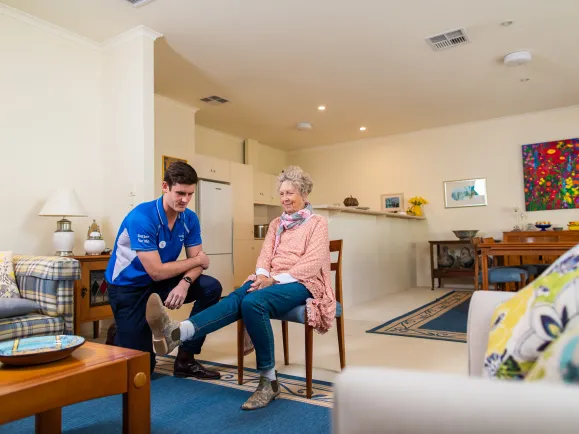
With personalised assessment and treatment plans, our experienced physiotherapists assist in the management of both acute and chronic conditions. This includes prescribing exercise and developing techniques to help you self-manage your condition and physical wellbeing.

Our services include:One-on-one therapy sessions and clinical assessments
Manual therapy and massage
Rehabilitation support and programs
Dry needling
Education for pre and post surgical recovery
Management of chronic physical conditions


Occupational Therapy

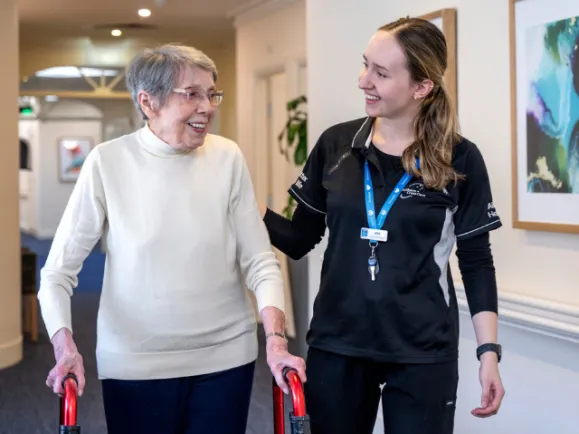
Our occupational therapists can help you maintain your independence by adapting your living environment and helping you manage daily activities. They provide professional home and workplace assessments to suggest modifications tailored to your specific needs.Hand therapy
Upper limb support
Wellness strategies including stress management and energy conservation
Home safety and equipment, advice on grab rails, shower chairs, seating, wheelchairs and ramps
Daily activity management supporting your ability to shop, clean, cook and engage socially
Cognitive support including practical strategies to manage cognitive changes in daily life
Personal care including assistance with strategies for dressing, showering and personal hygiene


Massage Therapy

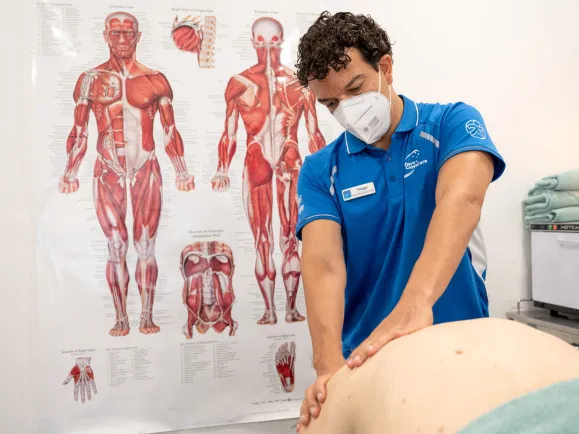
Therapeutic massage is designed to support you with a wide range of chronic conditions by promoting flexibility, supporting healthy circulation and encouraging relaxation. Our experienced therapists work with you to provide a tailored combination of relaxation and therapeutic massage techniques to support your wellbeing.

Our massage services provide support for:Physical comfort and relaxation
Stress management and well-being
Support during recovery from sports injuries
Comfort to those living with chronic pain
Soft tissue support
Promotion of postural awareness
Support for healthy circulation


Benefits of Allied Health


Physical


Mental


Social


Exercise Physiology

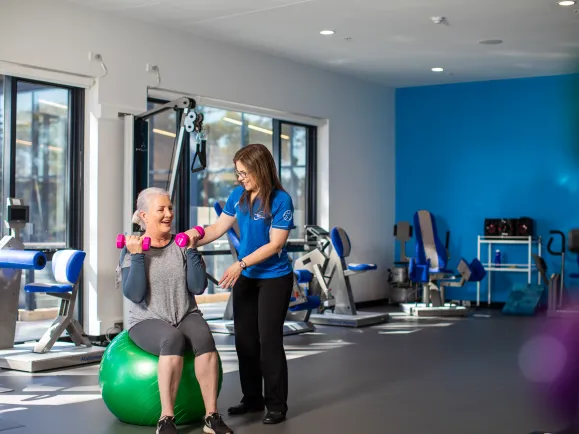
Exercise Physiology involves using evidence based exercise to support the management of complex medical conditions. Our dedicated exercise programs include professional delivery, advice and support with a strong focus on helping you create sustainable lifestyle changes.

Our Exercise Physiologists provide support for: Building muscle strength and physical function in one-on-one sessions
Management support for chronic disease and physical discomfort
Management of cardiovascular and heart-related health goals
Falls presentation and balance strategies
Supporting mental well-being through the benefits of physical activity
Facilitating group classes such as balance
Ongoing health and physical maintenance programs


Podiatry

Our qualified podiatrists provide a gentle approach to your foot care needs, offering education and support for a range of conditions such as sore feet, ingrown toenails, calluses and corns. We provide specialised support for unique health needs, including comprehensive diabetes foot care assessments and footwear education.

Our podiatry services include: Support for foot and leg comfort
Management of thickened nails
Treatment of corn and calluses
Diabetes foot care assessments and education
Footwear assessments and advice
Prescription and management of orthotics
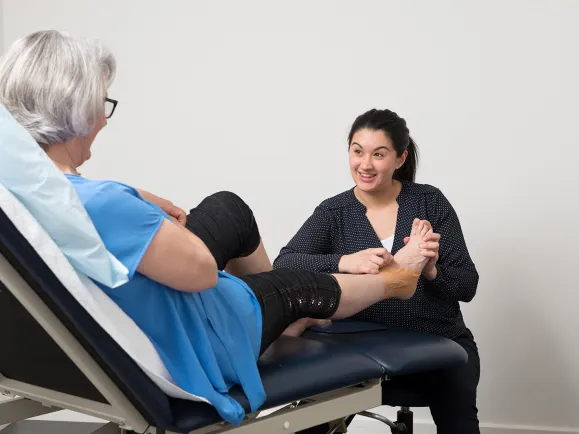


Dietetics

Eating a well balanced diet is essential to supporting your well-being as you age. Our qualified dietitians create individualised nutritional plans, providing you with professional guidance on diet and nutrition by:Developing tailored strategies to support healthy weight goals
Providing nutritional guidance for managing conditions such as diabetes, high blood pressure and cardiovascular health
Nutritional support for food allergies, intolerances (including IBS), and gastrointestinal health.
Individualised nutrition plans to support your health
Professional tips for food shopping on a budget, cooking, eating out and accessing local support services



Social Work

Our social workers aim to enable and empower you and your carers with the support and resources required to remain in your home or to explore alternative options for long-term care and accommodation.

Our social work services include:Emotional and psychological support to help you manage and adapt
Professional support through significant life changes and transitions
Access to short term counselling and problem solving
Support for navigating relationship challenges
Strengthening your links with local community groups and networks


FAQs

How can I pay for services?


What is the difference between an Exercise Physiologist (EP) and a Physiotherapist?


Do you offer a pick up/drop off service?


What kinds of classes do you offer?


===


===


===

2026년 4월 27일 월요일

Resthaven group class timetable 2026

 Resthaven group class timetable  2026

==


검버섯 - 나무위키

검버섯 - 나무위키

검버섯

최근 수정 시각: 
1. 개요2. 상세3. 치료
3.1. 치료 시 주의 사항3.2. 민간요법 및 부작용
4. 예방 방법

1. 개요[편집]

Age spots (Liver spots) / Seborrheic Keratosis

주로 노년층의 피부에 나타나는 거무스름한 얼룩. 얼굴을 비롯하여 손 등 다양한 부위에 발생한다. 늦으면 60대, 빠르면 40대부터 발생하기 시작한다. 검버섯이라는 용어 자체는 전문 의학적 용어라기보다는 검게 보이는 여러 피부병변을 같이 이르는 말이다. 기미, 주근깨, 지루각화증 등 다양한 피부병변에 의해 나타날 수 있다. 저승꽃이라고도 한다.

2. 상세[편집]

검버섯은 일종의 지루성 각화증으로, 30살 이후부터 진행하기 시작한다. 점인 줄 알고 조금씩 발생하다가 노화가 진행되면서 현저하게 그 윤곽을 드러내는 것이 특징이다.

피부에 있는 당과 단백질의 결합으로 발생하며 연령이 증가하게 되면 피부에 있는 당과 단백질이 결합해 갈색 검버섯이 증가한다.
주로 햇빛을 받는 안면, 두부 및 몸통(trunk)에 많이 생기며, 자외선에 피부가 오래 노출되면 피부 각질이 굳거나 세포가 국소적으로 과다 증식해 검버섯이 생기게 되는 피부양성종양이며, 악성종양과의 관계가 의심되기는 하나 명확하지 않다.

발생 원인은 유전적인 원인과 노화이다. 검버섯은 우성유전으로 가족이나 형제중 검버섯이 있을 경우 본인도 생길 확률이 높다. 2016년 독일의 한 연구팀이 대기오염물질에도 원인이 있음을 밝혔다. 자외선의 영향은 아직 확실히 입증되지 않았다.

잘 알려져 있진 않지만, 식물의 잎에서 발생하는 검은 반점도 검버섯이라고 할 수 있다.

3. 치료[편집]

  • IPL(Intense Pulsed Light, 다파장 레이저 또는 광선치료법)
    넓은 파장대의 복합적인 빛을 통한 치료법이다.
    • 레이저 토닝 : 단일파장으로 이루어진 빛으로, 한 가지 피부질환을 치료할 수 있다.
    • A2PL : 여러 파장의 빛을 피부에 도달하게 하는 치료 방법으로 여러 가지 피부 병변을 동시에 치료 할 수 있다.
  • 비타민 C 투여 : 전기 이온영동기기를 이용 피부에 비타민 C흡수를 증가시켜 색소 침착을 제거하는 치료방법이다. 검버섯을 포함한 색소질환에 효과적이다.
  • 두꺼운 검버섯의 경우 화학적 박피술 또는 박피용 레이저로 없애거나 CO2프랙셔널 레이저를 사용하여 치료한다.

3.1. 치료 시 주의 사항[편집]

  • 시술 부위는 하루 정도 물이 닿지 않도록 해야 하며, 세안은 시술 후 3일 정도 지나서 시작하는 것이 좋다.
  • 재생연고를 하루 3번, 세안 후 발라준다.
  • 색소 침착이 다시 일어나지 않도록 한 달 가량 치료 부위가 자외선에 노출되지 않도록 가리거나 자외선 차단제를 바르는 것이 좋다.

3.2. 민간요법 및 부작용[편집]

인터넷과 일부 블로그에서 검버섯을 제거하기 위해 사과식초, 레몬즙, 양파즙, 베이킹소다, 마늘즙 등의 민간요법을 시도하는 사례가 보고되고 있다. 이러한 방법들은 산성이나 자극 성분으로 인해 일시적인 각질 탈락 효과를 기대할 수 있으나, 실제로는 피부 자극, 화학적 화상, 색소침착 악화, 영구적인 흉터 등의 부작용이 발생할 수 있다.

대한피부과학회 및 여러 피부과 전문의들은 검버섯에 대한 민간요법을 권장하지 않으며, 시술이나 연고 치료를 포함한 안전성이 검증된 치료법을 우선적으로 고려할 것을 권고한다. 특히 빙초산, 전기침 등 강한 자극 요법은 정상 피부까지 손상시켜 회복이 어려운 흉터를 남길 수 있으므로 주의가 필요하다.

관련링크 참고 민간요법 부작용 더 알아보기

4. 예방 방법[편집]

Chungsoon Pak Client Record Snapshot 3 November 2026

AC48210702 Chungsoon Pak Client Record Snapshot 3 November 2026   Client Details   Age 79 ...