Kindle
$30.65
Available instantly
Paperback
$38.99
Read sample
Follow the author

Helen Buell WhitworthHelen Buell W…
Follow
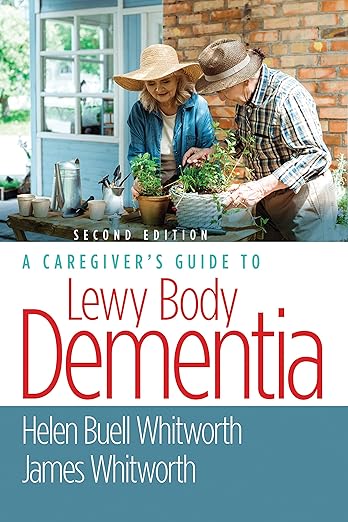
A Caregiver's Guide to Lewy Body Dementia Kindle Edition
by Helen Buell Whitworth MS BSN (Author), James Whitworth (Author) Format: Kindle Edition
4.9 4.9 out of 5 stars (190)
"Jim and Helen Whitworth have done an outstanding job not only of collecting a comprehensive compendium on all aspects of LBD, but they also have provided a personal touch with a moving compilation of anecdotes, stories, and quotes. I commend them for their efforts and will most certainly recommend this book as required reading for all my LBD patients and their families." -James E. Galvin, MD, MPH, Director, Comprehensive Center for Brain Health, Chief of Cognitive Aging for Palm Beach and Broward Counties, University of Miami Miller School of Medicine
A Caregiver's Guide to Lewy Body Dementia is the first book to present a thorough picture of what Lewy body dementia really is. Combining current strategies for managing symptoms and behaviors with personal examples that connect to readers' own experiences, this is the ideal book for caregivers, family members, and friends of individuals seeking to understand the disease and provide support to their loved ones. Written in easy-to-read language, the chapters incorporate handy facts and tips throughout, definitions of key terms, and practical wisdom to help caregivers navigate the day-to-day. Links to online resources, support groups, and associations are collected at the end of the book for further reference.
As a complete guide to Lewy body dementia, this revised and updated second edition includes coverage of recent research developments and topic areas of growing interest, including:Updated information on the latest drug and treatment options
Brand new chapter on the psychology of dementia, explaining the ways dementia changes the brain and how caregivers can continue to relate to their loved ones
Discussions of the various causes for dementia-related behaviors and responsive dementia care techniques for caregivers to follow
Expanded section on alternative therapies in a new chapter dedicated to managing stress
Read less
===
Review
Jim and Helen Whitworth have done an outstanding job not only of collecting a comprehensive compendium on all aspects of LBD, but they also have provided a personal touch with a moving compilation of anecdotes, stories, and quotes. I commend them for their efforts and will most certainly recommend this book as required reading for all my LBD patients and their families." - James E. Galvin, MD, MPH, Director, Comprehensive Center for Brain Health, Chief of Cognitive Aging for Palm Beach and Broward Counties, University of Miami Miller School of Medicine
From the Publisher
Helen Buell Whitworth, MS, BSN, is a retired nurse, educator, and writer. After she and Jim married, she joined his mission and became a passionate advocate for Lewy body dementia care partners and their loved ones. James (Jim) Whitworth is one of the co-founders of the nationally known Lewy Body Dementia Association (LBDA) and served as the organization's first president after his first wife died with LBD.
Product details
ASIN : B08F259FBH
Publisher : Demos Health
Accessibility : Learn more
Publication date : 15 November 2020
===
From other countries
Tara Looper
5.0 out of 5 stars Best book to understand LBD.
Reviewed in the United States on 13 November 2025
Format: PaperbackVerified Purchase
This is the main book I reference consistently to learn more about my LO’s diagnosis of LBD. It is truly amazingly helpful.
Report
SLOH
5.0 out of 5 stars Lewy body dementia Caregivers book
Reviewed in Canada on 27 January 2024
Format: PaperbackVerified Purchase
This is a must have for caregivers of lewy body dementia patients/partners. We end up teaching our medical team to some extent as this disease is so varied. It is full of knowledge, insight, experiences and support.
Report
A L MCFERRAN
5.0 out of 5 stars Good information
Reviewed in the United Kingdom on 26 February 2025
Format: PaperbackVerified Purchase
So little known about this type of dementia and my mum was diagnosed with it , so this book has helped understand a lot of her behaviours , would recommend
Report
lt
5.0 out of 5 stars Very helpful and good information
Reviewed in the United States on 20 October 2025
Format: PaperbackVerified Purchase
My husband was diagnosed with Lewy Body Dementia and his physician recommended this book. I ordered it and found it to be very helpful. It came in very good condition and gives very good information on the disease. This dementia is a horrible disease and the book will answer many questions about it.
Report
Cathi
4.0 out of 5 stars Very helpful
Reviewed in Canada on 1 May 2021
Format: PaperbackVerified Purchase
A great book full of healthful information.
Report
Sandy Sue
5.0 out of 5 stars Explains Lewy Body and how to care for a loved one.
Reviewed in the United States on 19 April 2025
Format: PaperbackVerified Purchase
When doctors, neurologists and family turns their back and gave no answers, this explains what has been known since 1912. Lewy Body is Parkinson’s that attacks the frontal lobe. Paranoid, delusional, hallucinations, Dr. Jekyll and Mr. Hyde in real life. And very dangerous for loved ones. Symptoms come and go for years. There is no tests that prove this illness and patients can hide for the short term. That is why doctors will refuse to acknowledge it as fear of losing their license in lawsuits. Patient can be very smart but delusional. Every person may have various symptoms so it is only those closest to them that see the long term behaviors. This gives answers and guidance for helping and dealing with the medical community to protect your loved one from medication for Alzheimer which can be deadly for Lewy Body patients!!!
3 people found this helpful
Report
Victoria
5.0 out of 5 stars So helpful for our family!
Reviewed in the United States on 5 September 2024
Format: PaperbackVerified Purchase
My brother-in-law has Lewy Body Dementia (LBD). Our family knew very little about LBD. This book has been such a help! LBD differs from "dementia", in some ways that are significant (for example what medications CAN'T be used for someone with LBD). The scenarios are comforting, in that others have gone through what we are going through. We often use one of the hints in the book - "Oh it's just that 'Lewy' again" when he has memory and word retrieval. It does make us laugh, during what would be a stressful moment. I cannot describe what this book has meant to our family - it is a treasure.
One person found this helpful
Report
Bumpa
5.0 out of 5 stars Helpful Book
Reviewed in the United States on 29 April 2025
Format: PaperbackVerified Purchase
very good book with lots of sp[rcific informatioin. Helpful in my learning process.
Report
-Belinda
5.0 out of 5 stars DLB-very helpful
Reviewed in the United States on 17 April 2023
Format: PaperbackVerified Purchase
This book has confirmed that we are on the right track. We went to a 'teaching hospital' to get the diagnosis of Dementia with Lewy Bodies, rather than accepting that we were dealing with the aging process of dementa. Thank God we did or my husband might not be here today. This book tells you step by step, the tests that are needed, things to expect and how getting the wrong diagnosis and medicine speeds the disease. Although I'm only 1/3 of the way through the book, it has confirmed what I do know, taught me so much and has given me direction and support. I HIGHLY RECOMMEND IT! As a matter of fact, I'm thinking about buying a copy for our son, so he gets a better understanding of the disease. If you have a loved one who has been given a diagnosis of Dementia w/Lewy Bodies and Parkinsonisms, I highly recommend you read this book, to help the patient, as well as the caregivers/family members.
7 people found this helpful
Report
SuzieQQ
4.0 out of 5 stars Great information
Reviewed in the United States on 6 July 2023
Format: PaperbackVerified Purchase
I am caring for somebody with Parkinson’s who is developing Lewy body dementia due to the Parkinson’s. This has been helpful to me so. I have worked with people with memory loss from many years. I have not been exposed to Lewybody dementia this is a Great help to me.
3 people found this helpful
Report
Heather
5.0 out of 5 stars Great Reference
Reviewed in the United States on 27 February 2025
Format: PaperbackVerified Purchase
This book is a great reference for anyone w a loved one w Lewy body disease. I’ve bought a second copy to share.
Report
Rachel F.
5.0 out of 5 stars Exceptional Detail
Reviewed in the United States on 5 March 2024
Format: PaperbackVerified Purchase
This book has been such a blessing. Most of the literature and articles discuss the major symptoms. This book has provided more insight into minor (but impactful) symptoms, a better understanding of what is going on with my husband and why he is not able to control some behaviors such as empathy.
Most dementia literature has focused around Alzheimer - this book has better helped me to understand how Lewy Body Dementia progresses, what is going on in the brain, and how best to manage it.
Truly this book has helped me as a caretaker to just simply understand.
3 people found this helpful
Report
Carlene G. Pierce
5.0 out of 5 stars Lewy Body Dementia
Reviewed in the United States on 6 October 2021
Format: KindleVerified Purchase
From a hospice admission RN, caring for my 87 year old mother with Lewy Body Dementia, this is an excellent caregiver resource book. Factual and informative. On point and truly accurate with concise explanations. I recommend this book to anyone who has a loved one dealing with Lewy Body Dementia. Lewy Body Dementia is not Alzheimer’s nor Vascular dementia. It runs it’s own trajectory with different symptoms and a much faster decline. Definitely, do not hesitate to consider daycare services for your own piece of mind and always give thought to hospice care for those final months. It is a tough role to be the primary caregiver. Remember, family and friends will help but it is your responsibility to ask for help and be specific as to what help you need. Lewy Body Dementia…quite the journey. Blessings to all.
24 people found this helpful
Report
Owl Lady
5.0 out of 5 stars Incredibly Helpful
Reviewed in the United States on 17 December 2023
Format: KindleVerified Purchase
This book is highly recommended. It really helped me understand more of the disease and the stages involved. It provided a lot of information that I desperately needed but didn’t know I needed until I read it in this book. Often sad at times this book is the only book I have found that covers every topic I would need to learn about.
One person found this helpful
Report
Rosie
5.0 out of 5 stars Informative, practical, and heartwarming
Reviewed in the United States on 12 July 2024
Format: KindleVerified Purchase
This book provides comprehensive but accessible information, practical advice, and personal stories that provide companionship for those with this disease and their loved ones.
One person found this helpful
Report
N Livingston
5.0 out of 5 stars Excellent book on Lewy Body Disease
Reviewed in the United States on 17 October 2022
Format: PaperbackVerified Purchase
This is an updated version of their previous book for caregivers, family, or anyone who wants practical yet medically based information about Lewy Body Disease. It is very readable and includes vignettes from patients and caregivers to illustrate various aspects of the disease. Their suggestions for handling difficult symptoms are practical and effective. They also include information about the course of the disease and its cause.
2 people found this helpful
Report
Alice H
5.0 out of 5 stars Wonderfully detailed and accurate
Reviewed in the United States on 29 August 2022
Format: PaperbackVerified Purchase
This book is an absolute necessity for anyone taking care of a loved one whose dementia doesn't fit the alzhimers mold. LBD is the most misunderstood and misdiagnosed form of dementia. The book throws a lot of information at you very quickly so if you are early in the LBD cycle you might just look up things as they occur. Eventually you will have looked up so many things, you'll have read it all.
6 people found this helpful
Report
Rhonda
5.0 out of 5 stars Very helpful
Reviewed in the United States on 2 March 2024
Format: PaperbackVerified Purchase
After my husband was diagnosed with this horrible disease, this book answered so many questions.
Report
Meavis Brown
5.0 out of 5 stars Great
Reviewed in the United States on 26 May 2024
Format: PaperbackVerified Purchase
Great reading and learning info for care giver
Report
Amazon Customer
5.0 out of 5 stars Very informative
Reviewed in the United States on 23 October 2023
Format: PaperbackVerified Purchase
Helps you understand the disease
Report
===
From other countries
Melvyn J. Schubert
5.0 out of 5 stars Great information
Reviewed in the United States on 20 April 2023
Format: PaperbackVerified Purchase
This book gave me so much valuable information that helped me with my journey
One person found this helpful
Report
Marie
5.0 out of 5 stars Great resource guide!
Reviewed in the United States on 12 October 2021
Format: KindleVerified Purchase
So much good information. I especially enjoyed the imput from caregivers. Very thankful for the knowledge gained. Best wishes to all of the Caregivers who give of themeselves, unselfishly, everyday, all over this world!
4 people found this helpful
Report
JuliaEP
5.0 out of 5 stars A must read for anyone touched by Lewy Body.
Reviewed in the United States on 28 August 2021
Format: PaperbackVerified Purchase
This book has been must reading for anyone touched with Lewy Body. I got this for a friend whose husband was just diagnosed.
4 people found this helpful
Report
Island Dawg
5.0 out of 5 stars Great Lewy Body Dementia resource
Reviewed in the United States on 10 March 2022
Format: KindleVerified Purchase
Great book that explains Lewy Body Dementia in detail and what Care Givers can expect.
4 people found this helpful
Report
Pat
5.0 out of 5 stars 2nd edition.
Reviewed in the United States on 28 September 2021
Format: PaperbackVerified Purchase
Full of updated information. Easy to read, giving facts and stories.
5 people found this helpful
Report
BixFan
5.0 out of 5 stars Very Informative
Reviewed in the United States on 30 April 2021
Format: PaperbackVerified Purchase
This is a very good resource for anyone who interested in learning more about LBD.
2 people found this helpful
Report
Althea G. Davis
5.0 out of 5 stars Excellent resource
Reviewed in the United States on 24 January 2022
Format: KindleVerified Purchase
Awesome easy to read resource
2 people found this helpful
Report
nancy herman
5.0 out of 5 stars Good Book
Reviewed in the United States on 5 July 2021
Format: PaperbackVerified Purchase
Reading it now. Great book for caregivers.
2 people found this helpful
Report
===
2010 edition
====
Top reviews from Australia
1 reader
4.0 out of 5 stars a good guide
Reviewed in Australia on 5 February 2015
Format: KindleVerified Purchase
I will be going back to this book time and time again in the months ahead.
Helpful
Report
See more reviews
Top reviews from other countries
Translate all reviews to English
happy customer
5.0 out of 5 stars If you are a caregiver for a loved one with Lewy body, you need this book
Reviewed in Canada on 11 July 2025
Format: PaperbackVerified Purchase
I bought this book because of a family member and a doctor recommended it. The information in this book is so valuable. If you have a family member with Lewy Body Dementia, this book answers alot of questions and gives you a clearer understanding of what is happening with your loved one.
Report
Mrs. C. Waters
5.0 out of 5 stars best book ever for carers
Reviewed in the United Kingdom on 19 June 2013
Format: PaperbackVerified Purchase
This is one of the most interesting and helpful books I have read. There are not enough people who know about Lewy Body Dementia. My husband has this and this book has been a god send for me, understanding more and giving plenty of advice and tips. The staff at the hospital my hubby is in are very interested so I have just ordered another one today as a gift to them as even they do not know half of what is said in this book. I would advise anyone who knows or cares for someone with this horroble disease to get this book.
Report
Client d'Amazon
5.0 out of 5 stars Enfin un livre sur la maladie à corps de Lewy qui aide les aidants.
Reviewed in France on 31 October 2015
Verified Purchase
A ma connaissance, et par expérience, c’est le seul ouvrage qui apporte des informations pertinentes et utiles à des personnes qui sont confrontés à la maladie à corps de Lewy d’un proche.
La description de la maladie, de ses particularités ainsi que les conseils pour faire face à toutes les phases de la maladie sont complètes et précises.
Tous les sujets sont abordés avec pragmatisme, de façon exhaustive et sans tabou (qualité des médecins, fin de vie, deuil, relations intimes…).
Ce livre a été écrit par des aidants pour des aidants. Il cite de nombreux témoignages qui ne sont que ceux d’aidants. Il ne parle pas de recherche ou de traitement miracle. Il ne cherche pas à donner de faux espoirs.
Ce livre mériterait d’être traduit en français, en l'adaptant à l’organisation et l'administration des soins en France.
Merci aux auteurs.
Report
Translate review to English
ts5189
5.0 out of 5 stars とても明快で読みやすい。
Reviewed in Japan on 26 September 2015
Format: PaperbackVerified Purchase
ご家族がレビー小体型認知症(LBD)の方にお勧めです。LBDのご家族をケアするうえで大事なことを、とても丁寧に助言してくれています。それに、とても平易な英語で書かれています。
Report
Translate review to English
Kathleen San Martino
5.0 out of 5 stars This is one of seven useful books I read on Parkinson's Disease
Reviewed in the United States on 23 January 2016
Format: PaperbackVerified Purchase
For the past 14 years an extremely close friend of mine has had many unexplainable symptoms (lack of smell, muscle cramping, choking, extreme abdominal pain with nausea after eating fiber or fat-rich foods, etc.) This November 2015 I noticed a resting tremor in the arm on his left side.
This was the first time I suspected his issues were related to one disease which might be Parkinson's Disease (PD). However, I still dismissed this possibility because tremors can be related to other medical issues (one of which is benign) and he has only had this tremor three times. Periodically over the past several months I noticed him walking slower, a frozen facial expression, and his right hand curled in front of him as if he had a stroke. On Dec 5, 2015 he really exhibited the slow walking, frozen face, and curled hand and he took forever to dress that morning. Later that evening I became certain (in my opinion) that he has PD due to his telling me about a change in his handwriting which I did not witness. Unfortunately, he refuses to go to the doctor or seek medical help from a neurologist even when I told him I believe he has PD. On extremely rare occasions he'll go to see a particular specialist for whatever ailment is almost killing him at the moment. As a result, since December 2015 I've completely immersed myself in learning about PD with some cursory investigation of illnesses that exhibit Parkinson-like symptoms because I wanted to be sure I was on the right track.
Besides searching the Internet for information, I purchased seven (7) books on Parkinson's Disease (PD) of which this book is one.
My review is written from the perspective of someone who does not have PD but wants to learn about what the signs of PD are, what a person's life will be like, what are their challenges, what they should do about it, what is their life expectancy, etc. This book is in the list below. I've listed the books in the order of value to me and not in the order that I read them. I also put the copyright date of each book in parenthesis as well as my star ranking based on its usefulness to me and a short few sentences of what the book was about. If I had PD myself, I would rank them in a different order. I posted the same review to each one of these seven (7) books. At the end, I wrote a summary of what I think about PD and listed seven (7) other books I may one day buy and read.
Parkinson's Disease For Dummies (c 2007) (4.5 stars) - Although this book does not have the latest developments or information on PD or Lewy Body disease (dementia included), it was invaluable in helping me understand what PD is in the most simplest terms. It helped me understand what to look for in a person with PD and what challenges they face. Since we are in 2016, the information on treatment is somewhat outdated. This book is great for someone who suspects they have PD or just got diagnosed because it clarifies symptoms in easy-to-understand language. It's a great resource for the newly diagnosed PD patient and those preparing for their first appointment. It also has information on Young Onset Parkinson's Disease (YOPD) and a chapter (sections of which I skipped over) full of exercises for the PD patient.
What Your Doctor May Not Tell You About(TM): Parkinson's Disease: A Holistic Program for Optimal Wellness (c Feb 2003) (4 stars) - This is like a textbook on Parkinson's disease with case studies from actual patients and information on alternative therapies such as acupuncture. This book appears to outline all the symptoms of Parkinson’s, including ones not in other books such as Seborrheic dermatitis and stuttering (which is also in Wilson's disease). This book discusses everything from A-Z, like complementary medicine (homeopathy, acupuncture, etc.), issues for caregivers, etc. Case studies are interspersed throughout the text to give the reader a general idea of a PD person's experiences. It even mentions Mucuna pruriens which is a bean sold in supplement form and has high levels of levodopa that could be of help to PD patients--of course, only take this with supervision of your doctor.
A Caregiver's Guide to Lewy Body Dementia (c 2011) (5 stars) - this broadened my horizons about PD because it described the symptoms related to two very similar diseases and was co-written by someone whose spouse had dementia with Lewy bodies. PD is a Lewy Body disease where abnormal proteins show up on the part of the brain that controls movement. However, it is closely associated with Lewy Body Dementia that has abnormal proteins on the cognition part of the brain. Both diseases have many of the same symptoms and depending on which symptoms appear first that determines what the disease is called. It is either dementia with Lewy bodies (DLB) or Parkinson's Disease with Dementia (PDD). The diagnosis is critical because medications for one disease can have adverse effects on those with the other disease or on those with Alzheimer's. Some DLB patients are misdiagnosed with Alzheimer's and those medicines are contraindicated in most cases for them. It was this book that helped me realize the symptoms I was seeing was the same with my friend and also easily explained what a caregiver needs to do.
Living Well with Parkinson's (second edition) (c 1991, 2005) (5 stars) - This book was originally written by a woman who had Parkinson's Disease but who died on November 25, 1998 from a heart attack unrelated to PD. It was revised in 2005. This book is phenomenal in my opinion because it supplied me with an excellent narrative of what it was like to live with Parkinson's and how to make that life worth living. The chapter on "Medications and Therapies" provides a list of diseases that can resemble PD. The chapter on "Is There Life With Parkinson's" is a positive narrative on how the author lived very well with the disease.
Parkinson's Humor - Funny Stories about My Life with Parkinson's Disease (c2012) (4 stars) - is a lighthearted book written by someone who has PD. The book, although not very funny to me, educated me on what day-to-day life is like to live with PD. For instance, Beverly mentioned how sometimes she felt starched when describing the rigidity PD patients experienced. Except for Living Well with Parkinson's, this book was the only other uplifting book. All the others books were way too serious and sobering. At a time when I am new in trying to understand PD and PDD, reading a text like this or the one above was critical especially since I was overdosing on the subject. This book provided the mental break I needed, was slightly educational, and an extremely easy read.
Parkinson's Disease: The Complete Guide for Patients and Caregivers (c 1993) (3 stars) - this book is similar to What Your Doctor May Not Tell You About(TM): Parkinson's Disease: A Holistic Program for Optimal Wellness but it's 10 years earlier so the information is dated. For example in one chapter on how to cope with Parkinson’s there's a suggestion to use a Dictaphone if you can't write. It has a short first section on symptoms of the disease and then goes into history, treatment, etc. There are three sections, however, that I found worthwhile. The Chapter on "The A to Z Guide to Symptoms and Side Effects," "Planning Your Financial Future," and "Diseases That May Resemble Parkinson's Disease" which is in the Appendix II are invaluable. One thing I did not like about this book is that it was very negative describing more than once about the disabling effects of PD and how you have get your affairs in order, etc. Except for the three worthwhile chapters, I feel I did not need to purchase this book to get the information I was looking for.
Brain Storms: The Race to Unlock the Mysteries of Parkinson's Disease (c 2015) (4 stars) - the author is actually a PD patient and this book covers the most recent research on PD. It was not as helpful to me because it talked more about the latest developments in the search for a cure as well a brief glimpse at tests and drugs for PD patients. If I were a person with PD, then this book would probably be second in value in my list. For me, I could have done without purchasing this book.
In summary, what I discovered is that a PD patient does not die from their disease and they can have a normal life expectancy. PD is a slowly progressive disease, that is not usually hereditary, and which affects each patient differently. Not all PD patients have visible tremors. The disease definitely changes the patient's life and the lives of those closest to them but it sometimes does this for the better because the patients re-evaluate their lives and how they want to spend their time. For many, the disease will be an inconvenience that the patients and caregivers can learn to live with. There are no tests that can definitely determine someone has PD while the person is alive. A definitive diagnosis can only be made with post-mortem brain analysis. PD is determined via a process of elimination of testing for other similar diseases, observing arm muscle reactions during a test a doctor may try, and observing how the symptoms respond to Carbidopa / Levodopa drugs. It is critical that patients seek help immediately and partner with a doctor (or several doctors such as physical therapists, speech therapists, etc.) to seek a diagnosis and develop a treatment plan. At the early stages of PD, no drug therapy may be involved; it might me more of a wait and see approach. The positive attitude of the patient along with eating right, exercising, partnering with a healthcare team, and having a good support network provides the best outcome for the patient to have a fruitful life with only some limitations and modifications.
Please understand that no one book provided all the information I needed or wanted. I discovered information has to come from several sources, including the Internet and PD support groups. For instance, one PD symptom not mentioned in any of these books is gastroparesis. I found that one by searching the Internet with the word Parkinson's and abdominal cramping with nausea and the likes. I did these searches years ago, but at that time I did not suspect PD so Parkinson’s was not part of the search criteria. I do hope my friend will seek the help of a neurologist, detail all his symptoms, and let me tell the neurologist what I have been seeing. Could I be wrong about believing that my friend has PD. Absolutely, I could be wrong; even doctors misdiagnose patients. However, after reviewing Internet sources for the other diseases mentioned in these books, the only other diseases that come close with his symptoms are a brain tumor or Wilson's disease. However, with Wilson's disease his eye doctor would have noticed the copper ring (known as Kayser-Fleischer Ring) around his cornea during his eye exam.
Although I am on PD overload, below are seven (7) other books (not listed in any particular order) that I might purchase in the future to learn more. The first one is on a disease with very close PD symptoms and the other six are on PD or a person’s experience with PD.
1. Wilson's Disease for the Patient and Family: A Patient's Guide to Wilson's Disease and Frequently Asked Questions about Copper
2. The Muhammad Ali Parkinson Center 100 Questions & Answers About Parkinson Disease (100 Questions & Answers)
3. A Life Shaken: My Encounter with Parkinson's Disease
4. Lucky Man: A Memoir
5. Parkinson's Disease: A Complete Guide for Patients and Families (A Johns Hopkins Press Health Book)
6. Parkinson's Disease and the Family: A New Guide (The Harvard University Press Family Health Guides)
7. Eat Well, Stay Well With Parkinson's disease
Read less
Report
<루이소체 치매 간병인 가이드> 요약 및 평론
1. 개요 및 출간 배경
<루이소체 치매 간병인 가이드>(A Caregiver's Guide to Lewy Body Dementia)는 루이소체 치매(LBD)라는 특정 질환을 본격적으로 다룬 최초의 대중적 지침서 중 하나다. 저자인 헬렌 부엘 위트워스(Helen Buell Whitworth)는 간호사이자 교육자이며, 공동 저자인 제임스 위트워스(James Whitworth)는 미국의 루이소체 치매 협회(LBDA)의 공동 설립자다. 제임스는 첫 부인을 루이소체 치매로 잃은 실제 간병 경험자이며, 헬렌은 전문 의료 지식을 더해 이 책을 완성했다. 알츠하이머에 이어 퇴행성 치매 원인 2위를 차지함에도 대중적 인지도가 낮아 진단과 관리에 어려움을 겪는 환 가족들을 위해, 임상적 전문성과 절절한 간병 경험을 결합하여 실질적인 솔루션을 제공한다.
2. 도서 요약
제1부: 루이소체 치매의 이해와 진단
루이소체 치매는 뇌세포 내에 '루이소체'라는 이상 단백질이 쌓이면서 발생하는 질환이다. 알츠하이머병이나 파킨슨병과 자주 혼동되지만, 고유한 임상적 특징을 지닌다. 이 책은 정확한 진단을 내릴 수 있는 전문의를 찾는 방법부터 제시한다. 오진율이 높은 질환인 만큼, 환자의 증상을 정확히 기록해 의사에게 전달하는 과정이 필수적이다. 조기 진단은 향후 발생할 약물 부작용을 막고 적절한 치료 계획을 세우는 첫걸음이 된다.
제2부: 인지 및 신체적 증상의 관리
루이소체 치매의 가장 큰 특징은 증상의 '변동성'이다. 환자는 몇 시간 혹은 며칠 사이에 정상적인 상태와 심한 혼돈 상태를 오간다. 책은 이러한 인지적 기복에 대처하는 법을 상세히 다룬다. 또한 파킨슨병과 유사한 운동 장애(경직, 떨림, 보행 장애)와 심각한 수면 장애(REM 수면 행동 장애로 인한 몽유병 및 가위눌림)를 관리하는 구체적 지침을 제공한다. 환자가 꿈속의 행동을 실제로 실행하며 발생하는 부상을 막기 위해 침실 환경을 안전하게 개조하는 법 등이 포함된다.
제3부: 지각 장애와 독특한 약물 민감성
환자들은 매우 생생한 '환시'(Hallucination)를 경험한다. 저자들은 환시를 억지로 부정하거나 교정하려 들지 말고, 환자가 느끼는 공포와 감정에 공감하며 환경적 유발 요인을 제거하라고 조언한다. 특히 이 책이 강조하는 핵심 위험 요소는 '약물 민감성'이다. 루이소체 치매 환자는 일반적인 항정신병 약물(전형적 신경이완제)에 노출될 경우 증상이 급격히 악화되거나 치명적인 부작용을 겪을 수 있다. 따라서 의료진과 소통할 때 약물 민감성을 반드시 고지해야 함을 경고한다.
제4부: 자율신경계 기능 장애와 일상 지원
질환이 진행됨에 따라 기립성 저혈압, 체온 조절 실패, 변비, 비뇨기 장애 등 자율신경계 이상이 동반된다. 책은 소변역류나 낙상을 방지하기 위한 일상적인 돌봄 기술을 세부적으로 가이드한다. 더불어 후기 단계에 직면하게 되는 법적·재정적 문제(위임장, 자산 관리)와 연명의료 결정 및 호스피스 돌봄을 포함한 임종 준비 과정까지 현실적으로 안내한다.
제5부: 간병 파트너의 생존 전략
저자들은 간병인을 '간병 파트너(Care Partner)'로 명명하며, 그들의 신체적·정신적 고립을 막는 데 지면을 할애한다. 죄책감 없이 휴식(단기 보호 서비스 활용)을 취하는 법, 의료진·가족·지역사회를 엮어 '돌봄 팀'을 구성하는 법, 그리고 스트레스를 관리하는 심리적 전략을 제시하며 간병인의 자기 돌봄이 곧 환자를 지키는 길임을 역설한다.
저자들은 간병인을 '간병 파트너(Care Partner)'로 명명하며, 그들의 신체적·정신적 고립을 막는 데 지면을 할애한다. 죄책감 없이 휴식(단기 보호 서비스 활용)을 취하는 법, 의료진·가족·지역사회를 엮어 '돌봄 팀'을 구성하는 법, 그리고 스트레스를 관리하는 심리적 전략을 제시하며 간병인의 자기 돌봄이 곧 환자를 지키는 길임을 역설한다.
3. 비평 및 평론
임상적 지식과 삶의 서사가 이뤄낸 완벽한 균형
이 책의 가장 큰 성취는 의학 전문 서적의 차가움과 개인 수기의 주관성 사이에서 절묘한 균형을 잡았다는 점이다. 간호사로서의 전문성을 지닌 헬렌과, 환자를 직접 떠나보낸 제임스의 경험이 결합하여 ' 앎'과 '삶'이 동시에 녹아든 텍스트를 생산했다. 각 장마다 배치된 '실제 사례(Anecdotes)'와 '간병 팁' 상자는 이론이 복잡한 현실에서 어떻게 적용되는지 직관적으로 보여준다.
행동 수정과 감정적 공감의 우선순위 설정
치매의 문제 행동을 통제하기 위해 약물에 의존하려는 경향에 경종을 울린다. 저자들은 루이소체 치매 특유의 환시나 망상을 대할 때 "논쟁하지 말고, 환자의 감정적 현실로 들어가라"는 관계 중심적 접근법을 제안한다. 이는 환자의 존엄성을 지키는 동시에, 약물 부작용으로 인한 급격한 인지 저하를 막는 가장 안전하고 효과적인 비약물적 치료법이다.
간병인 소외에 대한 따뜻한 시선과 구조적 대안
책은 환자뿐만 아니라 '간병 파트너'의 정신적 붕괴를 질병의 주요 증상만큼이나 심각하게 다룬다. 독박 간병이 초래하는 파멸을 경고하고, 법적·재정적 준비를 미리 서두르도록 촉구하는 부분은 매우 현실적이다. 질병을 개인의 불행으로 가두지 않고, 지역사회 자원과 협회를 통해 돌봄의 네트워크를 형성해야 한다는 구조적 해법을 제시한다.
아쉬운 점과 한계
출간된 지 시간이 흐름에 따라 최신 신약 정보나 디지털 헬스케어 기술(돌봄 로봇, AI 모니터링 등)의 반영은 다소 부족하다. 또한 미국 의료 시스템과 현지 지원 단체(LBDA) 중심의 자원 안내가 주를 이루고 있어, 타 국가의 독자들이 적용하기에는 의료 보장체계나 제도적 맥락에서 괴리가 존재할 수 있다.
총평
<루이소체 치매 간병인 가이드>는 단순한 질병 안내서를 넘어, 불예측성이라는 거대한 파도 속에서 길을 잃은 간병인들을 위한 정교한 나침반이다. 루이소체 치매라는 까다로운 질환을 마주한 가족과 의료계 종사자들에게 여전히 대체 불가능한 현장 지침서이자, 인간 엄숙함에 대한 깊은 통찰을 담은 연대의 기록이다.
법적 제도나 최신 약물 정보에서 국가별 차이가 있을 수 있지만, 루이소체 치매 특유의 기복과 환시에 대처하는 마음가짐을 배우기에 이보다 더 실용적이고 따뜻한 책은 찾기 어렵습니다. 추가로 궁금한 파트나 세부 내용이 있다면 언제든 말씀해 주세요.
==
=
<A Caregiver’s Guide to Lewy Body Dementia>
헬렌 부엘 휘트워스·제임스 휘트워스
1,000단어 요약+평론
<A Caregiver’s Guide to Lewy Body Dementia>는 루이소체 치매, 즉 LBD를 “의학적 진단명”이 아니라 “가족의 일상을 뒤흔드는 생활 조건”으로 설명하는 돌봄 안내서다. 저자는 헬렌 부엘 휘트워스와 제임스 휘트워스이며, 2020년에 나온 2판은 Springer/Demos Health에서 출간된 352쪽 분량의 실용서다. 이 책은 루이소체 치매를 전면적으로 다룬 첫 본격 돌봄 안내서라는 식으로 소개되며, 증상 관리 전략과 실제 가족 사례를 결합한 책으로 평가된다.
이 책의 출발점은 단순하다. 루이소체 치매는 알츠하이머병처럼 “기억이 조금씩 나빠지는 병”으로만 이해하면 안 된다. 핵심은 변동성이다. 어느 날은 거의 정상처럼 보이다가, 다른 날은 이해력·판단력·주의력·공간감각이 크게 무너진다. 가족은 “어제는 했는데 왜 오늘은 못 하느냐”고 생각하기 쉽지만, LBD에서는 바로 그 변동이 병의 본질이다. 그러므로 돌봄자는 환자의 능력을 고정된 것으로 보지 말고, 그날그날의 컨디션과 환경 자극, 수면, 약물, 감염, 피로에 따라 달라지는 것으로 받아들여야 한다.
책이 특히 강조하는 것은 LBD의 세 가지 축이다. 첫째, 인지 증상이다. 기억력 저하보다 주의력, 실행기능, 시공간 능력의 장애가 먼저 두드러질 수 있다. 둘째, 파킨슨 증상이다. 보행이 느려지고, 균형이 나빠지고, 표정이 줄고, 몸이 굳어진다. 셋째, 정신증상과 수면장애다. 환시는 매우 흔하고, 누군가 집 안에 있다고 느끼거나, 물건을 사람으로 착각하거나, 꿈을 행동으로 옮기는 렘수면행동장애가 나타날 수 있다. 이 병은 뇌, 몸, 수면, 감정, 지각이 한꺼번에 흔들리는 병이다.
저자들의 실용적 장점은 “논리로 설득하지 말라”는 메시지에 있다. 돌봄자는 환각이나 오인을 바로잡으려 한다. “그 사람은 없어”, “그건 의자가 아니라 옷이야”, “네 지갑은 누가 훔친 게 아니야”라고 말한다. 그러나 LBD 환자에게 그 순간의 지각은 현실이다. 책은 정면 반박보다 감정 확인, 안전 확인, 주의 전환, 환경 조정을 권한다. 환자가 “방에 사람들이 있다”고 하면 “무섭군요. 제가 같이 확인해볼게요”라고 반응하는 편이 “없다니까 왜 그래”보다 훨씬 낫다. 진실 싸움에서 이기는 것이 목적이 아니라, 불안을 낮추고 폭발을 막는 것이 목적이다.
또 하나의 중요한 주제는 약물 민감성이다. LBD 환자는 항정신병약에 심각하게 민감할 수 있다. 모든 약을 금지하자는 뜻은 아니지만, 약물은 낮은 용량, 천천히, 면밀한 관찰 아래 사용해야 한다. 특히 환시가 있다고 곧바로 강한 진정제로 누르는 방식은 위험하다. 책은 약보다 먼저 환경, 수면, 통증, 변비, 감염, 탈수, 시야·청력 문제, 과자극을 점검하라고 말한다. 행동문제는 “성격이 나빠져서” 생기는 것이 아니라, 병든 뇌가 감당하지 못하는 상황에 반응하는 경우가 많다.
일상 돌봄 부분도 구체적이다. 집 안은 단순하고 예측 가능해야 한다. 물건 위치를 고정하고, 라벨을 붙이고, 조명을 밝게 하고, 복잡한 무늬나 그림자가 착각을 만들지 않도록 해야 한다. 하루 일정은 너무 비어 있어도 안 되고, 너무 빡빡해도 안 된다. 환자는 지루하면 불안해지고, 과로하면 혼란스러워진다. 활동은 짧고 성공 가능해야 한다. “예전처럼 하라”가 아니라 “지금 할 수 있는 작은 역할”을 주는 것이 중요하다. 설거지 전체가 어렵다면 숟가락 정리, 빨래 전체가 어렵다면 수건 접기처럼 나누어야 한다.
책은 돌봄자의 감정도 정면으로 다룬다. LBD 돌봄은 알츠하이머 돌봄보다 더 혼란스러울 수 있다. 환자가 겉으로는 멀쩡해 보이는 시간이 많기 때문이다. 주변 사람은 “괜찮아 보이는데 왜 힘들다고 하느냐”고 말하기 쉽다. 그러나 실제 돌봄자는 밤의 수면장애, 반복되는 물건 분실, 의심, 환시, 넘어짐 위험, 약물 조정, 운전 중단, 병원 예약, 행정 절차를 혼자 떠안는다. 책은 돌봄자가 죄책감 없이 도움을 요청해야 하며, 휴식은 사치가 아니라 돌봄의 조건이라고 말한다.
이 책의 가장 좋은 점은 LBD를 “이상한 행동의 목록”으로 보지 않는다는 것이다. 환자 행동 뒤에 있는 원인을 찾으려 한다. 왜 저 말을 하는가? 왜 저녁에 더 불안한가? 왜 목욕을 거부하는가? 왜 도둑맞았다고 하는가? 저자들은 행동을 도덕적 문제로 보지 않고, 뇌 기능 저하와 환경 사이의 충돌로 본다. 이 관점은 돌봄자의 분노를 줄인다. 환자를 이기려 하지 않고 상황을 바꾸게 만든다.
다만 한계도 있다. 첫째, 미국식 의료·가족 돌봄 환경을 전제로 한 부분이 많다. 호주, 한국, 일본의 복지 제도와는 다르므로 그대로 적용하기 어렵다. 둘째, 책의 어조는 실용적이지만, 실제 가족이 겪는 경제적 부담, 배우자 돌봄자의 고립, 문화적 수치심, 종교적 해석 문제까지 충분히 깊게 다루지는 못한다. 셋째, LBD는 개인차가 매우 크기 때문에 안내서가 주는 “전략”이 모든 집에서 통하지 않는다. 어떤 환자는 환시를 부드럽게 넘길 수 있지만, 어떤 환자는 공포와 공격성으로 이어진다. 결국 책은 처방전이 아니라 도구상자다.
세진님 상황에 비추어 보면, 이 책은 특히 세 가지 점에서 유용하다. 첫째, 정순님의 “presence hallucination”, 즉 집 안에 누군가 있다고 느끼는 경험을 단순한 망상으로 몰지 않게 해준다. 둘째, 물건 분실과 도둑 의심을 기억력 문제가 아니라 불안·시공간 혼란·현실 해석의 문제로 보게 해준다. 셋째, 방문객 앞에서는 정상처럼 보이지만 집에서는 심하게 흔들리는 양상을 LBD의 전형적 변동성으로 이해하게 해준다.
결론적으로 <A Caregiver’s Guide to Lewy Body Dementia>는 의학 교과서라기보다 가족 생존 매뉴얼에 가깝다. 이 책의 핵심 메시지는 “환자를 고치려 하지 말고, 환자가 덜 무너지는 환경을 만들라”는 것이다. 돌봄자는 논쟁가가 아니라 통역자, 관리자, 안전 책임자, 감정 완충자가 된다. 잔인한 말이지만, LBD 돌봄에서 사랑만으로는 부족하다. 지식, 관찰, 기록, 휴식, 외부 서비스, 약물에 대한 신중함이 함께 있어야 한다. 이 책은 바로 그 현실적인 돌봄의 문법을 가르치는 책이다.
==
==
==


댓글 없음:
댓글 쓰기